
Your clients are judging you before you say a single word. Here's how to make that work in your favor.
She almost didn't call.
A woman I'll call Sarah had been putting off finding a therapist for three months. She finally opened Psychology Today one night at 11 PM, scrolled through a list of 40 therapists in her area, and started narrowing down.
She didn't read a single bio first.
She looked at the photos.
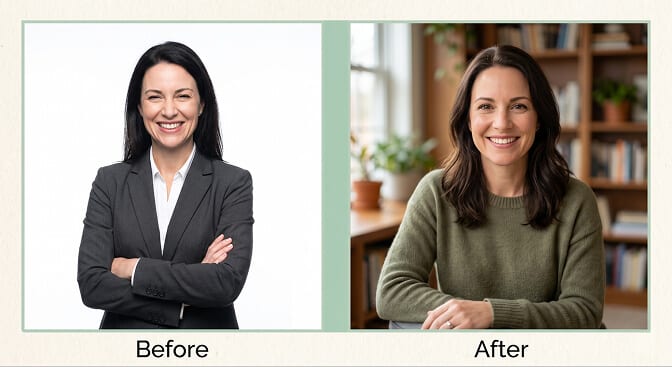
One therapist had a corporate headshot with a stiff smile and a navy blazer, arms crossed. Too intimidating. Another had a blurry selfie taken in a car. Not serious enough. A third had no photo at all. Immediate skip.
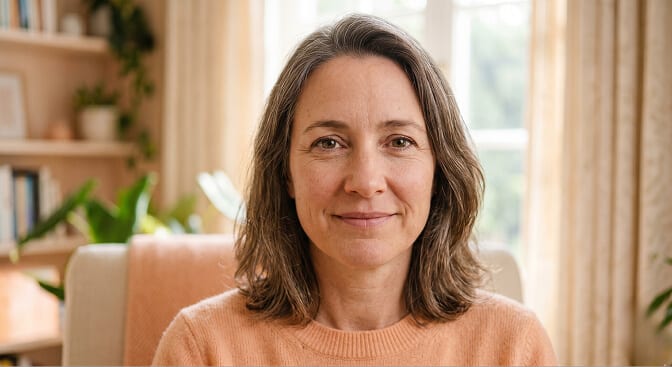
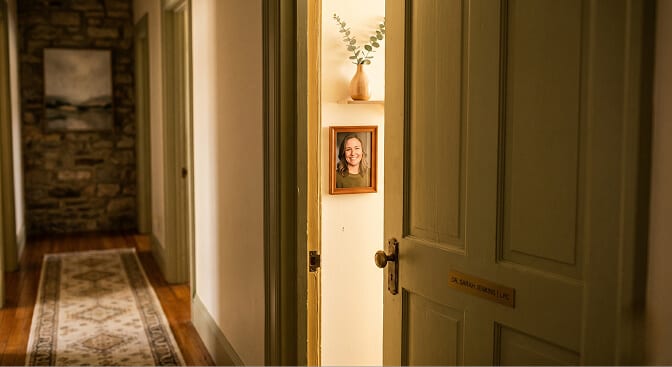
Then she landed on a therapist whose photo stopped her mid-scroll. Soft lighting. A genuine half-smile. Eye contact that somehow felt... safe. The therapist was wearing a simple olive sweater, sitting in what looked like a real office with a plant in the background.
Sarah clicked. Read the bio. Booked the intake call the next morning.
Here's the part that matters: that therapist's qualifications were nearly identical to the other 39 on the list. Same licensure. Similar specialties. Comparable experience. The difference wasn't expertise. It was a photograph.
And that's the strange, uncomfortable truth about therapist headshots that most clinicians don't want to hear.
Your Photo Is Doing Therapy Before You Are
Let's be honest about something.
Most therapists didn't get into this profession to think about personal branding. You went to grad school, did your clinical hours, passed your licensing exam, and now someone's telling you that a photo matters as much as your training?
It doesn't matter as much. But it matters more than you think.
Research on first impressions consistently shows that people form judgments about trustworthiness within milliseconds of seeing a face. Not seconds. Milliseconds. And for therapists, trust isn't just nice to have. It's the entire foundation of the therapeutic relationship.
Your headshot is the first micro-interaction a potential client has with you. Before the intake form. Before the phone screen. Before you ask them what brings them in today.
Your headshot doesn't need to be perfect. It needs to be honest. Because honesty is what your clients are already looking for.
That's a different bar than what most professionals aim for. A lawyer's headshot needs to say competent and powerful. A real estate agent's headshot needs to say energetic and trustworthy with your money. But a therapist's headshot needs to say something much harder to fake:
I'm someone you can be vulnerable with.
The Part Nobody Tells You About Therapy Directory Photos
Here's where it gets messy.
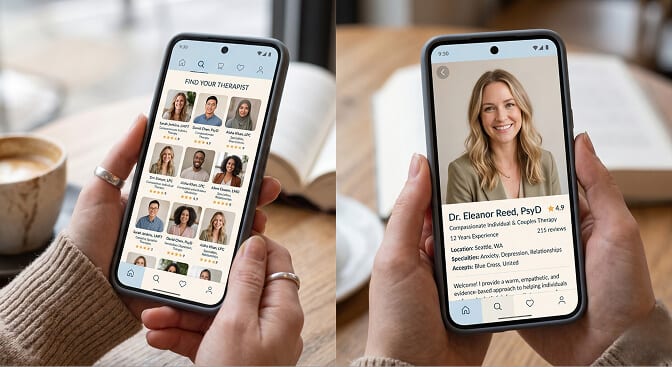
If you're listed on Psychology Today, GoodTherapy, TherapyDen, or any insurance panel directory, your headshot isn't just sitting on your website. It's sitting next to 20 or 50 or 100 other therapists. Side by side. In a grid.
Your potential client is scrolling through that grid the way someone scrolls through a restaurant menu. Fast. Instinctive. Emotional.
They're not analyzing your photo. They're feeling it. And they're making snap decisions:
Does this person look warm? Do they look like someone who'd understand my situation? Do they look like someone I could sit across from and say the hard things?
The therapists who understand this don't aim for "professional." They aim for approachable and real.
I've talked to dozens of therapists about their headshots while building Headshot Photo, and there's a pattern. The ones who get the most client inquiries aren't the ones with the fanciest photos. They're the ones whose photos feel like a person, not a portrait.

What Actually Makes a Therapist Headshot Work
Let me walk through what separates a headshot that converts from one that just exists.
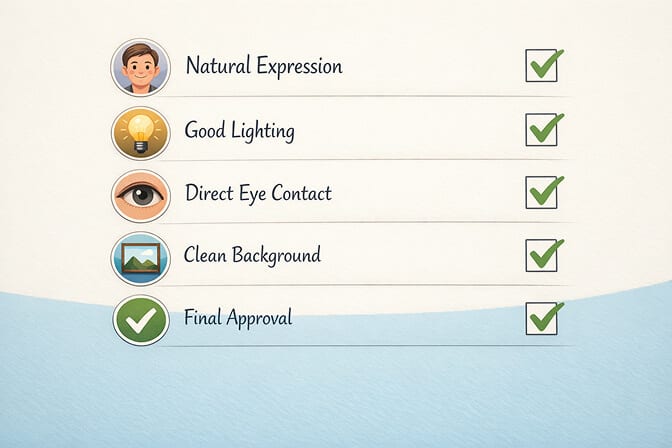
Expression is everything. A full, wide grin can actually feel performative in a therapy context. But a completely neutral face reads as cold. The sweet spot is what photographers call a "soft smile," where your mouth is relaxed but your eyes are warm. Think of the face you'd make when a client tells you something meaningful. That's the expression. If you want to go deeper on how your face communicates confidence and approachability on camera, our guide on how to look confident in photos breaks this down with psychology-backed techniques.
Wardrobe sets the emotional tone. Avoid the extremes. A full suit signals corporate authority, which creates distance. A hoodie signals "I'm not taking this seriously." The middle ground is what you'd actually wear on a day you're seeing clients. Soft, muted tones like olive, warm gray, cream, or dusty blue tend to photograph well and feel approachable. For a detailed breakdown of which colors work best on camera across skin tones, check out our guide on the best color to wear for a headshot.
Background tells a story you didn't know you were telling. A stark white background can feel clinical. A busy office background with books and credentials on the wall can feel like you're trying too hard. The best therapy headshot backgrounds are simple, warm, and slightly organic. Think soft natural light, a blurred plant, a neutral wall with texture. We have a full guide on headshot background colors if you want to see what works for different industries, including mental health.
Eye contact is non-negotiable. Look directly at the camera. Not past it. Not slightly to the side. In a therapy headshot, the viewer needs to feel like you're looking at them. This is the digital equivalent of the first moment a client walks in and you meet their eyes.
The Cost Problem (And Why It's Keeping Good Therapists Invisible)
Stay with me here, because this is where the math gets frustrating.
A professional headshot session typically runs between $200 and $500. In major cities, it can climb past $800 when you factor in retouching, studio rental, and multiple outfit changes. You can see the full breakdown across cities and options in our guide on affordable professional headshots.
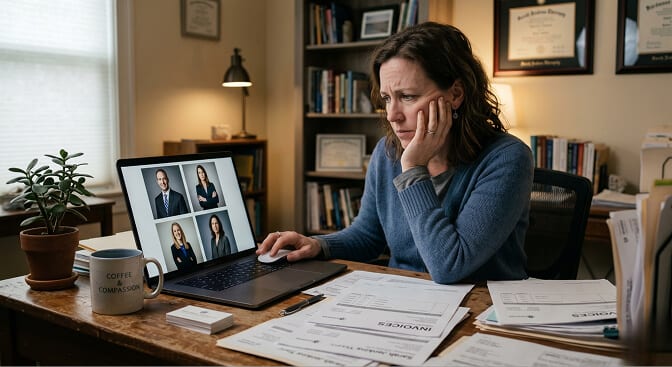
For therapists in private practice, that's already a stretch. You're paying for office rent, liability insurance, continuing education, EHR software, and the directory listings themselves. Adding $400 for a photo session feels... optional. So a lot of therapists skip it.
And then they wonder why their Psychology Today profile isn't getting clicks.
Here's the other side of the cost problem: even when therapists do invest in professional photography, the results aren't always right. I've heard this story more times than I can count: "I spent $350 on headshots and they're technically good, but they don't look like me. I look stiff. I look like a corporate employee, not a therapist."
That's not a photographer problem. It's a context problem. Most photographers optimize for "professional." Therapists need "professionally warm." Those are two very different things, and the gap between them is where a lot of money gets wasted.
But Then Something Clicked
This is where AI headshots enter the conversation, and I want to be straightforward about it because I know the topic is loaded in the mental health space.
Some therapists have philosophical objections to AI-generated photos. I get it. Authenticity matters in your field more than almost any other. If your headshot doesn't look like you, that's a problem. If a client walks into your office and feels like they're meeting a different person than the one in the photo, you've already damaged trust before the session starts.
But here's what's changed: the technology has gotten remarkably good at preserving what you actually look like.
Modern AI headshot tools don't create a fictional version of your face. They take your existing photos, your actual features, your real expressions, and generate professional-grade headshots with proper lighting, clean backgrounds, and natural retouching. The result looks like you walked into a studio and had a perfect session, except it took 1 hour and cost a fraction of the price. You can see real results on our before and after AI headshot transformations page.
At Headshot Photo, you upload a handful of casual selfies, pick a background and outfit style, and get back dozens of headshots in minutes. You choose the ones that feel most like you. No scheduling. No awkward posing. No $400 invoice.
For therapists who've been putting off getting a headshot because of the cost or the hassle, this removes the biggest barriers. And the therapists who've used it tell us the photos feel more natural than their studio shots, because they were working from photos where they were relaxed, not performing.
If you're tired of putting off your headshot and want something professional in under 1 hour, try Headshot Photo and see what your options look like.

Matching Your Photo to Your Practice
This is the nuance that most headshot guides completely miss.
Your headshot should match your therapeutic style.
If you specialize in trauma work, your photo should radiate calm and safety. Not overly cheerful. Not intense. Grounded.
If you work primarily with teens and young adults, a slightly more casual, less formal photo can help your target clients feel like you're someone who actually understands their world.
If you focus on executive coaching or high-functioning anxiety, a more polished and composed look communicates that you operate at their level.
If you work with couples, your expression should feel balanced and neutral. Not too warm toward one "side," not too detached. The photo should suggest steadiness.
There's no single "right" therapist headshot. There's the right headshot for your practice and your people.
Think about the client you most want to reach. Now ask: would this photo make them feel safe enough to pick up the phone?
That question is worth more than any list of wardrobe tips.

The Five-Minute Headshot Audit
If you already have a headshot, run it through this quick check:
Does it look like you on a normal day? Not you at your best. Not you at your worst. You. The person your clients would see when they walk through the door.
Is the lighting warm? Harsh overhead lighting or flash photography creates shadows that make people look tired or stern. Soft, directional light (think window light) makes faces feel open and inviting. If you want to understand the difference between good and bad lighting for headshots, our guide on headshot lighting setup explains it clearly.
Can you see your eyes clearly? If your glasses are creating glare, if your hair is covering part of your face, or if the image is too small to read your expression, that's a problem. Eyes are where trust lives.
Is the background helping or hurting? If someone's eyes go to the bookshelf behind you before they go to your face, the background is hurting. Keep it simple.
Would you feel comfortable showing this to a new client in person? If the answer is no, or even "maybe," it's time for a new one.
The Headshot You're Avoiding Is Costing You Clients
I want to end with something that might sting a little.
Every week you operate without a professional headshot, or with one that doesn't represent who you actually are, you're losing potential clients. Not because you're not qualified. Not because you're not a good therapist. But because someone scrolled past your profile in a directory and didn't feel that tiny spark of connection.
That person found another therapist. Maybe a great one. Maybe not. But they didn't find you.
And you didn't even know it happened.
Your headshot isn't vanity. It's accessibility. It's the bridge between "I need help" and "I think this person might understand."
If you've been putting it off, stop overthinking it. Get a photo that looks like you. One where your eyes are warm and your expression is the one your clients already know.
It doesn't have to be expensive. It doesn't have to take all day. It just has to be real.
If you want a professional therapist headshot without the studio hassle or the $400 price tag, try Headshot Photo free and see what your AI-generated options look like. Ten minutes. Real results.
Frequently Asked Questions
1. What is a therapist headshot and why does it matter?
A therapist headshot is a professional portrait used on therapy directories, websites, and social media profiles to represent you to potential clients. It matters because clients form trust-based judgments within milliseconds of seeing your photo, often before reading your bio or credentials. A warm, professional headshot directly increases the likelihood that a prospective client will reach out.
2. How do AI therapist headshots compare to traditional photography?
AI headshots use your existing selfies to generate studio-quality portraits with professional lighting, backgrounds, and natural retouching, typically in under 15 minutes for $29 to $50. Traditional sessions run $200 to $800 and require scheduling, travel, and posing. For most digital uses like Psychology Today profiles, websites, and LinkedIn, AI headshots produce results that are visually comparable and often feel more natural because they're based on relaxed, candid source photos.
3. How do I take a good headshot for my therapy practice?
Focus on four things: soft, warm lighting (natural window light is ideal), direct eye contact with the camera, a gentle and genuine expression (not a big grin, not neutral), and a simple, uncluttered background. Wear what you'd typically wear to see clients. If you're doing it yourself, position yourself facing a large window during morning or late afternoon for the most flattering light.
4. Is an AI-generated headshot professional enough for Psychology Today?
Yes. Modern AI headshot generators produce images at professional resolution with studio-quality lighting and clean backgrounds that meet the standards of therapy directories like Psychology Today, GoodTherapy, and TherapyDen. The key is choosing a tool that preserves your actual facial features rather than generating a heavily stylized version. The photo should look like you, just with better lighting and a cleaner setting.
5. How much do therapist headshots cost in 2026?
Traditional therapist headshot sessions range from $150 to $500 depending on location, photographer experience, and the number of retouched images included. In major metro areas, costs can exceed $800 with retouching and studio fees. AI-powered alternatives like Headshot Photo start at $29 and include dozens of headshot variations with multiple backgrounds and styles, making them the most budget-friendly option for therapists building or updating their online presence.