The Best Color to Wear for a Headshot (And the $400 Mistake That Taught Me Why It Matters)
How one wrong shirt wrecked my first professional headshot and what color science actually says about looking your best on camera
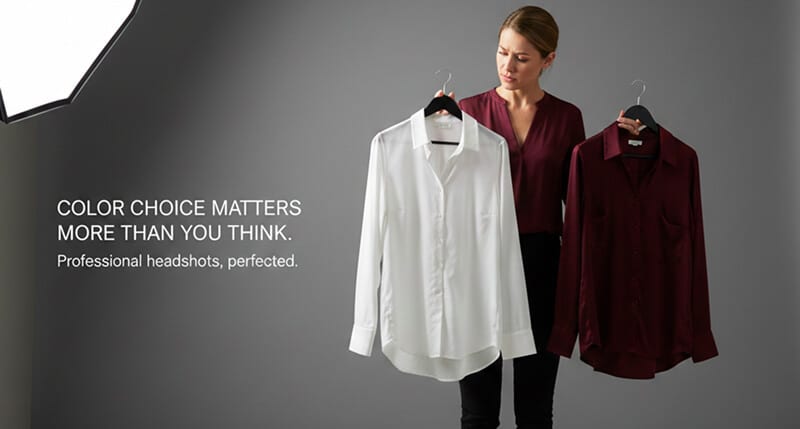
I showed up to my first professional headshot session in a light gray shirt.
It seemed safe. Neutral. Professional.
The photographer said nothing. She just started shooting.
When I got the photos back three days later, I looked like a floating head. The gray shirt blended into the gray backdrop, my face looked washed out, and my skin had this weird greenish tint I'd never noticed in the mirror.
I paid $400 for photos I never used.
Here's the part nobody told me: what looks great in your bathroom mirror can look terrible on camera. Cameras don't see color the way your eyes do. And most "what to wear for a headshot" advice completely ignores this.
So I spent the next two years learning why. And now I'm going to save you from making the same expensive mistake.
Why Color Matters More Than You Think (The Science Nobody Explains)
Let's start with a number that should get your attention.
Research shows that 62% to 90% of first impressions are based on color alone. Not your smile. Not your posture. Color.
In a headshot, that impression happens in about 90 seconds. Sometimes less.
But here's where it gets interesting. When someone looks at your LinkedIn profile or company bio, they're not consciously thinking "nice blue shirt." They're forming instant judgments about whether you seem trustworthy, competent, and approachable.
Color drives those judgments at a subconscious level.
The real question isn't "what color looks professional?" It's "what color makes me look like someone worth trusting?"
Those are two very different questions. And the second one depends entirely on your unique combination of skin tone, the background you're shooting against, and the message you want to send.
The Three Factors That Actually Determine Your Best Headshot Color
Forget the generic "wear navy blue" advice. That works for some people and looks terrible on others.
Instead, run through these three questions:
1. What's Your Skin Undertone?
This isn't the same as being "fair" or "dark." Undertone is the subtle hue beneath your skin's surface.
Here's the quick test: look at the veins on your inner wrist.
Bluish or purple veins? You have cool undertones.
Greenish veins? You have warm undertones.
Can't tell / mix of both? You're neutral.
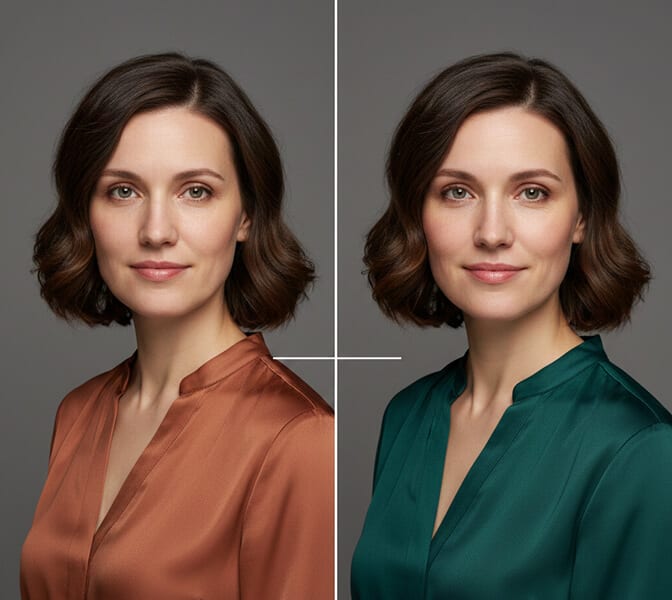
Cool undertones look best in jewel tones: sapphire blue, emerald green, amethyst purple, and deep berry shades.
Warm undertones shine in earthy colors: olive green, terracotta, burnt orange, rich browns, and golden yellows.
Neutral undertones have the most flexibility. Navy, dusty rose, teal, and soft gray all work well.
2. What's Your Background Going to Be?
This is where my gray shirt disaster happened.
The rule is simple: you need contrast between your clothing and your background.
- Light background? Wear darker or saturated colors.
- Dark background? Lighter or brighter colors pop.
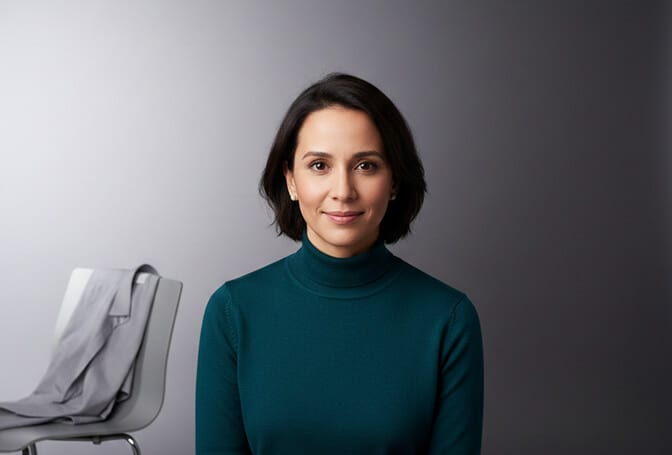
- Gray background? Avoid gray clothing entirely.
If you don't know what background you'll have, mid-tone colors like burgundy, forest green, or deep teal are your safest bet. They work against almost anything.
3. What Message Does Your Industry Expect?
A startup founder and a corporate attorney probably shouldn't wear the same thing.
Finance, law, consulting: Navy, charcoal, black. Clean and authoritative. Skip anything too bright.
Tech, creative, startups: More freedom here. Teal, burgundy, or even a well-chosen pattern can signal you're not just another suit.
Real estate, sales, coaching: Approachable warmth matters. Blues and greens build trust. Avoid anything too severe.
Healthcare: Soft, calming colors. Light blues, greens, and neutrals communicate care without stuffiness.
The Colors That Almost Always Work (And Why)
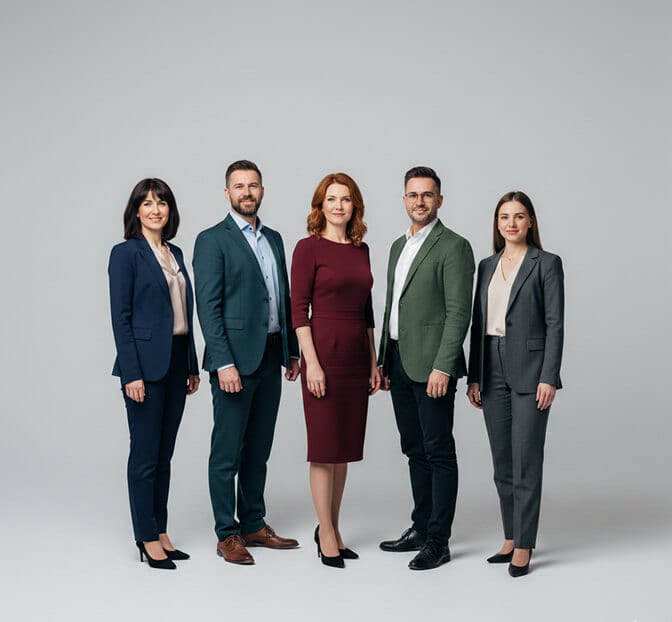
If you're short on time and need a reliable answer, here are the colors that photograph well on most people, most of the time:
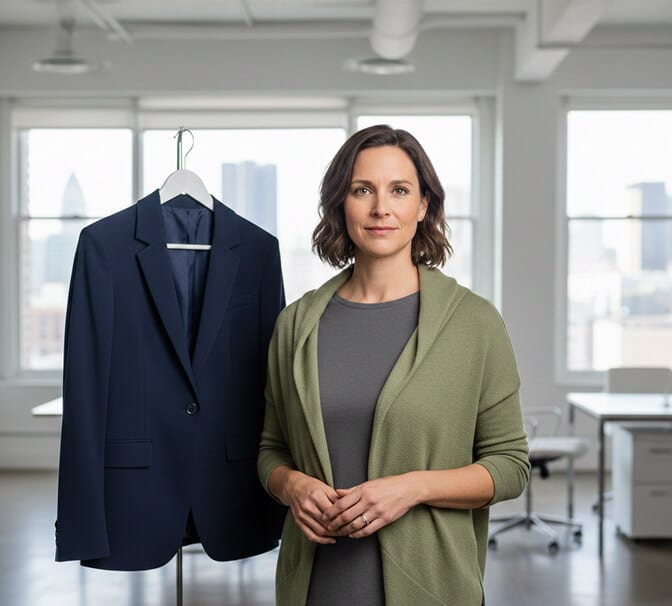
Navy blue is the workhorse of professional headshots. It conveys trust and competence without being boring or severe. Studies consistently show blue is the most universally preferred color across cultures.
Deep teal or petrol blue offers the same trust signals as navy but feels slightly more modern and distinctive.
Burgundy or wine adds warmth and approachability while still reading as professional. It's unexpected enough to be memorable but not so bold it distracts.
Forest green or hunter green signals growth and reliability. Particularly strong for anyone in wellness, sustainability, or education.
Charcoal gray works when navy feels too expected. Just make sure your background isn't gray.
The thread connecting all these colors: they're saturated mid-tones. Not too light, not too dark, not washed out. They create clear contrast with most backgrounds and photograph consistently well across different lighting setups.
Colors to Avoid (Unless You Know What You're Doing)
Some colors are just harder to pull off on camera.
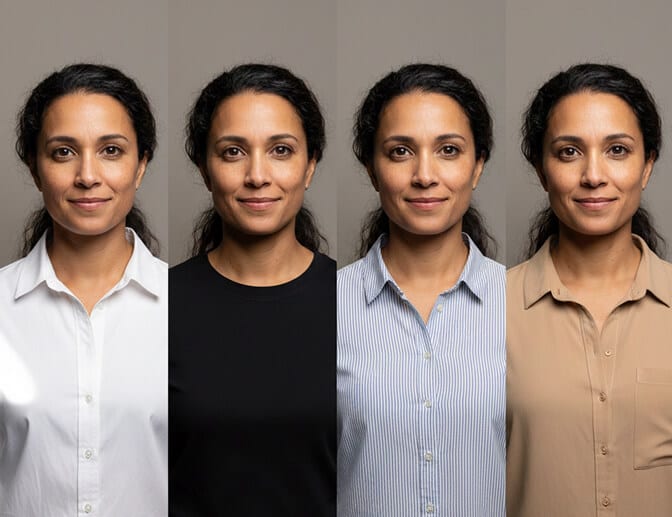
Pure white reflects too much light. It can blow out in photos and draw attention away from your face. If you love white, try cream or off-white instead.
Pure black absorbs light and can look like a void, especially against darker backgrounds. If black is your go-to, pair it with a lighter layer underneath or shoot against a light background.
Neon or highlighter colors scream for attention in all the wrong ways. Your headshot should highlight your face, not your shirt.
Tight patterns, stripes, or small prints can create a visual buzzing effect called moiré. On camera, it looks like your shirt is vibrating. Solid colors are almost always safer.
Colors too close to your skin tone flatten dimension and make you look washed out. If you have fair skin, avoid pale pink. If you have darker skin, avoid very dark brown.
The One Thing AI Headshots Change About This Entire Conversation
Here's what frustrated me most about my gray shirt disaster.
I didn't know it was wrong until after I'd paid, shown up, posed, waited three days, and opened those photos.
By then it was too late.
This is where AI headshots flip the script entirely.
With HeadshotPhoto.io, you can upload a few casual photos and generate headshots in multiple outfit styles and colors. In ten minutes, you can see yourself in navy, burgundy, teal, and charcoal and actually compare them side by side.
No guessing. No gambling $400 on the wrong shirt.
You get to test before you commit. And if teal looks amazing but burgundy washes you out? You know before it matters.
Learn more about how our AI headshot generator works and see examples of different color options in action.
A Quick Framework: The 60-Second Color Decision
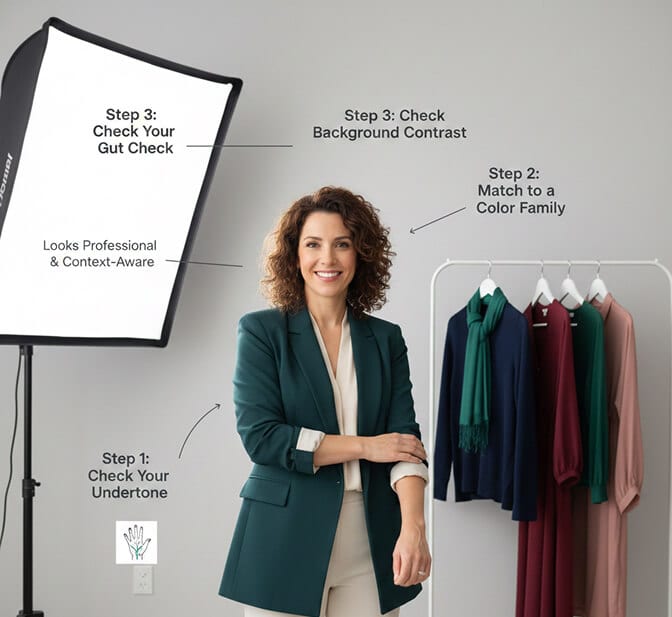
Don't overthink this. Run through these steps:
Step 1: Check your undertone (vein test). Cool, warm, or neutral?
Step 2: Match to a color family.
- Cool: Navy, teal, emerald, burgundy, purple
- Warm: Forest green, terracotta, golden brown, rust
- Neutral: Any of the above, plus dusty rose and soft gray
Step 3: Consider your background. Make sure you'll have contrast.
Step 4: Gut check against your industry norms. Does this feel appropriate for where you work?
If you can answer yes to all four, you've got your color.
What About Hair Color and Eye Color?
Your hair frames your face. Your clothing shouldn't fight it.
Blonde or light hair: Avoid very pale colors that blend into your hair. Darker mid-tones create better definition.
Dark hair: You can wear almost anything, but all-black sometimes creates a "floating head" effect against dark backgrounds.
Red hair: Earth tones and greens complement beautifully. Be cautious with orange or salmon, which can clash.
As for eye color: this is more subtle, but wearing a color that echoes your eyes can create a cohesive, striking effect. Blue eyes with a slate blue shirt. Green eyes with olive or forest tones. Brown eyes have the most flexibility since they pair well with nearly everything.
The Real Goal: Looking Like Yourself, But Polished
Here's what I wish someone had told me before that first headshot session.
The goal isn't to wear whatever color "looks professional." The goal is to wear a color that makes you look like yourself on a really good day.
A headshot isn't a costume. It's a first impression. And first impressions work best when they feel authentic.
If you've never worn burgundy in your life, don't start now. If navy makes you feel confident and put-together, lean into it.
The best color to wear for your headshot is the one that makes you look in the mirror and think: yeah, that's me.
If you're tired of second-guessing your outfit choices and want to see exactly how different colors look on you before committing, try HeadshotPhoto.io. Generate multiple headshot options in minutes, compare colors side by side, and actually know which one works before you use it.
No studio. No scheduling. No $400 gamble on the wrong shirt.
Frequently Asked Questions
What is the best color to wear for a professional headshot?
The best color for most people is a saturated mid-tone that contrasts with your background and complements your skin undertone. Navy blue, deep teal, burgundy, and forest green work well across skin tones and industries. The key is avoiding colors too close to your complexion or background, which can wash you out or make you blend in.
Does what I wear in my headshot really affect how people perceive me?
Yes, significantly. Research indicates that 62-90% of first impressions are based on visual cues, and color plays a major role in that judgment. The colors you wear in a headshot can subconsciously signal trustworthiness, competence, and approachability before anyone reads your bio or resume.
How do I know if a color will look good in my headshot before the photoshoot?
The safest approach is testing beforehand. You can take selfies in natural light wearing different colored shirts and compare them. Better yet, AI headshot generators like HeadshotPhoto.io let you see yourself in multiple outfit colors and styles so you can compare results before using the final image professionally.
Is navy blue a good color for LinkedIn headshots?
Navy blue is one of the most reliable colors for LinkedIn and corporate headshots. It's universally associated with trust, competence, and professionalism. It works across most skin tones and creates good contrast against common headshot backgrounds. If you're unsure what to wear, navy is rarely a wrong choice.
Should I wear black for a professional headshot?
Black can work, but it requires more care. Pure black absorbs light and can look flat or create a "floating head" effect against dark backgrounds. If you want to wear black, pair it with a lighter undershirt or choose a background that provides contrast. Charcoal or very dark navy often photographs better while achieving a similar look.