
How to Build a Cohesive Personal Brand with AI Headshots Across Every Platform in 2026
You're not just managing a profile photo. You're managing a visual identity that shows up in a dozen places at once. Here's how to make all of them work together.
I got a message from a founder last year that I still think about.
She'd spent six months building her personal brand seriously. Writing on LinkedIn three times a week. Speaking at two industry events. Pitching herself for a podcast that finally said yes. The podcast went live, and she sent me the link, excited.
I clicked through to the episode page. Nice show. Good production. Her guest bio was strong.
And the photo they used was... not quite her. It was a three-year-old headshot from a previous job, pulled from an old website she thought she'd taken down. Different hair. Different energy. Different professional chapter entirely.
The bio described who she was now. The photo described who she used to be.
She hadn't noticed because she'd been so focused on the content that she'd stopped thinking about the image. And because her headshots were inconsistent across platforms, it was easy for someone to grab the wrong one.
That's the personal brand photo problem nobody talks about. It's not just about having a good headshot. It's about having the right headshot, consistently, everywhere you appear.
The Visual Identity Problem Most Professionals Don't See
Here's the thing about personal brand building in 2026.
Your face appears in more places than you realize. LinkedIn profile. Company website team page. Email signature. Slack and Teams profile. Zoom display picture. Speaker bio for any event you participate in. Guest posts and bylines. Podcast appearances. Press features. Conference programs. Your own website About page.
Each of those is a touchpoint where a stranger might encounter you for the first time. And each of them may currently have a different photo.
Some taken years apart. Some at different quality levels. Some that don't even look like the same person on a different day. Most people have never audited this. They've just let it accumulate.
A fragmented visual identity isn't just aesthetically inconsistent. It creates subconscious friction that makes you harder to trust and remember. Consistency, on the other hand, compounds. Every time someone sees the same face at the same quality level, their recognition and trust deepen.
Personal branding statistics consistently show that a coherent personal brand increases professional opportunities significantly and that employers regularly make decisions based on what they find in a person's online presence. Your headshot is the visual anchor of all of it.
The question is how to make it consistent without spending half your career in photoshoots.
Why AI Headshots Are Particularly Good for Personal Brand Consistency
Traditional photography creates a beautiful problem.
You book a session. You get 30 to 60 minutes. You walk away with, if you're lucky, three to five images you actually want to use. They're all from the same session so they share the same lighting and quality. But they're limited in variety, and they're often not quite right for every platform.
LinkedIn wants a tight, clean headshot. Your website About page might want a slightly wider crop with some environment. Your speaker bio might want a warmer expression. Your company's team page has a specific background style that differs from your personal brand.
With three to five photos from one session, you're either using the same image everywhere (too rigid) or mixing photos from different sources (too inconsistent).
AI headshot generation changes this math entirely.
One set of well-prepared input photos, processed through a quality AI model, can produce dozens of outputs. Different backgrounds, different crops, different lighting styles, all rendering the same face at the same quality level. You get variety without inconsistency. You get a library, not just a photo.
That library is what personal brand consistency actually requires.
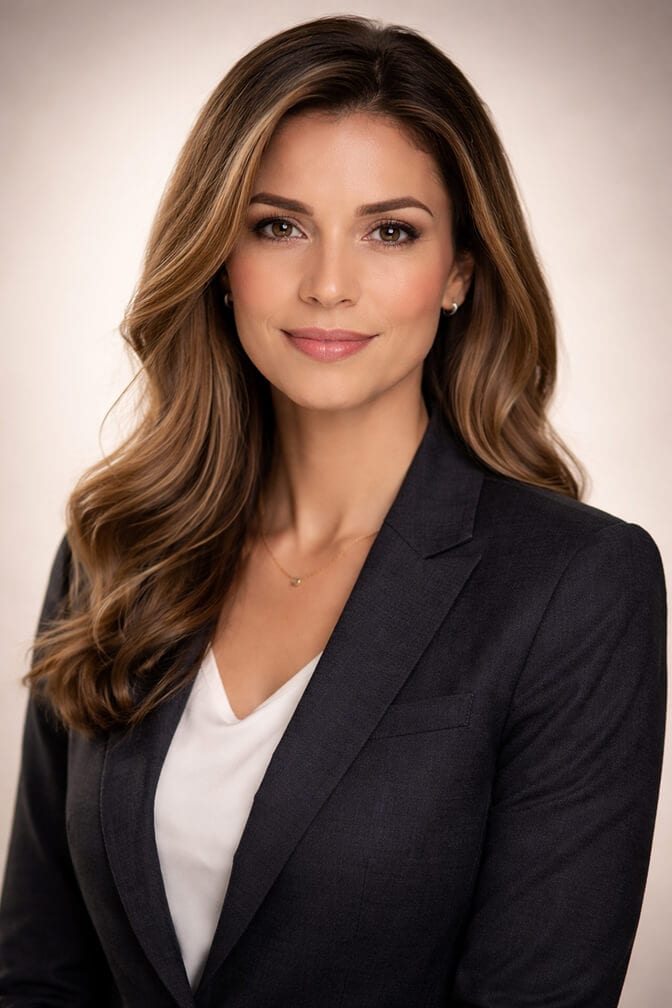
Building Your Personal Brand Headshot Library: The Practical Framework
This is where most guides stop at the concept and don't give you the actual system. Here's the system.
Step 1: Audit where your face currently appears.
Before you generate anything new, spend twenty minutes doing a complete inventory. Search your name. Check every platform where you have a profile. Check speaker bios from past events. Check bylines. Check press features. List every place your photo appears and note which image is being used.
You'll likely find three to five different photos spread across different periods of your career. That's your baseline problem to solve. If most of them look outdated, run our outdated headshot upgrade checklist before moving on.
Step 2: Define your brand signal.
Before generating headshots, decide what your primary headshot needs to communicate. This isn't about looking professional in a generic sense. It's about the specific signal your audience needs to receive before they trust you enough to act.
Are you building an authority brand? (Executives, consultants, senior professionals.) Your primary headshot should project composure and weight. Confident neutral expression, darker background, structured wardrobe.
Are you building a warmth brand? (Coaches, educators, client-facing service professionals.) Your primary headshot should project approachability. Genuine smile, softer tones, open body language.
Are you building a creative brand? (Designers, marketers, creative directors.) Your primary headshot should project taste and personality. More visual latitude, bolder colors, expressive expression.
Know your signal before you choose your headshot. The wrong signal, executed at high quality, is still the wrong photo.
Step 3: Generate a library with distinct functions.
Think about your four or five most important touchpoints and what each one needs:
Your primary LinkedIn headshot is the workhorse. Tight crop. Face filling 60% of the frame. Clean background. Professional expression. This is the one that does the most daily work.
Your website About page photo benefits from slightly more context. A wider crop showing shoulders and a bit of the upper body. More room to breathe. This photo can have a warmer or slightly more relaxed expression than your primary LinkedIn shot.
Your speaker bio and press photo is often the one that gets pulled by third parties without your input. Make it obvious. Strong contrast. Simple background. Immediately recognizable at thumbnail size. This is the one you want everyone to use so they don't hunt for an old one.
Your internal directory photo (Slack, Teams, Zoom) needs to hold up at very small sizes. Clean, high contrast, immediately readable as your face.
When you generate your headshot library, think about which output best serves each of these four functions. They can all come from the same AI session. They should all be recognizably the same person.
Step 4: Update all platforms at the same time.
This is the step most people skip, and it's the most important operational detail.
Don't update LinkedIn today and your website next month. Do it all at once. Schedule two hours, go through every platform on your audit list, and replace every photo simultaneously.
The reason is simple: your visual identity shift only works if it happens everywhere at once. If you update LinkedIn but leave the old photo on your company website, the next person who googles you will still encounter the inconsistency.
When you do the full update in one session, your entire online presence shifts to your current visual identity at the same moment. That coherence is noticeable, even if most people can't articulate why your profile feels more trustworthy than it did before.
If you're ready to build a consistent headshot library for your personal brand, get your professional AI headshots with Headshot Photo and generate a full set from a single upload session.
The Part Nobody Talks About: Your Photo and Your Voice Need to Match
Stay with me here, because this is where personal brand building gets genuinely nuanced.
A cohesive personal brand isn't just about having the same photo everywhere. It's about having a photo that's consistent with every other signal you're putting out.
If your LinkedIn voice is direct and confident, and your content is analytical and takes clear positions, and then your headshot is soft, tentative, and slightly apologetic in expression, that's a mismatch. People sense it without being able to name it. Your image and your words are telling slightly different stories about who you are.
The reverse is also true. If your content is warm, personal, and vulnerable, and your headshot looks like an austere executive portrait, the signals don't add up. People experience a version of you in your writing that they can't quite reconcile with the face staring at them from your profile.
The alignment test: Read your LinkedIn bio or About page out loud. Then look at your headshot. Does the expression in the photo match the voice in the text? Does the overall energy feel like the same person?
If the answer is yes, you have brand coherence. If the answer is no, one of them needs to change. Usually the photo is easier to update than the voice.
What "Consistent" Actually Means (And What It Doesn't)
Here's where it's worth being specific, because "consistent" can be misread as "identical."
Consistent does not mean using the exact same photo everywhere. Different platforms have legitimately different needs. A tiny circle on Slack and a full-width hero image on your website cannot use the same crop. That's not inconsistency. That's appropriate adaptation.
Consistent means the same person, at the same quality level, sending the same primary signal. When someone moves from your LinkedIn to your website to your podcast guest bio, they should see the same face, at the same professional standard, communicating the same core message about who you are. The specific crop, background, or even expression may vary slightly. The underlying visual identity stays the same.
Think of it like a font system. A brand doesn't use one font size for everything. But all the fonts share the same family. The headshots in your personal brand library are the same: a family of images rather than a single fixed image.

For Teams: The Organizational Version of This Problem
Everything above applies to individual professionals. But the same problem exists at the organizational level, often much more visibly.
A company's team or leadership page is a direct window into whether the organization is coherent or chaotic. When every person's headshot is from a different year, a different photographer, a different lighting setup, and a different background, the cumulative message is that nobody is managing the visual brand intentionally. That matters to clients, partners, investors, and recruits who land on that page.
The fix is the same principle applied at scale: one session (or in the case of AI, one consistent input and output standard) applied to every person. The result is a team page that feels unified and deliberate rather than assembled from whatever happened to exist.
For companies building this kind of visual coherence across their team, the company headshots page at Headshot Photo shows how to approach this practically across teams of any size.
The Takeaway That Actually Matters
That founder? She fixed it within a week. New headshot session, consistent across everything. Speaker bio, LinkedIn, website, press page, all updated with the same image from the same quality standard.
The next podcast appearance featured her current photo. She sent me that link too.
The difference was visible immediately. Not because the new photo was dramatically better than the old one, but because it was the same as every other place she appeared online. The friction was gone. The identity was coherent.
She told me later that it was a small thing that felt much bigger than it should have. I think that's because visual identity consistency does something subtle and significant: it lets people trust you a little faster, without knowing exactly why.
That's the whole point of personal branding done well.
Explore what a consistent professional headshot library looks like by browsing AI headshot examples across multiple styles from Headshot Photo before starting your own session.
Frequently Asked Questions
1. What is personal branding with AI headshots?
Personal branding with AI headshots means using AI-generated professional photos to create a consistent, cohesive visual identity across all the platforms where you appear professionally. Instead of using different photos from different sessions at different quality levels, AI headshot tools let you generate a full library of images from one input session, all at the same quality standard, all recognizably the same person adapted for different platform needs.
2. How many AI headshots do I need for a complete personal brand library?
Most professionals need four to six distinct headshots to cover their key touchpoints: a tight primary headshot for LinkedIn and social profiles, a slightly wider shot for website About pages, a high-contrast press and speaker bio photo, a small-display-friendly version for Slack and Zoom, and one or two variations with different expressions or backgrounds for different brand contexts. AI headshot tools make building this library practical since all images come from the same session and maintain the same quality standard.
3. How do I make sure my AI headshots are consistent across different platforms?
Generate all your headshots from the same input session using the same AI tool. This ensures the lighting style, skin rendering, and overall quality are consistent across every output. Then select specific photos from that batch for each platform, choosing the crop and background most appropriate for each context. Update all platforms at the same time rather than one by one, so your visual identity shifts coherently rather than piecemeal.
4. Is building a personal brand with AI headshots worth the investment in 2026?
Yes. Personal branding significantly increases professional opportunities, with strong personal brands linked to higher earning potential, faster career advancement, and more inbound professional opportunities. Your headshot is the visual anchor of your entire personal brand and the first element most people see before reading anything about you. AI headshot tools make it faster and more affordable than ever to build and maintain a consistent, high-quality visual identity.
5. How does an AI headshot library compare to a traditional photography session for personal branding?
A traditional photography session typically produces 3 to 5 usable images in one sitting, which limits variety for multi-platform use. An AI headshot session generates dozens of outputs from the same input, all at the same quality level, giving you genuine variety for different platform contexts while maintaining visual consistency. Traditional photography still has advantages for very high-stakes contexts or highly customized needs, but for building a practical, consistent personal brand headshot library, AI tools offer more flexibility at a fraction of the cost.