How to Nail the 'Confident Neutral' Expression in AI Headshots (The 2026 Look Everyone's Trying)
Why the slight smile is dying, the frozen "professional face" is dead, and what you should be aiming for instead.
I generated 47 versions of my own headshot last week trying to get one expression right.
Not the smile. Not the serious look. Something in between. The thing photographers in 2026 are calling the Confident Neutral, and the thing my AI generator kept getting almost right but never quite there.
Here's the weird part. The expression itself takes a real photographer about 90 seconds to coach in person. With AI, it's a prompt engineering problem. And almost nobody is solving it correctly.
Let me show you what I figured out.
Wait, what is the Confident Neutral?
The 2026 trend in professional headshots is moving away from two things. The forced grin. And the dead eyed "I am a serious adult" stare.
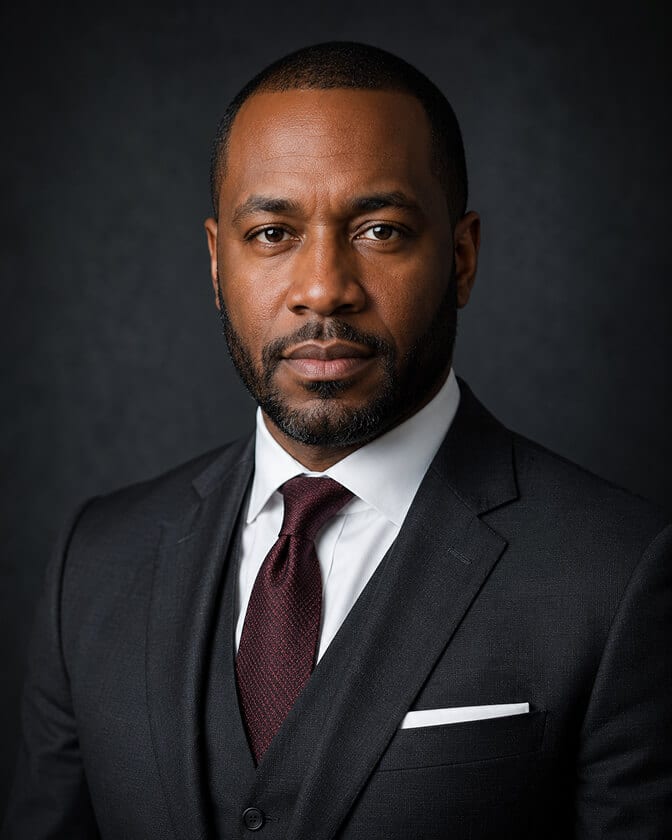
According to Boston Creative Headshots, the 2026 trend is "The Confident Neutral", an expression that signals you're focused, approachable, and actually present in the room. It's about a relaxed jaw and engaged eyes, the kind of subtle micro expressions AI still can't quite get right.
That last bit is important. AI still can't quite get right.
So if you're using an AI headshot generator, you're already starting on hard mode. The good news? Once you understand what the expression actually is, you can prompt your way to it. Or pick the right generator. Or fix the ones you've already paid for.
Stay with me. This gets practical fast.
The part nobody tells you about facial expressions in photos
Most people think of expression as binary. Smiling or not smiling.
That's not how the human face works. There are roughly 43 muscles in your face. The micro adjustments between them are what make a photo feel real or fake, alive or dead.
A genuine confident neutral involves three things happening at once:
The eyes engage. Slightly narrowed lower eyelids. The kind of look you have when you're listening to someone interesting, not staring at a camera.
The jaw relaxes. Tension in the masseter muscle (the one near the back of your jaw) reads as anxious. Modern photographers literally tell clients "let your jaw drop slightly."
The mouth does almost nothing. Maybe a 2 millimeter lift at the corners. Not a smile. Just a face that hasn't given up on the day.
The Confident Neutral isn't a pose. It's a state of mind that happens to show up in your face.
Here's where it gets messy. AI image models are trained on millions of stock photos where people are either grinning like idiots or doing their best LinkedIn glower. The middle ground is underrepresented in the training data. Which is why your AI headshots keep landing in uncanny valley territory.
Why this expression is exploding in 2026
Three things changed at once.
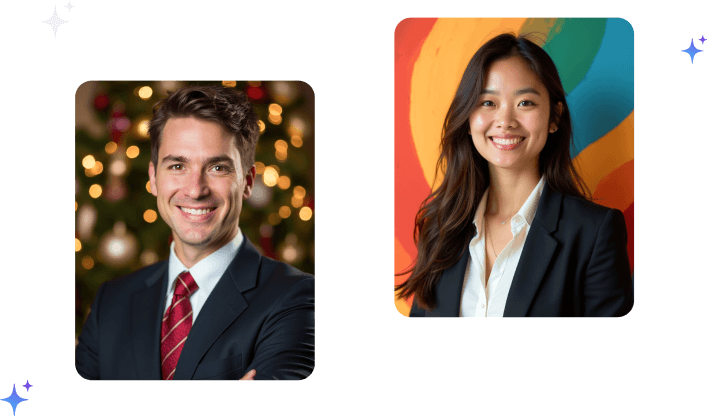
First, the visual culture shifted. The number one headshot trend right now is a move away from stiff, overly posed portraits because clients want to look professional but also approachable and real. Toothy LinkedIn smiles started looking dated. Suddenly everyone realized they look like aspiring real estate agents from 2014.
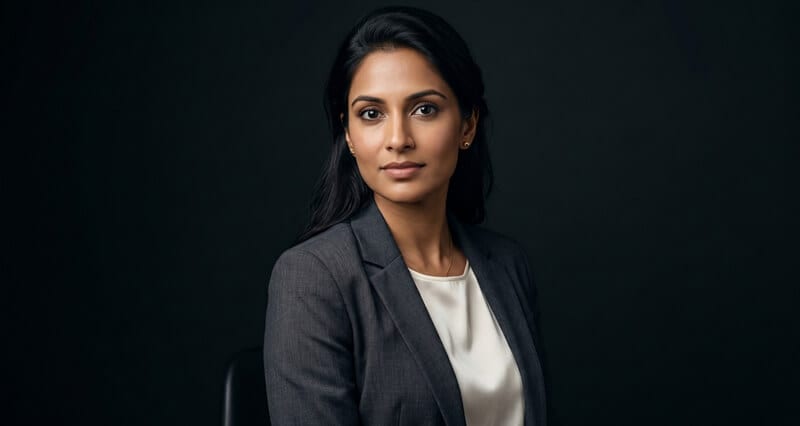
Second, dark backgrounds came back. Headshot Trends for 2026 emphasizes authentic in-camera expressions, darker neutral backgrounds with selective white making a comeback, brand-matched composite options, restrained retouching, and efficient delivery. And here's the thing nobody tells you: dark backgrounds make smiles look weird. They visually demand a more controlled expression. The Confident Neutral is the only thing that holds up against a charcoal void.
Third, AI made everything else easy. Once anyone could generate a headshot in 10 minutes, the cheap differentiator became the photo where the human inside actually feels human. Which, conveniently, is the hardest thing for AI to fake.
Here's what most AI generators get wrong
I've tested probably 14 different AI headshot tools this year. Most of them have the same failure pattern.
Failure mode 1: The forced micro smile. The model interprets "confident" as "must show teeth or imply teeth." You end up with a weird half grimace that looks like you just smelled something off.
Failure mode 2: The dead stare. Strip the smile entirely and you get the LinkedIn version of a hostage video. Eyes flat. Jaw locked. Soulless.
Failure mode 3: The doll face. Over retouching kills micro expression. Pores gone. Skin texture gone. The little asymmetries that make faces real are airbrushed into a Pixar character.
The fix is in your prompt and your reference photos. Not in the generator picking up on vibes.
The prompt formula that actually works
After running the test 47 times, here's the structure that gets closest to a real Confident Neutral:
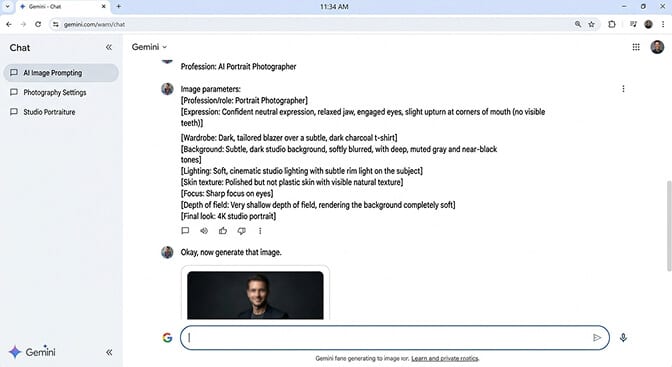
The key phrases that move the needle:
- "Relaxed jaw" beats "confident" every time
- "Engaged eyes" prevents dead stare
- "Slight upturn at corners of mouth, no visible teeth" is the magic line
- "Polished but not plastic" prevents over retouching
- "Visible natural texture" keeps pores and asymmetry
You'll notice this looks similar to the kind of prompt structure used across headshot lighting setups where the goal is to mimic real studio direction. That's not an accident. The best AI prompts are basically photographer's notes turned into text.

What to do with the photos you upload
Here's something most blogs about AI headshots skip. Your input photos shape the output expression more than your prompt does.
If every photo you upload shows you grinning at a wedding, the model learns this person grins. Confident Neutral becomes an uphill battle the AI loses 4 times out of 5.
If every photo shows you looking dead serious, the AI learns this person broods. You'll get prison mugshot energy in your "professional" output.
The fix is to upload a mix. Maybe 6 to 10 photos showing genuine expressions across a range. A few where you're listening to someone (not posing). A couple where you're mid laugh but not at the peak. One or two where you're just... existing. Not performing.
Your AI headshot is downstream of your reference photos. Garbage expression in, garbage expression out.
If you want a deep dive on exactly how many photos you need and what kinds, I wrote about it at length in this guide on photo selection for AI training.
The wardrobe and background combo that locks it in
Expression doesn't exist in isolation. The 2026 Confident Neutral lives in a specific visual ecosystem.
Backgrounds: Dark charcoal, near black, or warm off white. Dark neutral backgrounds (navy, charcoal, near-black) are the fastest growing background trend in corporate photography. The reason is simple. Dark backgrounds simplify the frame and force attention onto the eyes. Which is exactly where you want it for this expression.
Wardrobe: Solid colors. Mid tones. Mid-tone colours like blues, greens and jewel tones, rich neutrals such as navy, charcoal or deep burgundy. Avoid pure black (it loses detail). Avoid pure white (it overexposes). Avoid patterns (they fight the face).
Lighting: Soft key light from front and slightly above. Subtle fill on the shadow side. A gentle rim light to separate you from a dark background. This is the lighting setup professional studios have used for 30 years. AI generators that nail it are basically replicating Mark Seliger's approach without telling you.
The mid article gut check
Real talk. If you've already paid for AI headshots and the expression looks off, you don't need to start over.
You need different reference inputs and a sharper prompt.
If you're tired of paying photographers $500 for two hours of awkwardness or burning through credits on AI tools that give you doll face, you can try HeadshotPhoto.io and run a session in about 10 minutes. Upload, prompt, get something usable. Repeat until you get the expression you want.
That's the entire pitch. No drama.
What separates a good Confident Neutral from a great one
This is the part that took me longest to figure out.
The difference between a 7 out of 10 Confident Neutral and a 9 out of 10 isn't in the prompt. It's in eye direction.
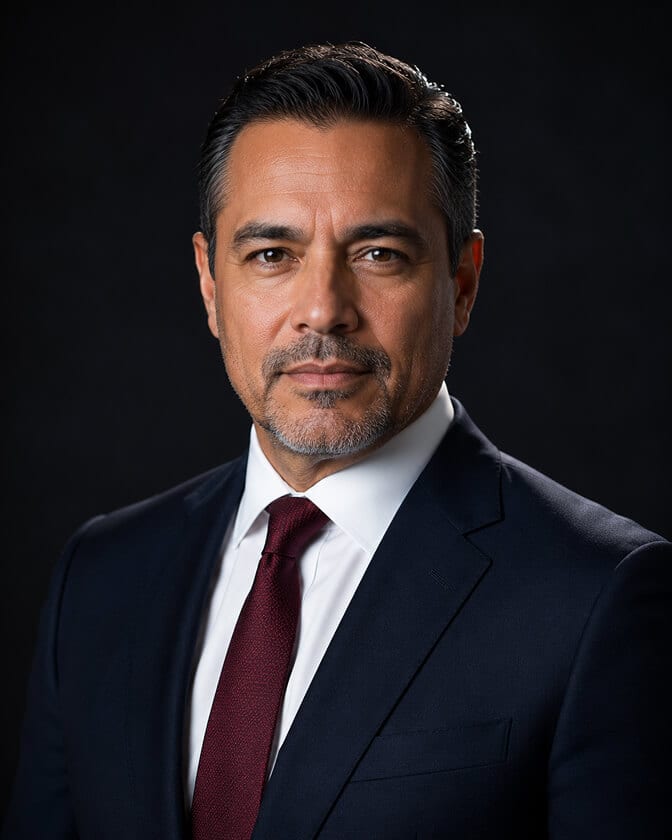
A great Confident Neutral has the subject looking just slightly past the camera. Not at the lens. Not over your shoulder. Just enough off axis to suggest they're looking at someone they're listening to.
This is a trick old school portrait photographers used because it triggers a primal "this person is engaged with me" response in the viewer. Direct camera stare reads as confrontational. Off camera stare reads as distracted. The 5 to 10 degree off axis stare reads as present and attentive.
In AI prompts, you can specify this with phrases like "looking just past camera, eyes engaged" or "subtle off axis gaze, looking at imaginary person 6 inches left of lens." Most generators will pick this up on the second or third generation.
Why this expression matters more for some professions than others
Not every job benefits equally from the Confident Neutral.
For sales people, customer success folks, and client facing roles, you might still want to bias slightly warmer. A genuine slight smile beats a Confident Neutral when your job is to make someone feel comfortable buying something.
For creatives, founders, and tech leaders, the Confident Neutral is the dominant aesthetic right now. Look at Y Combinator's batch photos from the last year. Look at the founding team pages of every YC company. Confident Neutral everywhere.
For healthcare? Mixed. Pediatricians and family doctors usually want a warmer expression. Surgeons and specialists can lean into the controlled look. Context matters more than trends.
A few honest warnings before you generate
The Confident Neutral can go wrong. Here's how.
If your eyes don't engage, you don't have a Confident Neutral. You have a passport photo. The single biggest mistake people make is dropping the smile without doing anything to replace it. The expression is active. Engagement has to come from somewhere.
If your jaw is too relaxed, you look stoned. There's a sweet spot. Fully clenched reads as tense. Fully dropped reads as out of it. Aim for "just heard a neutral fact and am processing it."
If your generator can't produce real skin texture, the expression won't matter. Plastic skin overrides everything else. The push to overdo the editing takes away from the authenticity of an updated headshot. The goal is "polished, not plastic". If your AI tool keeps producing airbrushed dolls, the model itself isn't trained for what you want. See our human looking AI headshots breakdown for more on this.
The end of article pitch
Look. The Confident Neutral is the headshot expression of 2026 because the world has finally gotten tired of fake.
Fake smiles. Fake severity. Fake confidence. People are exhausted by performance.
What works now is the photo that looks like you on a Tuesday at 10 a.m. when someone you respect just asked you a real question. Engaged. Calm. Present. Not performing.
If you want to skip the photographer back and forth and dial in this expression yourself, run a quick session through HeadshotPhoto.io. Use the prompt structure above. Upload reference photos that show you naturally engaged. Generate, regenerate, pick the one where your eyes actually look like they're paying attention.
That's the photo people are going to click through to message you about.
Frequently Asked Questions
1. What is a confident neutral expression in headshots?
A confident neutral expression is a controlled facial pose with relaxed jaw, engaged eyes, and a very slight upturn at the corners of the mouth (no visible teeth). It signals authority and approachability at once, without the forced energy of a full smile or the coldness of a flat serious face. It's the dominant 2026 trend for executive, legal, finance, and tech headshots.
2. How does the confident neutral compare to a slight smile in headshots?
A slight smile reads as warmer and more accessible, which works well for sales, healthcare, and client facing roles. A confident neutral reads as more authoritative and modern, which suits leadership, finance, and technical roles. The confident neutral also pairs better with the dark charcoal backgrounds that are trending in 2026, while a slight smile tends to work better against lighter neutral backdrops.
3. How do I get a confident neutral expression in AI headshots?
Use a prompt that includes "relaxed jaw, engaged eyes, slight upturn at corners of mouth, no visible teeth" along with your professional context. Upload 6 to 10 reference photos that show you in genuinely engaged moments rather than posed grins or stiff serious faces. Generate multiple options and pick the one where the eyes look most alive and the jaw looks most relaxed.
4. Is a confident neutral expression worth it for LinkedIn in 2026?
Yes for most professional roles, especially leadership, consulting, finance, legal, and tech. The confident neutral has overtaken the toothy LinkedIn smile as the dominant aesthetic for senior professionals because it reads as more current and authentic. For client facing or service oriented roles, a slight natural smile often performs better.
5. Can AI generators actually produce a believable confident neutral expression?
Modern AI generators can produce a convincing confident neutral, but the result depends heavily on three things. Your reference photos (which need to include genuinely engaged, non posed shots), your prompt specificity (vague prompts produce vague expressions), and the generator's underlying model quality (some tools are trained too heavily on stock smiles). Plan to generate multiple variations before you find one that lands.