
If you're applying to medical school, you'll probably be asked for a headshot at some point, often with a school's secondary application. Interviewers and admissions committees may see it alongside your file, so it should look professional, current and like you. This guide covers why schools ask for a photo, what to wear, how to pose, which background to use, what it costs, and how a med school photo differs from the ERAS photo you'll need later for residency.
Why do Medical Schools Ask for Headshots?
Medical schools ask for headshots so admissions committees can quickly recognize and remember you throughout the interview and selection process. With thousands of applicants each year, it's hard for reviewers to match names with faces, especially after interviews are done. A professional headshot makes it easier to recall each applicant during ranking discussions and final decisions.
For example, UNLV's Kirk Kerkorian School of Medicine requires a headshot with its secondary application and states the photo "is presented to groups like interviewers and the admissions committee" (UNLV).
Beyond identification, a headshot also shows a candidate's level of professionalism. A well-taken photo shows you know how to present yourself in a formal setting, which matters in medicine. It's not about being "photogenic," but about looking prepared, confident, and approachable. Now that you know why the photo matters, let's talk about when you'll need one.
When You'll Need It: Secondary Applications and Interviews
Photo requests usually come from individual schools rather than a single central application, so check each school's secondary application instructions carefully. Some schools ask for a photo as part of the secondary; others may not require one at all.
Before you upload:
- Check each school's file type and size limits. Portals differ.
- Use the same photo everywhere so interviewers recognize you across schools.
- Keep the original high-resolution file and export smaller copies as needed.
Med School Headshot vs ERAS Residency Photo
A med school headshot and an ERAS residency photo are not the same thing. ERAS (Electronic Residency Application Service) is the AAMC system students use near the end of medical school to apply for residency programs, not to get into med school.
| Med school application photo | ERAS residency photo | |
|---|---|---|
| When | Applying to medical school (often with secondaries) | Applying to residency, usually in the final year of med school |
| Who asks | Individual medical schools | Residency programs via the AAMC's ERAS system |
| Requirements | Set by each school | JPG/JPEG or PNG, max 150 KB, face centered (AAMC) |
| Main use | Putting a face to your application for interviewers and committees | Helping programs identify you when you report for an interview |
| Typical attire | Business professional (blazer, button-down or blouse) | Business professional; some applicants wear a white coat |
Applying for residency soon? See our ERAS headshots guide.
What Should I Wear for a Med School Headshot?
You don't have to dress like you're going to a job interview, but you do want to look like someone you can trust with your health. So, go for something that feels like you, just a more polished version.
For Men:
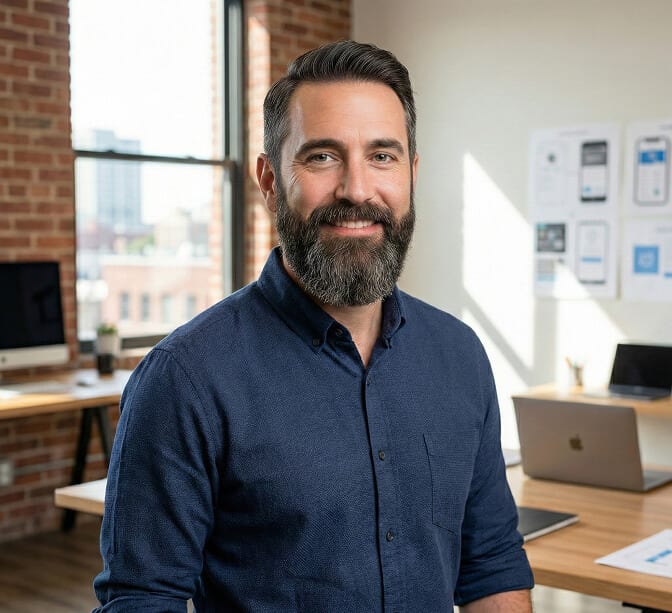
If you're wondering what to wear, a solid colored button down is always a safe bet. Light blue, pale gray, or white works really well on camera. These colors are simple and let your face shine, which is exactly what you want.
To look even more professional, you can add a blazer. Navy, black or dark gray are all good choices. If you wear a tie, keep it subtle. Avoid anything too bold or flashy and go for solid colors or light patterns at most. Also, don't forget grooming. Make sure your hair is tidy. If you have a beard, keep it neatly trimmed. Small details like that make a big difference in how polished you look.
For Women
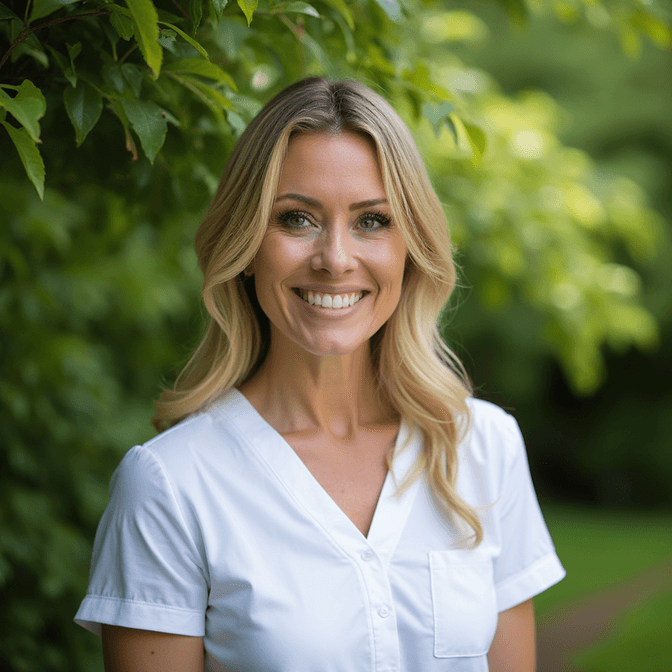
For women, a blouse or top with a modest neckline is perfect. Go for something in solid color like navy, burgundy, teal or a warm pastel. These colors photograph well and keep the focus on your face. If you want to level up the look, throw on a fitted blazer. It instantly makes you look more professional. When it comes to accessories, simple jewelry, small earrings or a delicate necklace is fine. But avoid anything too bold or sparkly. Same with your makeup. Keep it natural and just enough to highlight your features without looking overdone. And of course, make sure your hair is tidy and out of your face. Wearing the right outfit is only the start. How you pose matters too.
How to Pose for a Med School Headshot
Your posture, facial expression, and eye contact all work together to create a strong first impression. Let's go through some simple tips to help you pose like a pro. They include:
1. Start with Good Posture
Your posture says a lot about you, especially in a headshot. Standing or sitting up straight with your shoulders slightly rolled back shows confidence and readiness. Don't slouch or lean too far forward, that makes you look unsure or tired. Keep your chest open and head held high. Good posture makes you look professional, calm, and composed.

2. Make Eye Contact with the Camera
Next up is eye contact. When you look directly at the camera lens, it feels like you're connecting with the person on the other side. It's like you're saying, "Hey, I'm here, I'm present and I'm confident." Don't look off to the side or let your eyes wander, that looks distracting. Just keep a steady gaze at the lens. It makes the photo feel real and engaging.

3. Don't Force Your Smiles
A smile can bring your headshot to life when it's natural and not forced. One trick to getting a natural smile is to think of something that genuinely makes you happy, like a funny memory or someone you love talking to. That helps your expression stay real instead of stiff. Remember, forced smiles show and not in a good way.

4. Slightly Angle Your Body
Instead of facing the camera straight on, try turning your body just a little to the side, about 10 to 30 degrees. That small shift adds some depth and makes you look more natural. While doing this, keep your shoulders relaxed and your neck long.

5. Mind Your Chin and Jawline
Gently lower your chin and push your face forward just a little. It might feel a bit awkward but it really works. That helps avoid a double chin and adds more definition to your face. Don't tilt your head too much in any direction, instead keep it mostly level or just slightly down. That small adjustment can make your features look clearer and more polished.
6. Relax Before the Shot
Being nervous is totally normal, especially if you're not used to being in front of a camera. Before the shot, take a few deep breaths. Drop your shoulders, unclench your jaw and let your hands rest. The more relaxed you are, the better your expression will look. After all, this is a photo of you, so just be you and let your personality show through.

What Background Should I Use for a Medical Headshot?
A solid color background is the safest and most professional option for a medical headshot. Light gray is usually the top choice. This is because it has enough contrast to make you stand out without being too harsh. Plus it flatters most skin tones and outfits, which is helpful if you're wearing white or soft colors.
Alternatively, white backgrounds are also common for digital submissions. They give a smooth look that feels modern and polished. But keep in mind that white backgrounds need good lighting or they can end up looking flat or washed out.
If you're looking for something a bit different but still safe, you could go for a very soft blue or off-white. These tones can add a bit of warmth or personality without taking away from your overall professionalism. On the other hand, it's best to avoid anything too distracting, like busy patterns, outdoor scenes or colorful walls. While they might seem fun or unique, they can shift attention away from your face, which defeats the purpose of a headshot.
How to Choose a Photographer for a Med School Headshot
Now that you know what you want, finding the right photographer is the next step.
1. Look for Relevant Experience
Look for experience with professional and application headshots. Ask whether the photographer can deliver a web-ready file at a small file size, since some application portals limit how large your photo can be. Browse their portfolio to see if their work matches the professional image you're going for.
2. Check Reviews and Reputation
Once you've found a few options, take time to read online reviews and testimonials. These can give you valuable insight into how the photographer treats their clients. Even better, ask friends, classmates, or mentors if they have someone they recommend.
3. Consider Their Technical Skills
Beyond experience and reputation, it's also important to look at the quality of their lighting, framing, and editing. These technical elements can affect how polished your med school headshot looks. Also, make sure they use professional-grade cameras and equipment. That's usually a good sign you're in good hands.
4. Ask About Their Studio and On-Location Options
If you want a plain background, then a studio is probably your best bet. But if you want something different, like an outdoor location, ask if they offer on-location sessions.
5. Other Considerations
Before you book, make sure to confirm pricing, availability, and turnaround time. Also, ask if light retouching is included for blemishes or flyaway hairs. These details might seem small, but can make a big difference in the final product.
How Much Do Medical School Headshots Cost?
Medical school headshot costs vary widely by city and photographer. Use these as rough planning ranges and always get quotes that include retouching and the number of final images.
| Option | What you typically get | What to ask |
|---|---|---|
| Campus or career-center headshot day | Quick session, a few images | Is it free for students? When is the next one? |
| Newer or budget photographer | Shorter session, fewer images, light retouching | How many retouched images are included? |
| Established headshot photographer | Better lighting, more outfit changes, polished retouching | Turnaround time, file sizes, usage rights |
| AI headshots (Headshot Photo) | 40 to 100 headshots from 8 selfies, in as little as 1 hour | Does it look like me? Can I export a small file for upload portals? |
For a detailed breakdown by market and experience tier, see our headshot cost guide.
Can I Get a Medical Headshot Using AI?
Yes, you can, as long as it looks exactly like you. Schools and residency programs use your photo to recognize you at interviews, so an image that changes your face, age or features works against you. Before you upload, check each school's photo instructions; some may specify file size, format or how recent the photo must be.
Headshot Photo generates professional headshots from 8 selfies, with choices of outfit and background, in as little as 1 hour. Plans start at $34. Pick the result that looks most like you on a good day, and keep the same photo consistent across every application.
Med School Headshot Checklist
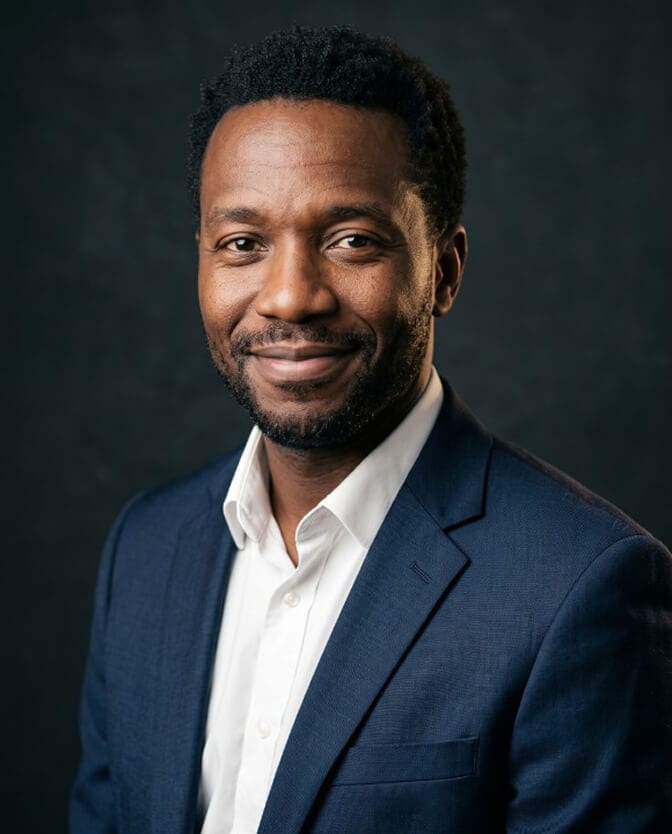
- Photo taken in the last 6 to 12 months and looks like you today
- Head and shoulders, face centered, looking at the camera
- Business professional outfit in a solid color
- Plain light gray, white or soft blue background
- Natural smile, light retouching only
- Exported in the format and file size each school asks for
- Same photo used across all schools
FAQs
1. Do all medical schools require a headshot?
No. Photo requests usually come from individual schools, often as part of the secondary application. Check each school's instructions.
2. How do you stand out in headshots?
To stand out, focus on good posture, a natural and confident smile, and direct eye contact.
3. Should I smile in my med school headshot?
Yes. A relaxed, natural smile looks approachable and confident. Avoid forced or very wide smiles.
4. What should I wear for a med school headshot?
Business professional clothing in solid colors: a button-down shirt with an optional blazer and subtle tie for men, or a blouse with a modest neckline and an optional blazer for women.
5. Is a med school headshot the same as an ERAS photo?
No. ERAS is the AAMC system for residency applications, not for getting into med school. The ERAS photo must be a JPG/JPEG or PNG of up to 150 KB with your face centered. See our ERAS headshots page for details.
6. Should I wear a white coat in my med school headshot?
Usually not for med school applications, since you haven't started medical school yet. Business professional attire is the safer choice.
7. Can I use a selfie for my med school headshot?
A well-lit selfie can work if it's sharp, well framed and looks professional, but a timer shot from a few feet away, a photographer, or an AI headshot generated from your selfies usually looks better.
8. How recent should my med school headshot be?
Recent enough that interviewers recognize you. If your hair, glasses or general look has changed, update it.