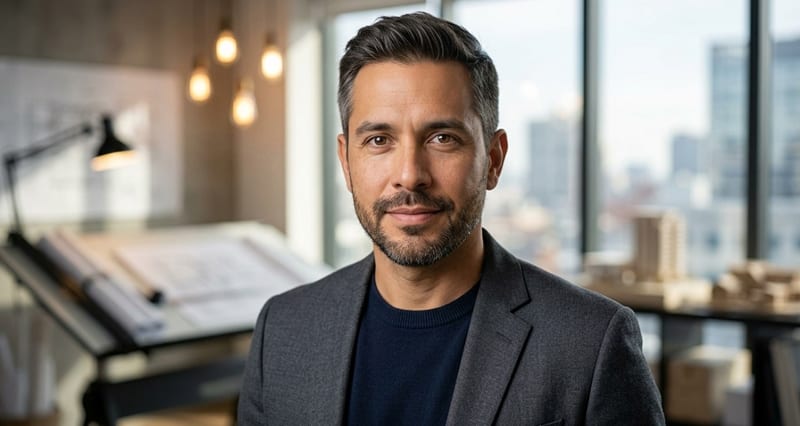
Environmental Headshots: Why the Blank Studio Backdrop Just Died in 2026
How story-driven AI headshots quietly replaced the most boring photo on your LinkedIn profile.
I was scrolling through a competitor's About page last Tuesday when something snapped in my brain.
Twelve people. Twelve identical gray backdrops. Twelve identical half-smiles. Twelve.
And here's the weird part. Their company sells outdoor adventure gear. Not one of them was photographed near a mountain, a tent, a kayak, or a single blade of grass. They looked like they worked at a tax office. They looked like anyone.
That's when I realized what most professionals still don't get. The blank studio backdrop, the thing that signaled "professional" for the last fifteen years, has quietly become the visual equivalent of a stock photo. It says nothing. It builds no trust. And in 2026, it's actively making you forgettable.
This post is about what's replacing it. And why the technology that made environmental headshots cheap and fast is the same technology most people are still scared to use for them.
The blank backdrop used to be safe. In 2026, it's the riskiest choice you can make.
Wait, what's wrong with a clean studio shot?
Nothing, technically. The lighting is good. The expression is neutral. Your hair looks fine.
That's the problem.
A studio shot tells me you can afford a photographer. It does not tell me what you do, where you work, who you serve, or why I should care. It is the visual equivalent of a resume that just lists your job titles with no bullet points underneath.
Here's what changed. In 2026, credibility depends on believability, and the trend has shifted toward darker, more sophisticated backgrounds and real spaces over generic studio look-alikes. An architect photographed in their studio. A chef near their kitchen. A real estate professional framed against a skyline or a property they love. Context is doing the work that a paragraph of bio text used to do.
This is environmental headshot territory. And until about eighteen months ago, getting one meant booking a half-day on-location shoot, scouting a venue, dealing with foot traffic, hauling lighting gear, and writing a check for somewhere between $600 and $1,500.
Now? You can do it from your couch in ten minutes.
The cost collapse nobody is talking about
Stay with me here, because this is the part most articles miss.
Environmental portraiture used to be the premium option. You paid extra for it. The photographer charged a location fee, charged for travel, charged for the extra setup time, charged for the post-production needed to balance ambient and flash. A studio session was $200. An environmental session was $800 to $1,500.
That math just inverted.
With a good AI headshot generator, you can produce a doctor in their clinic, an architect in their studio, a chef near a kitchen line, and a lawyer in front of a bookshelf for the same flat fee. The environment is free. The expensive part used to be access to the location. The expensive part is now nothing.
If you've ever stared at the average headshot cost for a traditional shoot and wondered why it has stayed stubbornly high, this is your answer. The traditional studio is fighting a war it can't win on either price or flexibility.
Where environmental headshots actually beat studio shots
I'm going to be opinionated here. Not every profession needs context. But for a surprising number, the studio shot is now a downgrade.
The professions where context is everything
Real estate agents. Your local market knowledge is your entire pitch. A headshot in front of a soft-blurred neighborhood, a charming brownstone, or a modern lobby tells the story your bio has to spell out. I work here. I know this place.
Doctors and healthcare professionals. A clinical setting builds instant trust. Patients are choosing you off a directory photo. A doctor professional headshot in a soft-blurred clinic communicates competence in a way a gray backdrop simply cannot.
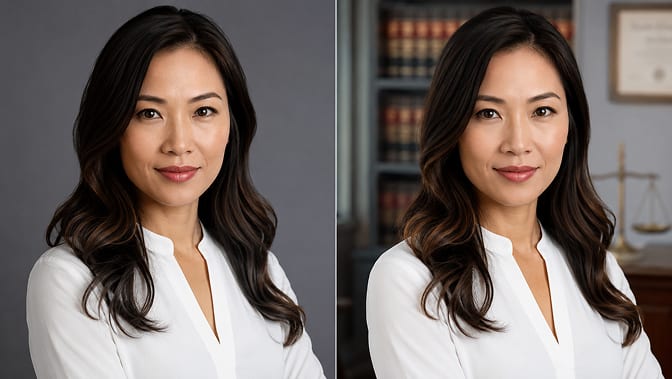
Lawyers. A bookshelf, a wood-paneled office, a courthouse exterior softly out of focus. These visual cues are the entire reason wood paneling has existed in law firms for a hundred years.
Chefs, bakers, makers, craftspeople. Your tools are your identity. Show them.
Founders and creative directors. Your studio, your office, your workspace becomes part of your personal brand. A blank backdrop says you could be anyone. A workspace says you are you.

The professions where studio still wins
Actors. Casting directors want to see you, not your apartment. Plain backdrops, classic actor poses, and clean wardrobe still rule.
Fashion and beauty. The clothes, hair, and skin are the product. Don't let a background distract.
Investment banking and traditional finance. The industry expects gray. Don't fight it. Yet.
That last "yet" is doing a lot of work. Every industry that resists this trend will resist it until they see one peer move first.
Where most people get environmental headshots wrong
This is the part nobody tells you, so I'm going to.
The biggest mistake isn't picking the wrong environment. It's picking an environment that fights your face. The environment is supposed to support you. It is depth, not subject.
Here are the failure modes I see constantly.
The background is too sharp. If your bookshelf is in the same focal plane as your eyes, the background is now competing with you. Creating blurred / shallow depth-of-field (DOF) backgrounds will give your photo a more polished/professional look and feel. The technical term is "shallow depth of field." The English translation is "blur the background, sharp on the eyes."
The background tells the wrong story. A finance person in front of a colorful coffee shop backdrop reads as confused, not approachable. The setting needs to match the work.
The lighting on the subject doesn't match the lighting in the scene. This is the #1 way bad AI environmental headshots blow their cover. If the office windows in the background suggest soft afternoon light, your face cannot be lit like a studio softbox at noon. AI doesn't simply replace backgrounds, it automatically adjusts facial lighting reflections based on environmental light, ensuring ultra-realistic person-scene integration. The good generators handle this. The cheap ones don't.
The environment is generic. "Office background" is not a story. Your office background is. The difference matters more than people think.
If your headshot environment could belong to anyone in your industry, you are still photographing yourself like a stock model. The whole point is specificity.
The five-environment cheat sheet for 2026
I built this list after looking at thousands of headshots across every major professional vertical. Use it as a starting point and adjust.
1. Soft blurred office, neutral. The safest environmental choice. Works for consultants, project managers, ops leaders, anyone whose job is "the work" rather than "the place."
2. Industry-specific workspace. A clinic for doctors, a kitchen for chefs, a workshop for makers. High-trust, high-context.
3. Architectural backdrop. A modern lobby, a textured brick wall, a mid-century interior. Communicates taste and aesthetic confidence without being literal about the job.
4. Outdoor, soft and contextual. Real estate agents in front of skylines or homes. Adventure brands outside. Be careful, outdoor scenes get distracting fast.
5. Dark dramatic. Charcoal grays, near-blacks, low-key lighting. Technically a background, not a "scene," but it functions like an environment because it carries mood. Increasingly the default for executives and founders.
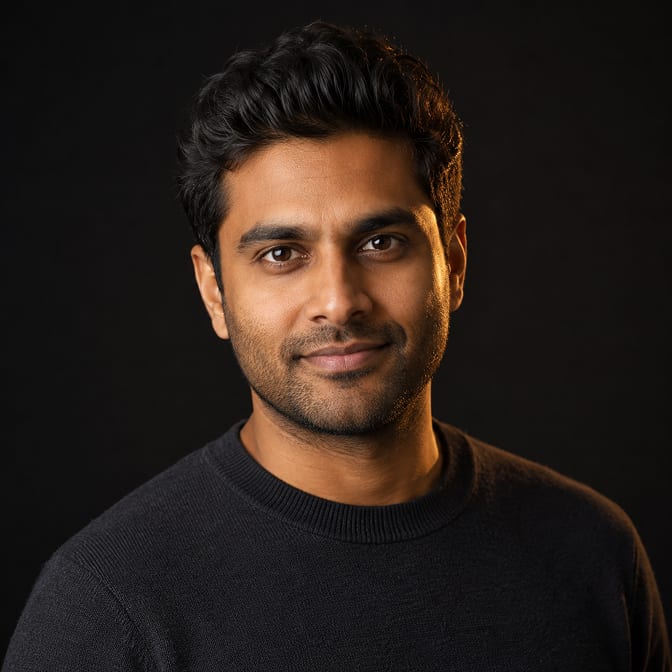
If the dark dramatic look interests you, we wrote a deeper piece on why top professionals are choosing dark backgrounds that walks through the lighting and wardrobe logic.
A quick word on AI environmental headshots, since I know you're wondering
Yes, this is what we make at HeadshotPhoto.io. Yes, I am biased. But I have also tested every major competitor and watched a lot of generators butcher environmental scenes specifically.
Here is what to look for.
Subject-environment integration. Does the light on the face match the implied light source in the background? If the window is on the left, the highlights on the face should be on the left. Cheap generators get this wrong almost every time.
Background coherence. Are the objects in the background actually consistent with each other, or is it a Frankenstein of shapes that vaguely suggest "office?" The background does not need to be sharp, but it does need to be plausible.
Skin texture preservation. In 2026, credibility depends on believability. People want to see your real skin texture, your character lines, and the history in your face. The polished-not-plastic standard applies to environmental shots especially. Plastic skin against a real-looking environment is the worst possible combination.
If you're tired of paying $800 for a half-day location shoot and want to try environmental headshots without booking anything, you can generate yours in about ten minutes. The first batch is the experiment, not the final answer. Iterate.
So is the studio backdrop dead, dead?
No. It's just no longer the default.
The clean studio shot is now a deliberate creative choice for people whose face is the product. Actors. Models. Some executives. The rest of us are moving on.
In two years, looking at a LinkedIn page full of identical gray backdrops will feel the way looking at a website with a Flash intro feels today. Not wrong, exactly. Just from a previous era.
The professionals who figure this out first get a small but real edge. Their photo communicates something on first impression that everyone else's doesn't. Their About page looks intentional instead of templated. Their personal brand starts before anyone reads a word.
That edge is available now. It costs almost nothing to claim. The only thing standing between most people and a story-driven headshot is the assumption that this is somehow harder or more expensive than the studio version.
It isn't. Not anymore.
The blank backdrop is the new "Sent from my iPhone." Functional. Fine. Says nothing about you.
If you've been putting off updating your headshot because the idea of booking a photographer, scouting a location, and burning a Saturday sounds exhausting, this is the year you don't have to. Try HeadshotPhoto.io free, generate a few environments, and see if the story-driven version of yourself feels more like the actual you.
Most people are surprised. They look at the gray backdrop version and the contextual version side by side and realize they have been undercutting themselves for years.
Frequently Asked Questions
1. What are environmental headshots?
Environmental headshots are professional portraits taken in a setting relevant to your work or personality, instead of against a plain studio backdrop. The background is usually softly blurred to keep focus on the subject, and the location adds story and context. Think a chef near a kitchen, a doctor in a clinic, or a real estate agent in front of a property.
2. How do environmental AI headshots compare to traditional location shoots?
The visual outcome is now nearly identical for most use cases. The difference is cost and time. A traditional environmental shoot runs $600 to $1,500 with location fees, travel, and a half-day commitment. AI environmental headshots cost roughly $20 to $40 and take ten to twenty minutes. The trade-off is iteration, you can try a dozen environments instead of being locked into one.
3. How do I pick the right environment for my headshot?
Match it to what you actually do. Doctors should pick clinical settings. Lawyers should pick offices or libraries. Real estate agents should pick architectural or neighborhood backdrops. Avoid environments that compete visually with your face, anything too busy, too colorful, or too sharp will pull attention away from your eyes.
4. Are story-driven AI headshots worth it for LinkedIn?
Yes, especially if you're in a trust-based or location-dependent profession. Recruiters and prospects look at LinkedIn photos for under two seconds. An environmental headshot communicates context in that window, while a generic studio shot leaves them guessing. The investment is low and the differentiation is real.
5. Can AI environmental headshots look realistic enough for professional use?
The best ones, yes. The cheap ones, no. The tell is usually mismatched lighting between the face and the background, or a plastic-skin look against a real-feeling environment. Look for generators that preserve skin texture, match light direction between subject and scene, and offer industry-specific environment options instead of generic "office" labels.