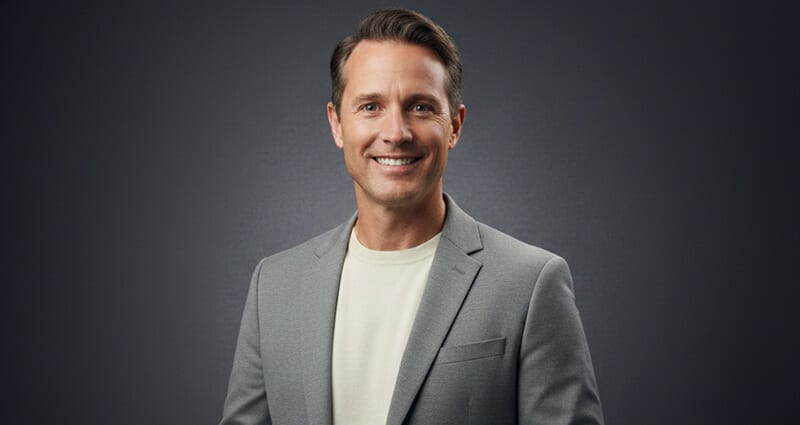
The Black Background Headshot: Why the Boldest Professionals Choose to Disappear
Everything fades but your face. That's the point.
I spent three hours on a photographer's website last month.
Not shooting. Researching.
I was trying to figure out why some headshots made me stop scrolling and others felt like visual wallpaper.
The ones that stopped me? Almost all of them had black backgrounds.
Not because they looked "edgy." Not because they screamed "executive."
Because there was nothing else to look at.
Here's the weird part.
Black background headshots don't actually add anything to your image. They remove everything that's competing with your face.
And in a world where everyone's fighting for attention, sometimes the smartest move is creating a space where you're the only thing worth noticing.
The psychology most people miss about dark backgrounds
When you look at a headshot with a white or gray background, your eyes do something you don't even realize.
They wander.
They check the edges. They assess the lighting on the backdrop. They subconsciously evaluate whether the photo looks "professional enough."
A black background stops all of that.
Your brain has nothing else to process. The darkness becomes invisible and your face becomes the only signal in the frame.
This isn't just aesthetic theory.
Portrait photographers have known this for centuries. Rembrandt's most iconic portraits used dark backgrounds to force the viewer's eye toward faces emerging from shadow. It's called chiaroscuro and it works because human vision is naturally drawn to light surrounded by darkness.
A black background doesn't make you look more serious. It makes everything else disappear.
That's a meaningful distinction.
Because the goal of a professional headshot isn't to look "corporate" or "executive." It's to be remembered.
And you're far more memorable when there's nothing competing with your presence.
Who actually benefits from black background headshots
Not everyone needs the drama of darkness.
But certain professionals consistently benefit from black backgrounds and it's worth understanding why.
Lawyers and financial advisors. These fields require instant trust signals. A black background creates visual gravity that suggests weight, substance, and seriousness without any props or staging.
Executive leadership. When your headshot appears on a company's "About" page alongside twenty other faces, you need to stand out. Black backgrounds create natural contrast that pulls attention even in a grid of photos.
Creative professionals with bold personal brands. Paradoxically, black backgrounds work brilliantly for creative directors, designers, and brand strategists who want to project sophisticated confidence rather than chaotic creativity.
Anyone whose current headshot blends into the LinkedIn feed. Most LinkedIn photos use white, gray, or office backgrounds. A black background creates immediate differentiation through contrast alone.
Here's the part nobody tells you.
Black backgrounds also work against certain situations. If you're in healthcare, education, or hospitality fields where approachability matters more than authority a lighter background often performs better.
The background you choose isn't about looking "professional." It's about signaling the right kind of professional for your context.
What to wear for a black background (the counterintuitive answer)
Most advice tells you: "Wear dark clothes on light backgrounds, light clothes on dark backgrounds."
That's... partially true.
But it misses the deeper principle.
With black backgrounds, your clothing creates the frame around your face. So you want enough contrast to define your silhouette without the clothing becoming a distraction.
What works beautifully:
- Light gray blazers or jackets
- White or cream dress shirts (without busy patterns)
- Soft pastels if they complement your skin tone
- Navy blue (creates sophisticated contrast without being jarring)
What usually backfires:
- Pure black clothing (you become a floating head)
- Bright red or orange (too aggressive, steals attention)
- Busy patterns (compete with your face)
But then something clicked.
The best black background headshots I've seen don't follow any "rules" about clothing color.
They follow one rule: Whatever you wear should make your face the brightest part of the image.
If your clothing is lighter than your face, the viewer's eye goes to your chest first. If your clothing disappears into the background, your face becomes the only thing that exists.
That's the real principle.
The lighting problem (and why most DIY attempts fail)
Here's where black background headshots get tricky.
Unlike white backgrounds which are forgiving and reflect light everywhere black backgrounds absorb light and reveal every mistake.
If your key light is positioned wrong, you get harsh shadows that make you look tired or menacing.
If there's any ambient light hitting the background, you don't get black you get muddy gray.
If the light is too flat, your face loses dimension and looks like a cardboard cutout.
Professional photographers solve this with multiple lights: a key light for your face, a fill light for shadows, sometimes a hair light to separate you from the background, and careful flagging to prevent light spill.
This is where most people get it wrong.
Not because they lack talent. Because they lack equipment, space, and the ten years of trial-and-error that professional portrait photographers have invested.
The AI alternative: studio results without the studio
Stay with me here.
I'm not saying AI headshots replace a skilled photographer with proper lighting and a real studio.
I'm saying they solve a different problem entirely.
If you need a polished black background headshot in the next 24 hours not the next two weeks, after scheduling, shooting, editing, and revisions, AI has become a legitimate option.
Modern AI headshot generators can take your existing selfies and produce professional headshots with perfect lighting and controlled backgrounds. Including black backgrounds that would require studio equipment to achieve otherwise.
The technology has matured past the "uncanny valley" phase. The best generators now produce results that are genuinely difficult to distinguish from professional studio shots.
Is it the same as a $500 custom shoot with a portrait specialist? No.
Is it dramatically better than the grainy phone selfie currently on your LinkedIn profile? Absolutely.
For many professionals, that's the trade-off that makes sense.
When to choose black vs. gray vs. white
Let's make this practical.
Choose black background when:
- You want maximum visual impact and differentiation
- Your industry values authority, expertise, or gravitas
- Your headshot will appear alongside many others (team pages, speaker bios)
- You're refreshing a brand and want to signal evolution
Choose gray background when:
- You want a classic, safe choice that works everywhere
- Your industry is conservative but not formal
- You're unsure and need a versatile option
- Your company has strict brand guidelines requiring neutrality
Choose white background when:
- Your industry prioritizes approachability over authority
- You work in healthcare, education, or consumer services
- You need maximum flexibility for background replacement later
- Your personal brand is bright, optimistic, or energetic
There's no universally "best" background. There's only the background that signals the right message to the right audience.
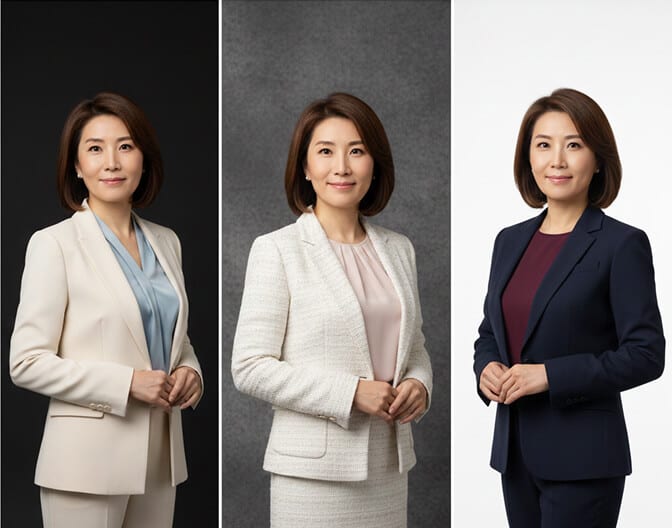
How to evaluate if your black background headshot actually works
Once you have your headshot whether from a photographer or an AI headshot generator, run it through these checks:
The squint test. Squint at your headshot until it's blurry. Can you still tell it's a face? Does anything else compete for attention? If the answer is "yes, just a face" the background is doing its job.
The grid test. Put your headshot next to five other professional headshots. Does yours stand out or blend in? Black backgrounds should create natural differentiation.
The five-second test. Show someone your headshot for five seconds, then hide it. Ask them what they remember. If they mention your face or expression success. If they mention the background or your clothing, problem.
The context test. View your headshot at the size it will actually appear LinkedIn thumbnail, email signature, company website. Does it still read clearly? Does your face still dominate?
The real reason black backgrounds keep coming back
Every few years, someone declares that black background headshots are "outdated" or "too formal" for modern business.
And every few years, they come back stronger.
Because the fundamental psychology hasn't changed.
In a world of infinite visual noise social media feeds, endless team pages, crowded conference programs the professionals who control attention are the ones who get remembered.
A black background isn't about looking serious.
It's about creating a frame where you're the only thing that matters.
If you've been staring at the same tired headshot for three years, wondering whether it's time for an update, the answer is probably yes.
And if you want to test how you'd look with a black background without committing to a full photoshoot, HeadshotPhoto.io can generate professional options from your existing photos in minutes. It's a zero-risk way to see the difference before you invest.
Sometimes the boldest move is choosing to disappear so only you remain.
Frequently Asked Questions
What is a black background headshot?
A black background headshot is a professional portrait photograph where the subject appears against a solid black or very dark backdrop. This style eliminates visual distractions and focuses all attention on the subject's face, creating a dramatic yet professional appearance suitable for executive profiles, speaker bios, and LinkedIn.
Is a black or white background better for professional headshots?
Neither is universally better; it depends on your industry and personal brand. Black backgrounds convey authority, sophistication, and visual impact, making them ideal for executives, lawyers, and finance professionals. White backgrounds signal approachability and openness, working well for healthcare, education, and customer-facing roles.
How do I take a professional headshot with black background at home?
Without studio equipment, achieving a true black background at home is challenging because you need to prevent light from reaching the backdrop while properly illuminating your face. This requires careful positioning and ideally two or more light sources. Alternatively, AI headshot generators can create professional black background headshots from regular selfies without any special equipment.
What should I wear for a black background headshot?
Wear clothing that creates contrast with the black background without competing with your face. Light gray, white, cream, navy blue, and soft pastels work well. Avoid pure black clothing (you'll become a floating head) and busy patterns. The goal is for your face to be the brightest, most attention-grabbing element in the frame.
Can AI headshot generators create realistic black background photos?
Yes, modern AI headshot generators can produce professional-quality black background headshots that are often indistinguishable from studio photography. They analyze your uploaded photos and generate new images with professional lighting, appropriate backgrounds, and natural-looking results without requiring any photography equipment or studio access.