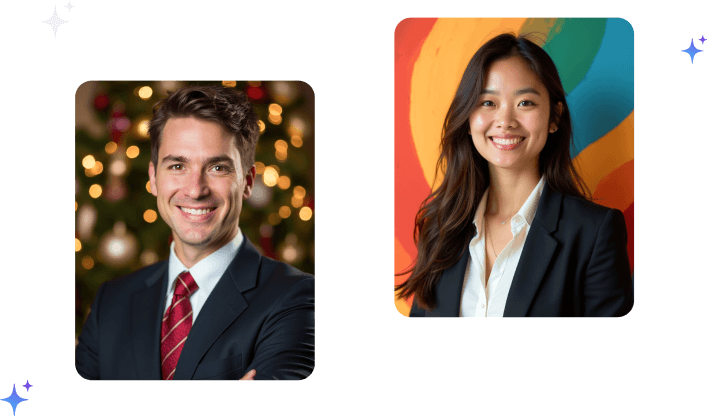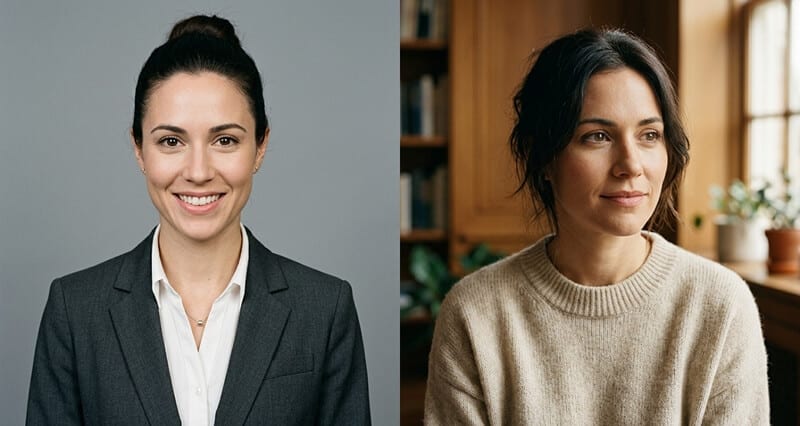
Forget what your headshot looked like three years ago. The rules just changed, and the people getting it right aren't booking studios anymore.
I was scrolling LinkedIn last Tuesday when I noticed something weird.
The top voices in my feed, the ones racking up thousands of comments, all had a similar look. Not the same face. Not the same outfit. But the same vibe.
Soft natural light. A slight off-center angle. Shoulders relaxed. Clothing that looked like they'd worn it to an actual meeting, not bought it the morning of a shoot.
It hit me: the corporate headshot is dead.
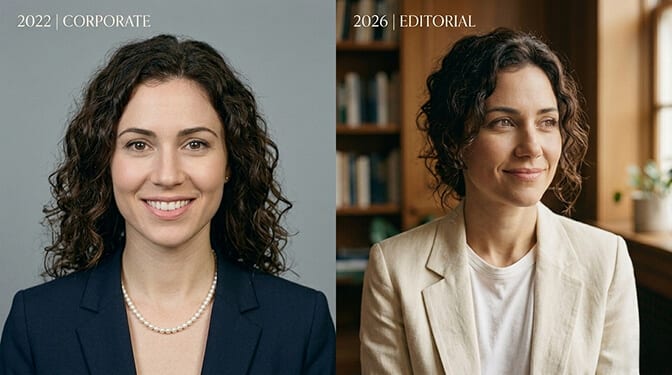
Not the concept of the headshot. That's stronger than ever. But the version we all grew up with, you know the one, white backdrop, forced grin, jacket pulled tight at the shoulders, that thing belongs in 2018.
2026 headshots look completely different. And most people haven't caught on yet.
So I spent the last two weeks studying what's actually winning attention on LinkedIn, executive bios, podcast covers, and Substack profiles. I cross-referenced with what photographers in NY, LA, and London are charging premium rates for. Then I tested every trend through our own AI generator to see which ones actually translate.
Here's what I found.
Why headshot trends matter more in 2026 than ever before
Quick context, then we'll get into the trends.
Your headshot is now your single most-viewed image. Think about it. LinkedIn, Slack, your email signature, podcast guest spots, conference badges, Substack, Notion, your company About page. The same photo travels everywhere.
A bad one quietly costs you opportunities you'll never know you missed. In fact, recruiter data shows your LinkedIn photo directly affects your job search outcomes, with most hiring managers admitting they form a verdict within seconds.
A great one does something subtler. It makes people feel like they already know you before you've said a word.
Your headshot isn't a photo. It's a 1.5-second pitch that runs on autopilot every day of your career.
That's why the trends matter. And why the gap between people who update their headshot and people who don't is widening fast.
Let's get into it.
1. The cinematic editorial look
This is the biggest shift of the year.
Old headshots tried to look professional. New ones try to look intentional. There's a difference.
The cinematic editorial style borrows from magazine portraiture. Soft directional lighting, often from a window. Slightly desaturated tones. A composition that puts you slightly off-center instead of dead-middle. The expression is thoughtful, not toothy.
You've seen this on the covers of The Atlantic and on every newly-funded founder's profile.
Why it works: It signals seniority and self-possession without trying. People read it as "this person is comfortable being looked at," which is shorthand for confidence.
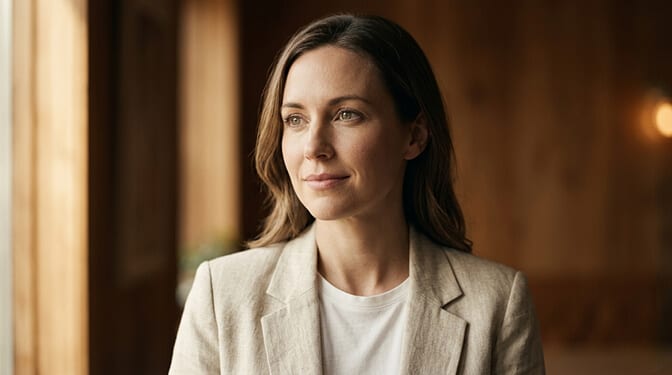
How AI delivers it: This look used to require a photographer who knew how to shoot for editorial publications. That's a real skill, and they charge accordingly. AI generators trained on editorial photography can now reproduce the lighting, color grading, and composition consistently. You don't need to find the right studio. You just need to pick the style and let the model render it.
2. Natural environment portraits (the death of the grey backdrop)
The seamless grey backdrop is the polyester suit of headshots. It used to be the safe choice. Now it just looks dated.
In 2026, the background tells part of the story. A bookshelf hints at depth. A blurred coffee shop suggests creativity. A clean studio with warm wood tones reads as modern but grounded.
The background is no longer hidden. It's a co-star.
Why it works: Context adds dimension. A photo against a white wall is just a face. A photo with a thoughtful background is a person in a world.
The trick is that the background has to be subtle. Blurred enough that it doesn't compete. Specific enough that it adds meaning.
If you're stuck on backdrop choices, the art of choosing the right headshot background is something we've broken down separately.
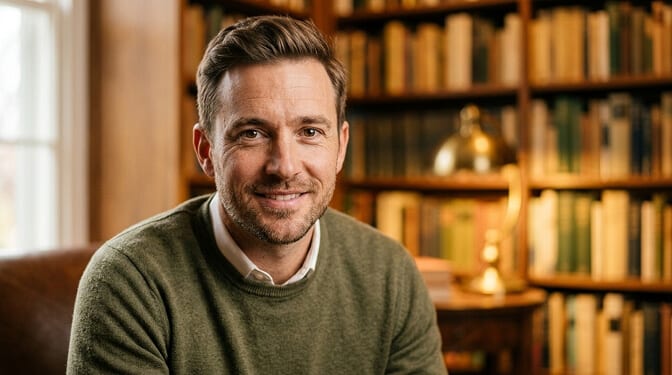
How AI delivers it: This is one of AI's superpowers. Picking a background in real life means scouting locations, dealing with weather, getting permission, and praying the lighting cooperates. With AI, you describe it and it appears. Library, rooftop, brick wall studio, golden-hour park bench. All available. All consistent.
3. Warmer, softer color grading
Look at headshots from 2020. They're cool. Slightly clinical. Lots of blue undertones.
2026 swung the opposite direction. Warmer skin tones. Golden highlights. Slight cream tint to the whites. Photos feel like late afternoon instead of fluorescent overhead.
This isn't just aesthetic. It's psychological. Warm tones make people read the subject as approachable. Cool tones read as distant.
In a market obsessed with authenticity and connection, warmth wins.
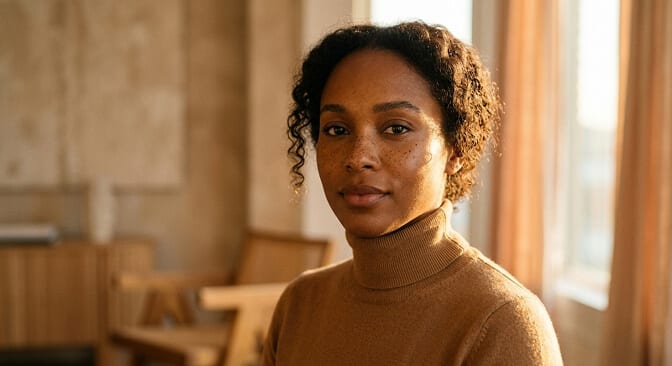
How AI delivers it: Color grading is the easiest thing for AI to nail consistently because it's a global filter applied at the rendering stage. You can request "warm editorial color grade" and get the same tonal feel across every variation. Try getting that consistency from a photographer across multiple sessions and you'll wait months.
4. Smart-casual over suit-and-tie
The suit isn't dead. But it's no longer the default.
The new default is what I'd call considered casual. A well-fitted knit. A clean linen shirt. A blazer over a t-shirt. Clothing that says "I take my work seriously, not myself."
Suits now signal a specific industry, finance, law, certain executive contexts, rather than being the universal uniform of professionalism. For most people, business casual headshots hit the sweet spot between approachable and authoritative.
For founders, creators, consultants, marketers, designers, engineers, and basically anyone in tech or modern services, the smart-casual headshot reads more current and more trustworthy.
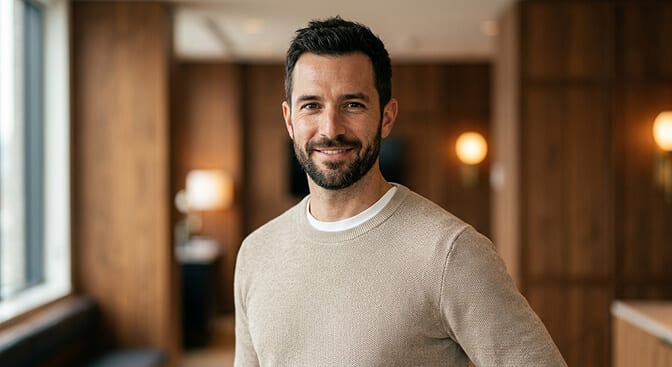
How AI delivers it: You can generate yourself in 20 different outfits in the time it takes to change once for a photographer. That means you can test what actually works for your audience instead of committing to one rented blazer.
5. The unposed pose (controlled candidness)
Stiff frontal poses are out. So are those weird cross-armed power stances.
The new pose is the almost-pose. A slight turn of the body. Hands relaxed or doing something natural like adjusting a sleeve. Eye contact, but soft. Like you just looked up because someone called your name.
It's choreographed to look uncoreographed. Which sounds annoying but is genuinely harder to pull off than it sounds.
Why it works: Our brains have gotten really good at detecting "photoshoot face." The unposed pose bypasses that defense. Your audience reads the photo as real, even though every element was intentional. If you want to break this down further, our guide to the best headshot poses covers what works for different contexts.
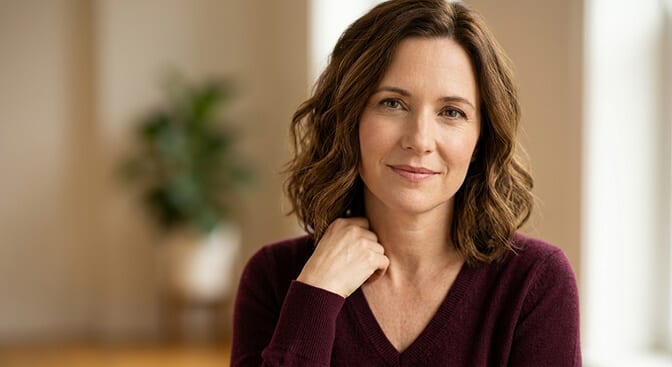
How AI delivers it: Modern AI headshot models are trained on millions of natural portrait poses, which means they generate variations that feel organic by default. You'll often need to force the model to do a stiff frontal pose. The natural version is now the easy mode.
6. Higher contrast, higher clarity
Headshots from a few years ago had a soft, slightly dreamy quality. Lots of skin smoothing. Lots of dewy highlights.
2026 reversed it. Sharper detail. Visible texture. Slightly punched contrast. You can see the weave of the fabric. The slight roughness of stubble. The actual structure of the face.
This is part of the broader shift toward authenticity. Filters that erase pores now read as untrustworthy. Honest texture reads as confident.
Polished is fine. Plastic is over.
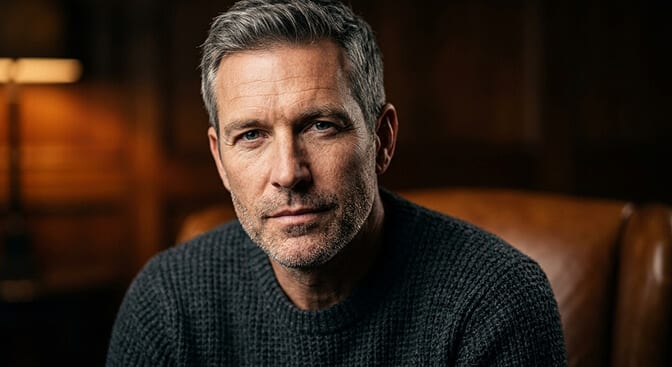
How AI delivers it: This used to be the area where AI struggled. Early models smoothed everything into a cartoon. The current generation has flipped the problem. Texture, freckles, eye detail, and natural skin variation now render with high fidelity. The trick is choosing a model trained for photorealism, not artistic stylization.
7. Multiple headshots, one cohesive identity
This is the trend most people are sleeping on.
In 2026, you don't have a headshot. You have a small library. Three to five photos that share a visual identity but cover different contexts.
One for LinkedIn (slightly more formal). One for your website (warmer, more approachable). One in profile or three-quarter angle for podcast features. One full-color and one in elegant black and white.
This is how serious personal brands operate now. The person who shows up consistently across platforms, with photos that feel like the same world, builds recognition faster than someone with one stiff portrait recycled everywhere.
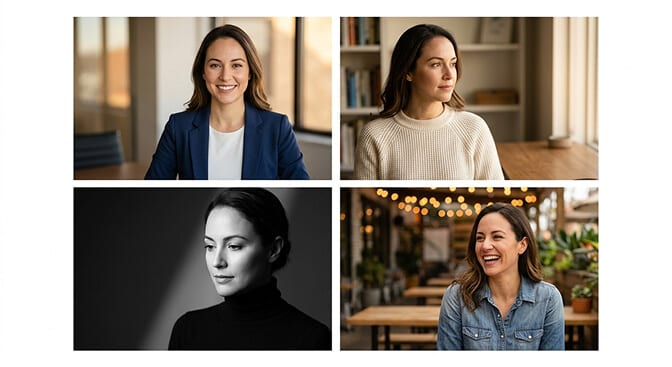
How AI delivers it: This is where AI completely breaks the old model. Getting 5 cohesive looks from a photographer means 5 separate setups and a much bigger invoice. With our AI photo generator, you upload once and get dozens of variations in different settings, outfits, and crops. Same face, same identity, different applications.
A quick honest moment
Look. I run an AI headshot company. Of course I'm going to tell you AI is great. So let me tell you when it's not.
If you're a model, an actor, or someone whose entire career depends on photographic precision, hire a human. They'll dial in details no algorithm catches yet.
If you're literally everyone else, a founder, a consultant, a sales lead, a marketer, a job hunter, an engineer, a freelancer, you're probably wasting money and weekends booking studio time. We've actually broken down the full headshot photographer vs AI headshots comparison if you want the receipts.
The math used to favor photographers because the technology wasn't there. The math has flipped.
If you want to see what your own modern headshot would look like, you can try Headshot Photo free and have results in about 10 minutes. No appointment. No wardrobe panic.
Back to the trends.
8. Subtle personality cues over pure neutrality
The last trend ties everything together.
For years, headshots optimized for neutrality. Don't show too much expression. Don't wear anything distinctive. Don't risk being polarizing.
That advice is dying.
The headshots that win in 2026 hint at personality. A small smile that suggests warmth. An accessory that signals taste. A color choice that pops. Something that makes you memorable instead of forgettable.
Neutrality is safe. Safe is invisible. Invisible costs you opportunities.
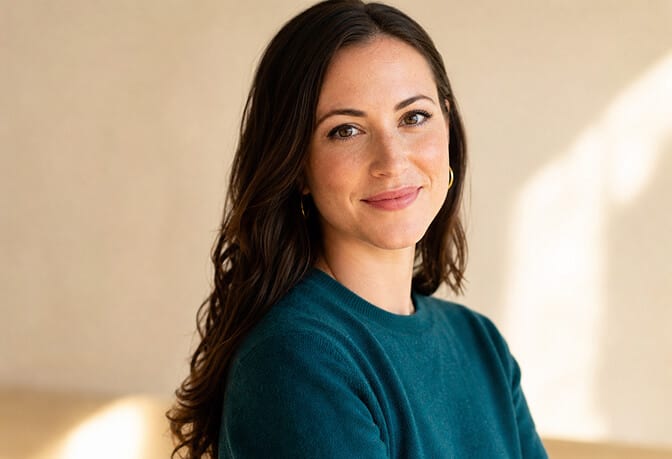
How AI delivers it: Once you generate a baseline batch, you can iterate quickly on personality cues. Try a smile. Try the serious version. Test a bold color. Find the version that feels the most you without going through five photo sessions to figure it out.
What this all adds up to
If you put these eight trends together, here's the headshot of 2026:
A photo with soft warm light, a considered background, a smart-casual outfit, a natural pose, honest texture, subtle personality, and a cohesive look that travels across platforms.
That's the brief. Whether you hire a photographer or use AI, that's what you're aiming for.
The reason AI won this year isn't that it's "good enough." It's that it's actually better at most of these elements than a typical session. Lighting consistency. Color grading. Multiple variations. Background flexibility. Iterative testing. These are computational problems, and computation is what AI does well.
What AI doesn't have is your face. So you give it that, and let it handle the rest.
The era of treating your headshot as a once-every-three-years event is over. In 2026, your face is a publishing platform. Treat it like one.
If you've been putting off updating your headshot because the photographer search felt like a chore, the booking felt like a commitment, or the cost felt absurd for what you'd actually use it for, you're not alone. You're the majority.
The good news: that whole problem just dissolved.
Ready to see how your 2026 headshot looks? Generate a full set of modern, on-trend professional headshots in about 10 minutes with Headshot Photo. Free to try, no booking required, results that match every trend in this article. See current Headshot Photo pricing for full plan details.
Frequently Asked Questions
1. What are the biggest professional headshot trends for 2026?
The biggest 2026 headshot trends are cinematic editorial lighting, natural environment backgrounds, warmer color grading, smart-casual outfits over suits, controlled candid poses, and visible skin texture instead of heavy smoothing. The overall shift is from "corporate stiff" to "intentional human." Most professionals are also building small libraries of cohesive headshots instead of relying on a single portrait.
2. How do AI headshot generators compare to traditional photographers in 2026?
AI generators now match or exceed traditional photography for most use cases like LinkedIn, websites, and team pages, especially when you need multiple looks or fast turnaround. Photographers still lead for ultra-high-end editorial, acting headshots, or shoots requiring specific physical direction. For 90% of professionals, AI delivers better cost efficiency, faster results, and more variation.
3. How long does it take to create AI headshots that follow 2026 trends?
Most AI headshot platforms generate a full batch of professional headshots in 10 to 60 minutes depending on the service. Headshot Photo typically delivers a complete set within 10 minutes, including multiple outfits, backgrounds, and poses that match current 2026 styles. Compare that to scheduling, traveling to, and editing a traditional photo session, which usually takes one to three weeks end to end.
4. Are AI headshots good enough for LinkedIn and corporate use in 2026?
Yes. AI headshots from quality platforms now look indistinguishable from traditional studio photography for LinkedIn, company websites, executive bios, and most professional uses. The key is choosing a service trained on photorealistic editorial portraiture rather than stylized artistic models. Recruiters, executives, and clients won't be able to tell the difference.
5. How much should I expect to pay for professional headshots in 2026?
Traditional professional headshot sessions in major cities typically cost $200 to $800 for a single look, plus extra for retouching and additional outfits. AI headshot platforms range from free trials to roughly $29 to $50 for a full set with dozens of variations. The cost gap has widened significantly, which is one reason AI options are dominating professional and executive use this year.