Minimal Retouching Done Right: How Authentic AI Headshots Build More Trust in 2026
The most damaging thing that happened to AI headshots wasn't a technical failure. It was the industry-wide decision to make everyone look perfect. Here's why less retouching builds more trust, and how to get it right.
The feedback came through on a Monday morning, from a senior partner at a consulting firm.
We'd helped them generate headshots for a twelve-person leadership team. Every photo was technically excellent. Good lighting. Clean backgrounds. Professional wardrobe. The AI had done its job.
But she had one note.
"They all look like they had the same skin doctor."
She was right. Every image in the set had the same problem: skin so smooth it had crossed from professional into artificial. Pores removed. Fine lines softened to the point of disappearance. Each face had the slightly luminous, slightly waxy quality that anyone who's looked at enough AI headshots in 2025 and 2026 has learned to recognize in half a second.
The photos looked excellent and they looked wrong, at the same time, in a way that's hard to name but immediately felt.
The fix wasn't dramatic. We regenerated the batch with a different approach. Same faces. Same lighting. Same backgrounds. But this time we prioritized natural skin texture, kept the character lines, retained the visible depth that makes a face look like a face rather than a render.
The second set looked more professional than the first. Not because they were more polished. Because they were more real.
That's the authentic headshot principle in 2026, and it's worth understanding in specific terms.
Why the Over-Retouching Era Is Over
Here's the weird part.
Retouching has been part of professional photography since the darkroom. Removing a temporary blemish, evening out skin tone, reducing distraction. These are legitimate interventions that make a photo more accurate to how the person looks on their best days rather than less accurate.
The problem isn't retouching. The problem is what happened when AI made retouching automatic and free.
When every image gets the same degree of smoothing by default, regardless of whether it's needed or appropriate, you get a visual monoculture. Everyone looks the same level of "perfect." Everyone's skin has the same absence of texture. Everyone's expression has the same slightly flattened quality.
And viewers have learned to recognize it. Not consciously, in most cases. But the brain processes faces at extraordinary speed and sensitivity. When the micro-textures that normally signal a living human face are absent, something registers as wrong even when the viewer can't articulate what.
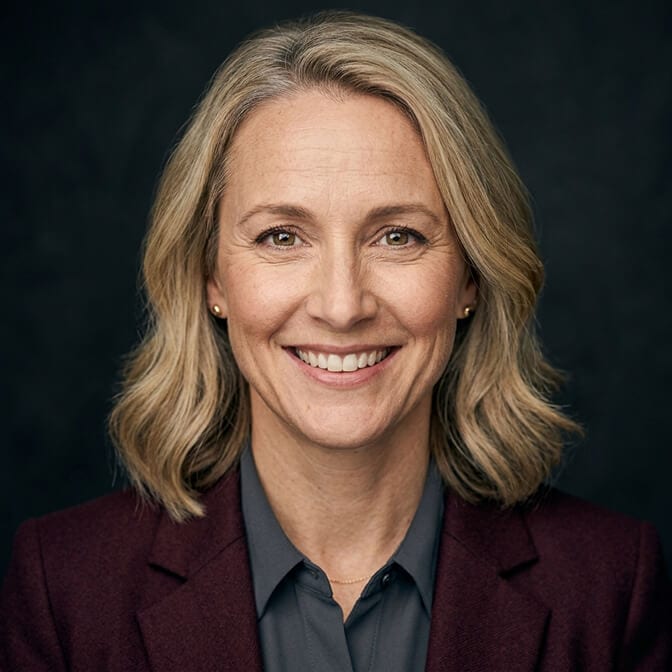
Filters that erase pores now read as untrustworthy. Honest texture reads as confident. The 2026 headshot standard isn't raw and unedited. It's polished without being plastic. There's a meaningful distinction between those two things.
The goal of retouching in a professional headshot is accuracy, not flattery. The right question is not "how can I look better?" but "how can I look like the best version of my actual self?"
The Trust Science Behind Natural-Looking Faces
This isn't just aesthetic preference. There's a specific psychological mechanism at work.
Human brains form trust judgments in under 100 milliseconds of seeing a face. This happens below the level of conscious processing. Before you know what you think of someone, your brain has already decided whether the face in front of you triggers the trust circuit or the caution circuit.
The trust circuit responds to cues of authenticity: natural variation in skin texture, genuine micro-expressions, the slight asymmetries that characterize real faces. The caution circuit responds to cues of artificiality: uncanny smoothness, perfect symmetry, expressions that don't fully reach the eyes.
When an AI headshot has been over-processed, it activates the caution circuit before anyone has read a word of your profile. The viewer doesn't think "this person used a bad AI tool." They think "something feels off." And that feeling shapes every subsequent judgment they make about you, usually without them knowing it happened.
This is the direct cost of over-retouching. It's not a cosmetic problem. It's a trust problem.
What minimal, accurate retouching preserves:
Visible skin texture, including pores appropriate to the person's age and skin type. Fine lines that are characteristic features rather than temporary conditions. Natural variation in skin tone across different areas of the face. The slight asymmetry that characterizes real faces. Eye whites that look like eyes rather than porcelain.
What minimal, accurate retouching removes:
Temporary conditions: a blemish that appeared the week of the shoot. Distractions: a stray hair crossing the face, a piece of lint on the jacket. Technical corrections: minor color temperature imbalance, slight exposure inconsistency.
The line between these two categories is the entire art and ethics of headshot retouching.
What "Polished Not Plastic" Looks Like in Practice
Here's where the principle becomes specific.
Professional photographers and quality AI headshot systems in 2026 are increasingly trained on the same standard: clean up distractions, don't alter identity.
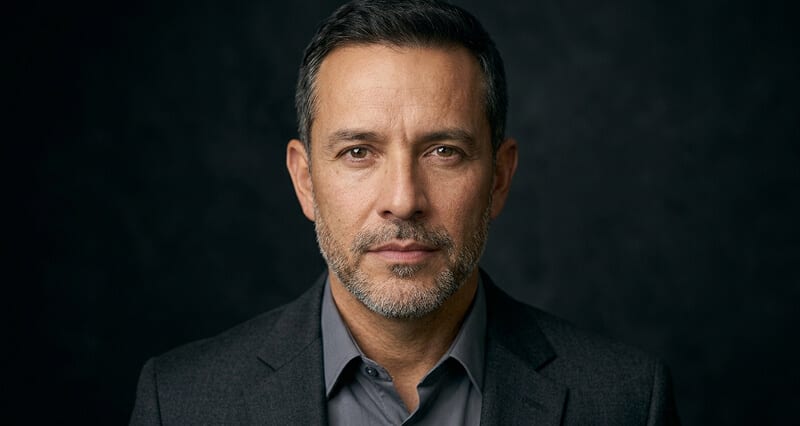
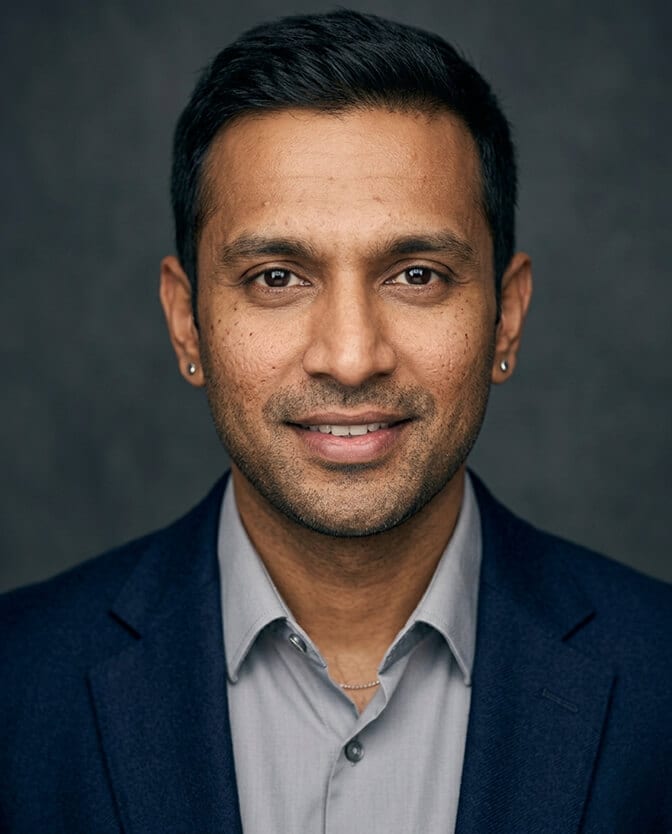
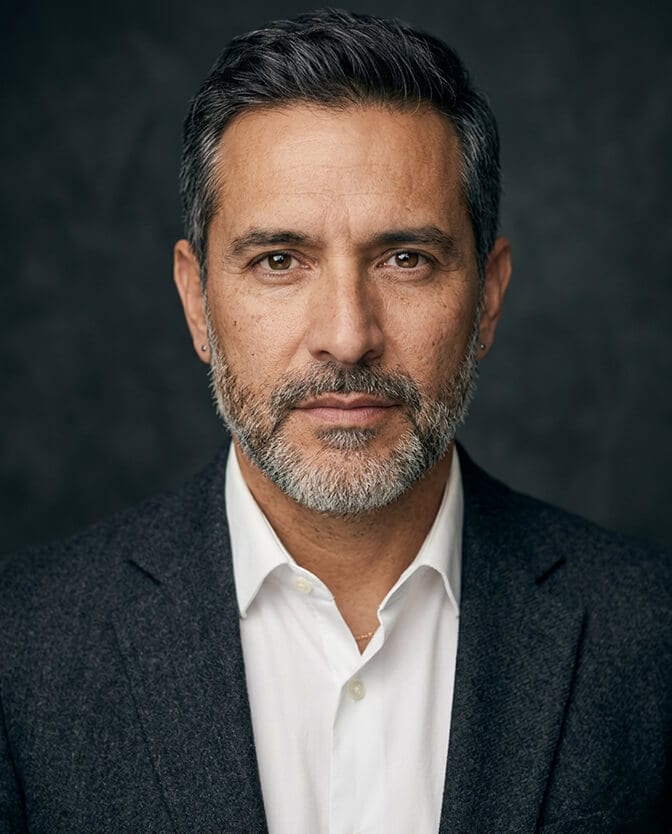
Skin texture. At 100% zoom on a quality headshot, you should be able to see individual pores, particularly on the nose and cheeks. The skin should have visible depth and micro-variation rather than a uniform, evenly lit surface. If the skin looks like it's been smoothed with a single global filter, it's been over-processed.
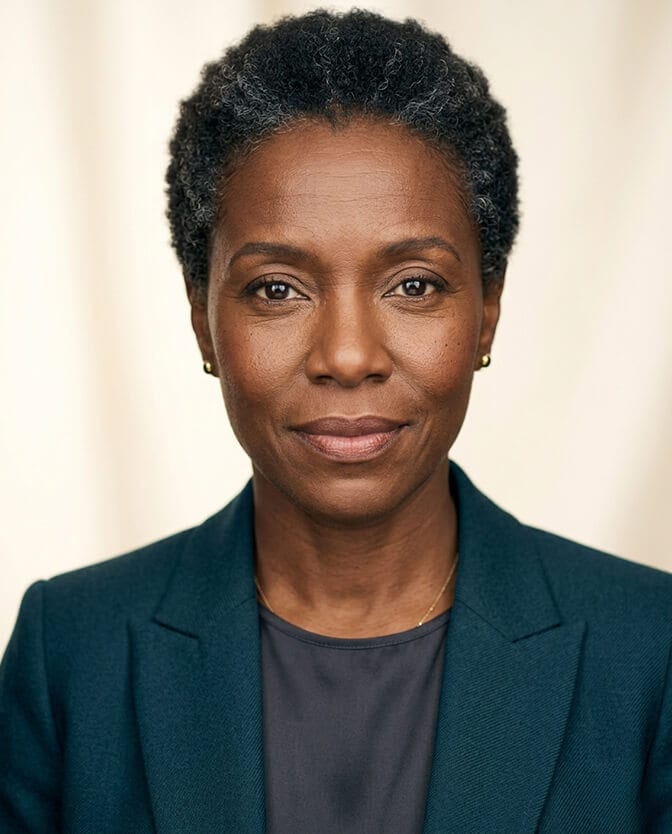
Fine lines and character. Lines around the eyes that appear when someone smiles are features, not flaws. They're part of what makes a genuine expression look genuine. Removing them doesn't make a face look younger. It makes a face look like it's not fully present. Crow's feet, smile lines, brow lines that have deepened over a career: these are identity markers that belong in a professional headshot. The only exception is temporary redness or puffiness from a specific day that doesn't represent the person's normal appearance.
Natural asymmetry. Real faces are slightly asymmetric. One eye is marginally higher. The smile pulls slightly more to one side. One eyebrow has a different arch. Over-processed AI headshots often introduce artificial symmetry because the model corrects toward a generic ideal. The result is a face that looks slightly sculpted rather than lived in.
Eye whites. Natural eye whites have subtle warmth, minimal blood vessels, and some natural variation. Brightened eye whites signal over-processing instantly. They make eyes look like they belong to a cartoon character rather than a real person.
Skin tone. The complexion across a real face isn't uniform. Forehead is often slightly different from the cheeks. The area around the nose and mouth has its own variation. Quality headshots preserve this natural variation rather than leveling everything to a single tone.
The AI Headshot Retouching Paradox
Stay with me here, because this is the nuance that most discussions of AI headshots miss.
Early AI headshot generators were trained on the assumption that professional meant perfect. The training data skewed toward heavily retouched images: the kind of photos that photographers delivered in 2018 and 2019, when heavy smoothing was the expected standard. The AI learned that a professional headshot looks like a face with no visible pores.
But the cultural standard shifted. Viewers grew more sophisticated about what over-processing looks like. The heavy smoothing that felt aspirational in 2019 started feeling uncanny by 2023. And by 2026, it actively signals low quality to anyone who looks at headshots regularly.
The best AI headshot generators in 2026 have adapted to this. They're trained on more current professional photography standards. They understand the difference between temporary distractions that should be removed and identity features that should be preserved. They produce outputs that look like a real person at their professional best, not a real person with their humanity edited away.
The challenge is that not all generators have made this shift. The market still contains tools that over-smooth by default because their training data was assembled before the standard changed. This is one of the most important quality differentiators to check when evaluating any AI headshot tool.
For professionals curious about what current-standard natural rendering looks like in practice, AI headshot examples from Headshot Photo show outputs across different ages, skin tones, and industries with the polished-not-plastic standard applied consistently.
The Industry-by-Industry Authenticity Standard
The level of polish that reads as appropriate varies by industry. Understanding this helps calibrate exactly how much retouching serves your specific professional context.
Law and finance. These industries have the most formal expectations for professional imagery, but even here the over-retouching backlash has been clear. A managing partner whose headshot looks like a thirty-year-old when they're fifty-five creates a specific kind of credibility problem: the expectation gap. Meeting someone who looks significantly different from their photo disrupts trust before the conversation has started. The standard is formal and polished, but accurate to the person's actual age and appearance.
Healthcare. Particularly for patient-facing roles, authenticity in a headshot is a direct trust signal. A physician whose photo looks over-processed creates the same mismatch problem as any other industry, but with higher stakes. Patients making care decisions based on a provider's profile need to be able to recognize that person when they arrive for their appointment. Natural, accurate rendering is a functional requirement, not just an aesthetic preference.
Tech and startups. This space has moved fastest toward authentic headshot standards. The over-polished corporate look was never the right fit here, and the industry's early adoption of AI headshot tools created early feedback loops about what over-processing looks like. The current standard is clean, contemporary, and genuinely natural.
Creative industries. Creative professionals are evaluated partly on their visual taste. A heavily processed headshot signals poor aesthetic judgment to an audience trained to recognize it. Natural rendering in creative headshots is as much a portfolio statement as a practical choice.
For a deeper breakdown of how these standards translate by sector, the industry-specific headshots guide covers what works and what falls flat across tech, finance, healthcare, and creative roles.
The Four-Question Retouching Test
Before finalizing any headshot, whether AI-generated or traditionally photographed, run through these four questions.
Would someone meeting you in person after seeing this photo recognize you immediately? If there's any chance of a recognition gap, the retouching has gone too far. The photo should represent your current, accurate appearance without adjustment.
Can you see natural skin texture at normal viewing size? Pull the image up on a desktop screen at standard size, not zoomed in. Does the skin look like it has natural depth and variation, or does it look like it's been smoothed with a single pass? The answer tells you where the retouching sits on the spectrum.
Do your eyes look present and alive? Eyes that have been brightened beyond natural whites, or that have had the natural micro-variation removed, look flat and slightly uncanny. Real eyes have warmth, depth, and natural variation that processing should preserve rather than remove.
Does this look like you on a good day, or a photoshopped version of you? This is the gut-check test. Show the photo to two or three people who know you. Ask whether it looks like you at your professional best. Not whether it looks good. Whether it looks like you.
If you're building a headshot that passes all four of these tests, the professional headshots page at Headshot Photo shows how natural rendering is applied across different professional contexts and demographics.
The Takeaway From the Leadership Team
The consulting firm's second batch of headshots went up on their website. The senior partner sent a follow-up note.
"These look like people I'd actually trust to run a project. The first set looked like stock photos of people."
That distinction, between stock photos of people and people, is the entire argument for natural rendering in professional headshots.
Your headshot's job is to make a stranger feel like they already know a little about who you are. That requires looking like yourself. Not a smoothed, perfected, plastic-finished version of yourself. Yourself, at your professional best, with enough visible humanity to trigger the right trust circuits before anyone reads a word.
The irony of over-retouching is that it does the opposite of its intention. The goal is to look more professional. The result is to look less trustworthy. That's a bad trade.
The right standard is simple: remove what shouldn't be there, keep what should. Let the face do the work it's supposed to do.
Ready to see what authentic, natural rendering looks like in your own professional headshot? Create your professional headshot with Headshot Photo and compare the output quality against the four-question test in this article.
For teams looking to apply this standard at organizational scale across an entire directory or leadership page, the company headshots page at Headshot Photo covers how consistent authenticity standards work when rolled out across a full team.
Frequently Asked Questions
1. What does "minimal retouching" mean for a professional AI headshot?
Minimal retouching in a professional headshot means removing temporary distractions (a blemish, stray hair, piece of lint) and making technical corrections (minor color temperature, slight exposure), without altering identity features like skin texture, fine lines, natural asymmetry, or anything that characterizes how the person actually looks. The 2026 standard is "polished not plastic": the output should look like the person at their professional best, not a smoothed or idealized version of them that creates a recognition gap in real life.
2. Why do over-retouched headshots look untrustworthy?
The human brain forms trust judgments in under 100 milliseconds of seeing a face, based partly on cues of authenticity like natural skin texture, genuine micro-expressions, and slight facial asymmetry. When these cues are removed through heavy retouching, the brain's caution circuit activates before any conscious evaluation has taken place. The viewer doesn't consciously identify the problem but experiences a vague sense that something is off. This undermines the primary purpose of a headshot, which is to build initial trust before a conversation begins.
3. How do I know if my AI headshot has been over-retouched?
Check four things at normal viewing size on a desktop screen. First, can you see visible skin texture, including pores? Second, do your eyes look present and alive with natural warmth, or do they look slightly flat and porcelain-like? Third, do fine lines characteristic of your age and expression appear naturally? Fourth, would someone meeting you in person recognize you immediately without any adjustment? If the skin is uniformly smooth, the eyes look artificially bright, or the photo looks significantly different from your current appearance, the retouching has gone beyond the appropriate standard.
4. Does authentic minimal retouching mean lower quality headshots?
No. The opposite is true in 2026. Over-retouching was previously associated with premium photography as a signal of effort and attention. The standard has reversed as viewers have grown more sophisticated about what over-processing looks like. A headshot with natural skin texture, preserved character lines, and accurate representation now reads as higher quality than one with heavy smoothing. Quality AI headshot generators trained on current photorealism standards produce outputs that are both more professionally polished and more naturally authentic than those trained on older heavy-retouching standards.
5. Is there an industry where more retouching is still appropriate?
No industry benefits from retouching that creates a recognition gap between the photo and the actual person. The appropriate retouching level varies by industry (formal industries like law and finance have different standards than tech or creative fields), but the authenticity principle applies everywhere. The consistent standard is accurate representation at the person's professional best, with temporary distractions removed and identity features preserved. Even the most formal industries in 2026 have moved away from the over-smoothed standard that was common five years ago.