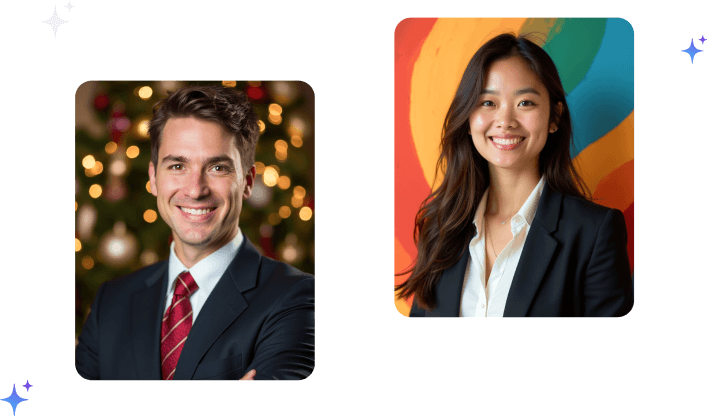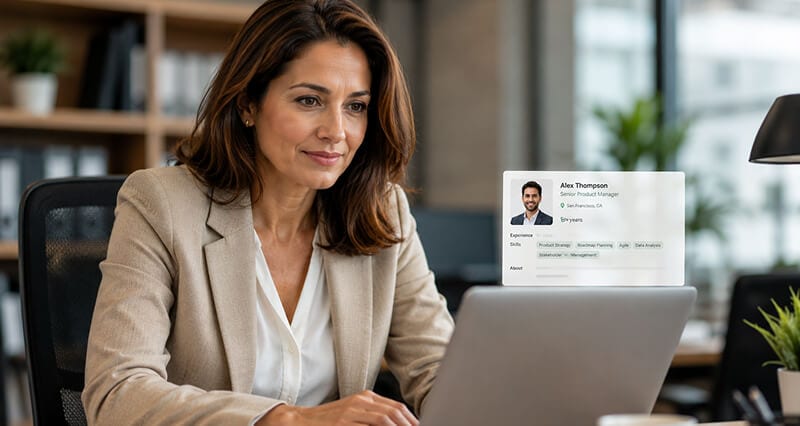
What Recruiters Actually Think of AI Headshots (We Went Through the Research So You Don't Have To)
The real answer is not the one you're scared of.
The question lands in our inbox almost every day, usually phrased with a little panic.
"If I use an AI headshot, will a recruiter be able to tell? And if they can, will they hold it against me?"
It's a fair fear. Your headshot sits at the top of the one profile a recruiter scans before deciding whether you're worth a reply. Getting it wrong feels expensive.
So instead of guessing, we went digging. Blind rating tests, hiring surveys, and decades of first-impression research. We wanted the actual answer, not the comfortable one.
Here's what we found. Some of it will relax you. One part should change how you pick your photo.
The truth is not "recruiters can't tell." The truth is that recruiters were never really asking that question in the first place.
Stay with me. This reframes the whole thing.
Finding 1: Most recruiters genuinely can't tell anymore
Let's kill the fear first, because the data is blunt.
In comparison tests, roughly three out of four recruiters could not reliably tell a good AI headshot from a studio photo. The tells that used to give it away, plastic skin, dead eyes, a spare finger, are mostly gone in quality outputs.
It gets more interesting. In blind quality tests, AI headshots were rated across five measures against traditional photos. AI came out equal or ahead on four of the five. Not "close enough." Ahead.
So the detection question is mostly settled. If the photo is good, nobody is squinting at it wondering if a model made it. They're just forming an impression of you. We broke this down further in whether employers can actually spot an AI headshot.
Finding 2: The judgment happens in a tenth of a second
Here's the part that reframes everything.
A recruiter forms a first impression of your face in about one tenth of a second. Some research puts it even faster, at a single glance of a few dozen milliseconds. And giving people more time to look barely changes the verdict. It only makes them more confident in the snap call they already made.
Read that again. The decision about your face is essentially made before anyone consciously thinks about it.
That means the "is it AI" question is happening way downstream of the part that matters. By the time a recruiter could even wonder how your photo was made, they've already filed you under "looks sharp" or "looks off."
Nobody rejects you because your headshot was AI. They form a gut read of your face in a fraction of a second, and the technology behind the pixels never enters into it.
Finding 3: What recruiters are actually rating
So if it isn't "real or AI," what are they judging?
The same traits humans have always judged in a face. Trustworthiness. Competence. Approachability. Whether you look like someone they'd want on a call.
This is where most people get it wrong. They obsess over whether the photo looks "professional enough" and forget that a face that looks warm and confident beats a face that looks stiff and expensive every time.
A great headshot, AI or studio, does three quiet things. Clean, flattering light. A genuine expression around the eyes. A background that doesn't fight for attention. Get those right and the rating takes care of itself.

Finding 4: Your photo moves hiring more than anyone admits
People love to say they don't judge on looks. The data disagrees, politely.
Around 85 percent of recruiters say your online reputation influences their hiring decisions, and your photo is the fastest-loading piece of that reputation. It renders before your headline, before your experience, before a single word.
And the presence of a photo is not a small edge. Profiles with a clear headshot pull roughly 21 times more views and 9 times more connection requests than profiles without one. That is not a nudge. That is the difference between being seen and being scrolled past.
If you've ever wondered whether your photo genuinely affects your job search, the honest answer is that it does more heavy lifting than almost anything else on the page.
Quick gut check while you're here. If your current headshot is older than your last two jobs, that's the real problem to fix. You can generate a fresh set of professional headshots from a few selfies in about ten minutes, no studio required.
Finding 5: Where AI headshots still lose points (the honest part)
I'm not going to pretend AI headshots win every time. They don't, and the failure mode is specific.
Over-retouching. The moment skin goes waxy, teeth go unnaturally white, and every pore vanishes, a viewer's gut flags it. Not as "AI," but as "something's off, I don't fully trust this." And remember, distrust forms in that same tenth of a second.
The irony is that this is a photography problem, not an AI problem. Studios have been plastic-surgery-ing headshots for years. But because AI can do it faster, it's easier to overshoot into the uncanny.
The fix is boring and it works: choose natural over flawless. A headshot that keeps a little real texture reads as more trustworthy than a poreless one. We wrote a whole piece on why human-looking AI headshots beat the plastic look, because this is the single most common mistake we see.
The goal was never to look perfect. It was to look like you, on a good day, in good light.
What this actually means for your photo
Let me hand you the takeaway, because it's simpler than the fear made it seem.
Recruiters are not running detective work on your headshot. They can rarely tell, and more importantly, they don't care how it was made. What they do, involuntarily, is form a fast read of your face.
So stop asking "will they know it's AI." Start asking "does my photo make me look like someone worth replying to."
Good light. A real expression. A calm background. A little human texture left in. Get those right and it does not matter whether a photographer or a model produced the pixels. It only matters that the person looking at it, in that first tenth of a second, thinks yes.
That's the whole game. It always was.
If you want a headshot that clears that bar without a studio, a schedule, or a three-figure invoice, you can see current plans and pricing and have a full set today. Real light, real texture, a face recruiters read as this one's a yes.
Frequently Asked Questions
What do recruiters think of AI headshots in 2026?
Most recruiters have no strong opinion because they usually cannot tell. In blind tests, roughly three in four could not separate a quality AI headshot from a studio photo, and AI rated equal or better on most quality measures. What they respond to is whether the face looks trustworthy and competent, not how the image was made.
Can recruiters tell if your headshot is AI-generated?
Usually not, if the headshot is good. The old giveaways like waxy skin and distorted hands are largely solved in quality outputs. The main way an AI headshot gets flagged is over-retouching, which reads as slightly untrustworthy, so a natural look with real texture is safer.
How do AI headshots compare to a professional photographer for job applications?
For most job seekers, a strong AI headshot performs on par with a studio one, at a fraction of the cost and time. A photographer still makes sense for premium personal-brand shoots. For a clean, current photo to use across applications and LinkedIn, AI is usually the practical choice.
Are AI headshots good enough to use for a serious job search?
Yes, for the vast majority of people. Recruiters rate quality AI headshots as high or higher than traditional ones, and any clear headshot dramatically outperforms having none. The quality of your specific photo matters far more than the fact that it was AI-generated.
How much does a professional AI headshot cost compared to a studio session?
AI headshots typically cost 29 to 59 dollars for a full set of variations delivered in minutes. Traditional sessions average close to 295 dollars and can take weeks to schedule. For the same practical result on a profile, the gap is hard to justify for most people.