
Should You Disclose That Your Headshot Is AI-Generated? The Honest 2026 Answer
Most advice on this is either paranoid or reckless. Here's the line that actually holds up.
A guy messaged me last month with a confession.
He'd updated his LinkedIn with an AI headshot. Best photo he'd ever had. Sharp, well lit, professional. And then he froze before hitting save.
"Do I need to put a little note? Like, disclose it? Or is that weird?"
He'd been staring at the screen for twenty minutes over a caption he might never write.
Here's the weird part. That tiny hesitation is one of the most common anxieties in professional branding right now, and almost nobody gives a straight answer about it. They either tell you to confess everything like you committed a crime, or they shrug and say it doesn't matter at all.
Both are wrong. Let me give you the line I actually use.
You don't owe anyone a disclosure label. You owe them a photo that looks like you. Those are two completely different obligations, and people mix them up constantly.
Stay with me, because the difference is the whole game.
First, the question underneath the question
When people ask "should I disclose," they're usually asking something else: "Am I being dishonest?"
So let's settle that first. Using AI to make your headshot is not dishonest. A studio photographer already stages everything... the light, your angle, the two hundred frames you never see. AI does the same job through a different door. You upload your real face, a model learns it, and you get a clean professional result.
The output is still you. That's the only thing that has ever mattered.
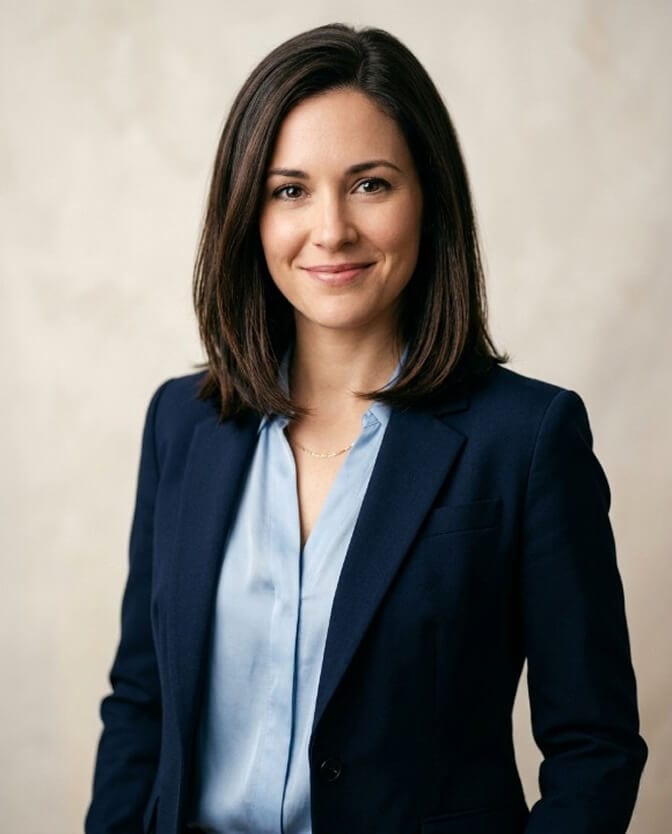
So the disclosure question isn't moral. It's strategic. It's about context and what you gain or lose by saying it out loud. That reframe changes everything.
What the data actually says (and where it disagrees with itself)
Here's where it gets messy, and I want to be straight with you about the mess.
The research does not fully agree.
One large recruiter survey found that a majority believe AI headshots should be disclosed. They don't see it as a neutral choice. They see it as something transparency should cover.
But another study of hundreds of hiring professionals found that 82% said candidates don't need to disclose an AI headshot at all. The same research showed recruiters could only correctly identify AI photos about 38 to 40% of the time. That's worse than a coin flip. And in blind tests, a striking share of recruiters actually preferred the AI headshots for professionalism and approachability.
Read those two findings again. Recruiters say disclosure matters, but they can't tell which photos are AI, and they often like the AI ones more.
This is where most people get it wrong. They treat "recruiters say you should disclose" as a rule. It's not a rule. It's a vibe about honesty, and it evaporates the moment the photo simply looks like a real, recognizable you. Nobody feels deceived by a headshot that matches the person who walks in.
The 3 situations where I'd actually disclose
So when does it make sense to say something? Three cases. That's it.
1. When disclosure makes you look good, not guilty. If you work in AI, tech, design, or anything where using new tools is part of your credibility, a light mention is a flex. "Headshot generated with AI, because I practice what I build." Now it signals competence instead of apology. Some platforms are even moving toward transparency badges that reward this.
2. When your industry runs on literal authenticity. A few fields treat photos as identity verification, not branding. Think provider directories, certain legal or government contexts, anywhere a picture is meant to prove who you are rather than present you. There, a genuine photo is the expectation, and AI has no business pretending otherwise.
3. When the image stops looking like you. If the result reshaped your jaw, erased a decade, or handed you skin with no pores, the problem isn't disclosure. The problem is the photo. Either fix it or flag it. If your AI headshot doesn't look like you, that gap is the real risk, not the technology.
Disclosure is a tool for building trust, not a punishment for using software. Use it where it earns you something.

The bigger trap nobody warns you about
Here's the thing that should actually keep you up at night, and it isn't the disclosure caption.
It's over-editing.
We're in a moment of rising fraud awareness. Recruiters are tired. They're wading through AI-written resumes and AI-assisted everything, and a small but real share say they'd reject candidates who lean on AI as a substitute rather than a support. That fatigue means a headshot that looks too perfect gets a skeptical second look, disclosure or not.
So the move isn't to confess. The move is to never give anyone a reason to squint.
A headshot that looks like a real human on a good day sails right through. A plastic, over-smoothed, suspiciously flawless one raises eyebrows whether you labeled it or not. The trust isn't in the caption. It's in the face.
This is exactly why we built our tool to keep skin texture, real expression, and your actual features intact. Authenticity isn't a disclosure problem you solve with words. It's a quality bar you clear with the image itself.
If you want a headshot that looks unmistakably like you, no caption required to make it believable, you can get your professional headshot with Headshot Photo in about one hour.
So, what should you actually do?
Let me make it simple, because you've waited long enough at that save button.
For 95% of people, on LinkedIn, resumes, company pages, and conference bios: no disclosure needed. Use a headshot that genuinely resembles you, and you're being completely honest. Nobody is misled. The platforms don't require a label for a photo that looks like you.
Disclose when it makes you look sharper (AI-adjacent work), when your field demands literal authenticity (verification contexts), or when you want to get ahead of a photo that's drifted too far from your real face. Otherwise, save the caption energy.
I told that guy to hit save. No note. His photo looked like him on a Tuesday when the light cooperated. That's not a confession-worthy event. That's just a good headshot.
Want to see what recruiter-safe output looks like before you decide? We broke down whether AI headshots are acceptable for LinkedIn with the full data, and our professional headshot examples show real people looking like themselves.
Frequently Asked Questions
Should you disclose that your headshot is AI-generated?
In most professional settings, no. If the photo genuinely looks like you, you are representing yourself honestly, and platforms like LinkedIn do not require a label. Disclosure makes sense mainly when it boosts your credibility, when your field requires verified authenticity, or when the image no longer resembles you.
Do recruiters care if your headshot is AI-generated?
The data is mixed but reassuring. Recruiters correctly spot AI headshots less than half the time, and many actually prefer them for professionalism in blind tests. What they care about is whether the photo looks like a real, recognizable person, not the method behind it.
How do I disclose an AI headshot without looking unprofessional?
Frame it as a strength, not an apology. A short line in your About section like "headshot generated with AI" works well, especially in tech or design roles where tool fluency signals competence. Keep it factual and brief, and never apologize for it.
Is it worth using an AI headshot if disclosure feels risky?
Yes. Having no professional photo costs you far more than any disclosure worry, since profiles with photos get vastly more views. The real risk is not AI, it is an over-edited image that stops looking like you, which you avoid by choosing a tool that preserves your real features.
Is it dishonest to use an AI headshot on LinkedIn without disclosing?
Not if it looks like you. A headshot has always been a staged, flattering version of your real self, and AI simply makes that faster. Honesty is about resemblance, not about announcing which software produced the image.