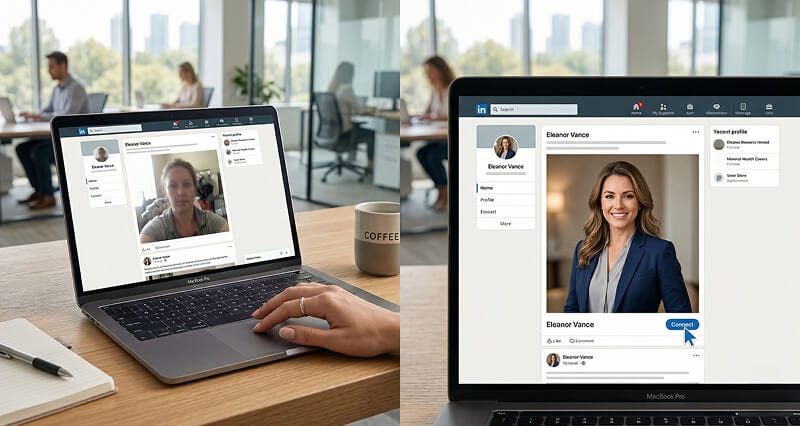
The science behind which profile photos make recruiters stop scrolling, and the 2026 shifts most professionals are sleeping on.
Last Tuesday, a friend of mine, a VP at a Series B startup, texted me a screenshot of her LinkedIn analytics.
"Why does nobody view my profile anymore?"
She'd rewritten her headline. Updated her About section. Even posted twice a week for a month.
I looked at her profile photo. It was from 2019. Shot against a white wall. Arms crossed. Slight frown.
That's why.
Here's the thing nobody wants to hear: on LinkedIn in 2026, your headshot does more work than your resume. And most people's headshots are actively working against them.
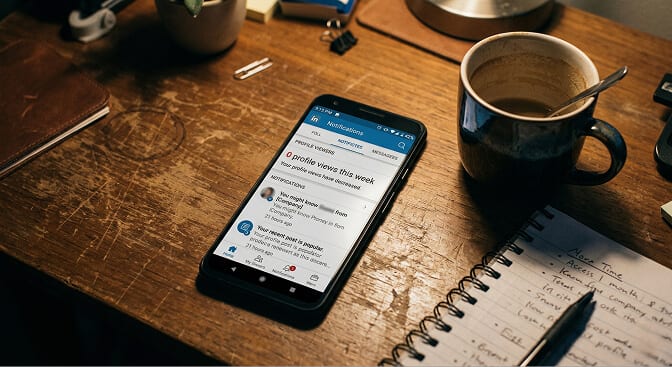
The numbers that should make you uncomfortable
Let me throw some data at you before we go any further.
LinkedIn's own research shows that profiles with a professional photo get 21x more profile views than those without one. They get 9x more connection requests. And this one stings: 36x more messages.
But here's where it gets messy.
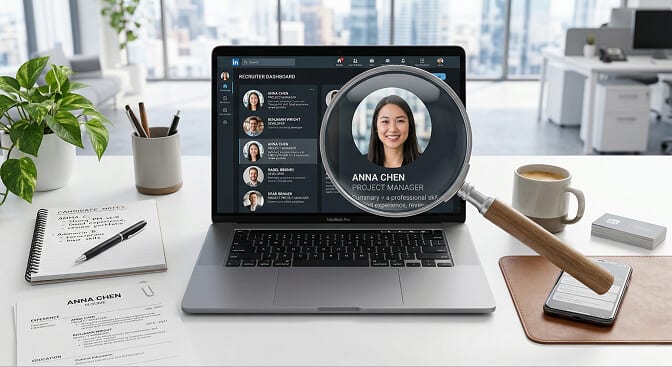
An eye-tracking study of professional recruiters found they spend 19% of their total LinkedIn viewing time staring at the profile photo. Almost a fifth of their attention goes to that tiny circle before they even read your name.
And 67% of recruiters said they won't message candidates with unprofessional photos. Not "probably won't." Won't.
Your headshot isn't decoration. It's a filter. And if yours is outdated, poorly lit, or just... meh, you're being filtered out of conversations you don't even know exist. If you're wondering just how much your LinkedIn photo affects your job search, the data is pretty brutal.
What "professional" actually means in 2026
Here's where most advice goes wrong.
People hear "professional headshot" and picture a stiff portrait from 2014. Dark suit. Crossed arms. Background so white it hurts your eyes. The kind of photo that screams I am a serious person who does serious things.
That's not what works anymore.
The biggest headshot shift in 2026 is simple: authenticity over perfection.
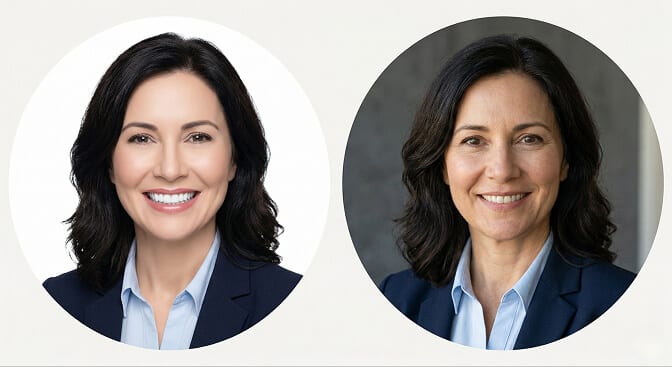
Heavy airbrushing is out. Rigid "cheese" smiles are out. The "wax-skin, erased-pores" look that screams AI or over-retouching? It dates your image faster than a flip phone.
What's in? Real texture. Real expression. Looking like the person who'd actually show up to a Zoom call.
The new standard is "polished, not plastic." You want to look like the best version of yourself, not a version of someone else.
Photographers across the industry are saying the same thing: clients who show up wanting to look 10 years younger end up with photos that break trust the moment someone meets them in person. The "catfish effect," as one study put it, erodes credibility before a single word is exchanged.
The 5 headshot traits that actually drive clicks
PhotoFeeler ran a massive study, over 60,000 ratings across 800 profile photos, measuring perceived Competence, Likability, and Influence. The findings give us a pretty clear blueprint for what works.
None of that requires a new shoot. A profile picture maker can retighten the crop and clean up the background on a photo you already have.
1. Smile with teeth (but don't laugh)
A genuine smile showing teeth boosts Likability by +1.35, the single largest positive impact of any trait tested. It also pushes Competence up by +0.33 and Influence by +0.22.
But take it too far into a laughing smile? Your Likability spikes to +1.49, but Competence and Influence drop. The sweet spot is warm, natural, teeth visible. Not a grin. Not a smirk. Something real.
2. Direct eye contact
Look into the lens. Not off to the side. Not down at your phone.
Eye contact triggers oxytocin, the bonding hormone, in the viewer. Princeton researchers found people form trustworthiness judgments from faces in just 100 milliseconds. Eye contact is a primary driver of that snap decision.
Sunglasses? They kill your Likability by -0.36. Anything obscuring your face, whether it's hair, glare, or shadow, drops Competence by -0.29.
3. Head-and-shoulders framing
Full-body shots reduce perceived Competence and Influence by -0.29 each. Extreme close-ups (face only, no shoulders) reduce Likability by -0.21.
The sweet spot: top of shoulders to just above the top of your head. Your face should fill roughly 60% of the frame, especially since LinkedIn crops everything into a circle.
4. Formal-ish clothing in dark, solid tones
Nothing they tested boosted perceived Competence and Influence more than formal dress, with an average increase of +0.94 and +1.29 respectively.
You don't need a tuxedo. But navy, charcoal, and jewel tones consistently score highest for trust. Solid colors. No logos. No busy patterns. If you need detailed guidance on what colors to wear for a headshot, we've broken it all down by skin tone and industry.
The 2026 rule of thumb: dress one level above your daily norm. If you wear jeans to work, shoot in a blazer.
5. Dark backgrounds are replacing white
This is the quiet trend most people are missing.
White and light gray backgrounds still dominate healthcare directories and enterprise bios. But charcoal and near-black backgrounds are the fastest-growing trend in modern headshots. They create tighter contrast, subtle edge shaping around the jawline, and a look that reads as contemporary and confident.
On LinkedIn specifically, dark backgrounds make your face pop in the feed, which is the whole point.
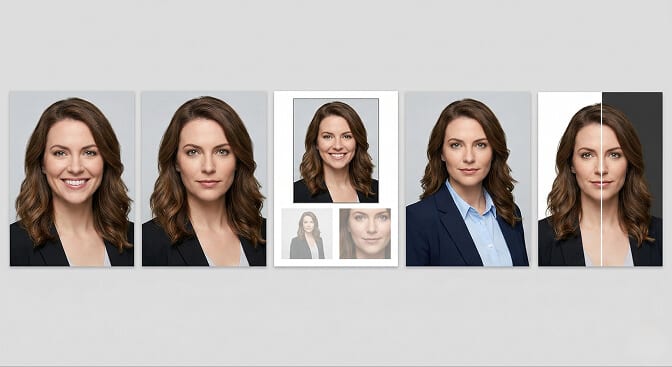
The AI headshot question (let's be honest about it)
I run Headshot Photo, so I'm going to be upfront about my bias here. But I'm also going to be honest.
The traditional studio headshot is still excellent. If you have $300-$500 and two weeks to wait, a good photographer will give you something great.
But here's the reality for most people in 2026:
You need a headshot now. You're switching jobs, launching a personal brand, getting tagged in company bios, or simply realizing your 2019 photo is doing you no favors. You don't have two weeks. You might not have $400.
AI headshot tools have improved dramatically. The early ones were obvious: plastic skin, weird ears, that uncanny valley stare. But the best ones now handle lighting, expression, and natural skin texture at a level that genuinely surprises people. Curious whether hiring managers can spot the difference? We dug into the data on whether employers can tell if your headshot is AI.
The key test: does it look like you? Not a better-looking stranger. You, on your best day, with great lighting.
Stay with me here. Whether you go AI or studio, the traits that drive clicks are exactly the same. Smile. Eye contact. Good framing. Dark solid clothing. The medium doesn't matter as much as the fundamentals.

The 2026 shifts most people are missing
Beyond individual photo traits, there are broader LinkedIn trends that affect how your headshot performs.
Personal branding is no longer optional.
LinkedIn now has over 1.2 billion members globally, with engagement rates climbing year over year. Posts with images see 2x more engagement than text-only. But here's the part that matters for your headshot: your photo appears on every single post you make, every comment you leave, every connection request you send.
Your headshot isn't just your profile page. It's your avatar across the entire platform. It shows up hundreds of times before someone ever clicks through to your actual profile.
AI-detection anxiety is real.
A Pew Research survey found that Americans remain wary about AI-generated content and their ability to detect it. This creates an interesting tension: AI headshots are better than ever, but some people worry about being "caught." The solution isn't avoiding AI. It's using tools that prioritize natural results over obviously filtered perfection. The best AI headshots don't look "AI." They look like a great photo taken on a good day.
Founder and executive visibility is surging.
Research shows that 85% of FTSE top CEOs now use LinkedIn, up from 12% just a few years ago. Executives and founders who show up on the platform build measurably more trust than those who hide behind company pages.
If you're a founder, your headshot is quite literally your brand's face. And it needs to feel current, approachable, and real.
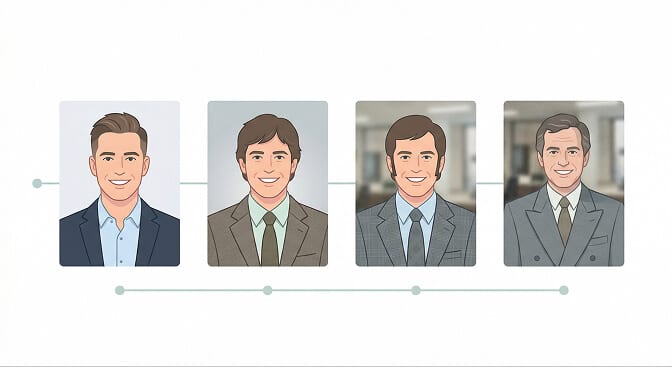
Your headshot has a shelf life.
The industry recommendation is to update every 2-3 years, or sooner if your appearance changes meaningfully: glasses, facial hair, hairstyle, weight. An outdated photo doesn't just look off. It signals that you're not paying attention to how you show up professionally.
The part nobody tells you
Here's what I wish someone had told me years ago:
Your headshot isn't for you.
I know that sounds weird. But your headshot is a communication tool for the people looking at it: recruiters, potential clients, collaborators, that person deciding whether to accept your connection request.
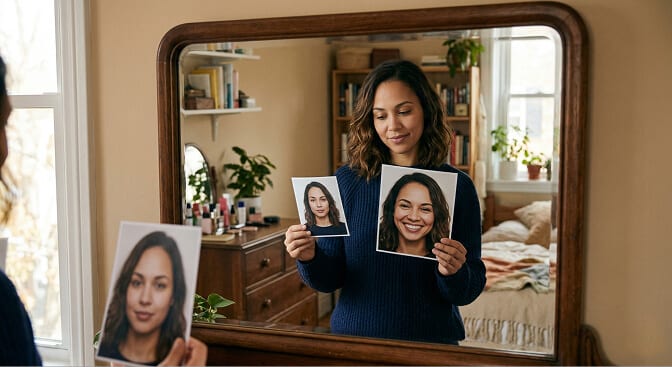
You might hate how your smile looks. You might think that photo "doesn't look like you." But if it scores high on Competence, Likability, and Influence with strangers? That's the one. That's the one that gets clicks.
The self-acceptance gap is real. Researchers at USC found that photographs force us to confront the difference between how we see ourselves and how we want to be seen. That discomfort is normal. But it shouldn't drive the decision.
Pick the photo that works for them, not the one that makes you most comfortable.
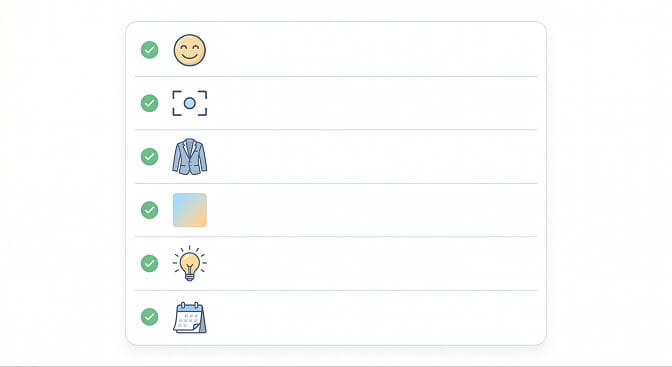
A simple checklist before you update
If you're going to update your LinkedIn headshot this week, and you probably should, here's what to nail:
Expression: Genuine smile, teeth visible, slight squinch (slightly narrowed eyes signal confidence). No stiff corporate face.
Framing: Head and shoulders. Face fills 60% of the frame. Center yourself for LinkedIn's circular crop.
Clothing: Solid colors, one level above daily wear. Navy, charcoal, or jewel tones. No logos, no busy patterns.
Background: Neutral and clean. Dark backgrounds are trending. Avoid anything that competes with your face.
Lighting: Soft and directional. Avoid harsh shadows, blown-out highlights, or that "nighttime selfie" look.
Recency: If your photo is more than 2-3 years old, it's time. Period.
And if the thought of booking a studio session makes you procrastinate for another six months, you can see real before-and-after AI headshot transformations to see just how far the technology has come. Then get yours done in minutes on Headshot Photo.
The real takeaway
Your LinkedIn headshot isn't about vanity. It's about removing friction.
When your photo looks current, competent, and human, people trust you faster. They click. They connect. They reply to your messages. The data is overwhelming on this.
And in 2026, where 49 million people search for jobs on LinkedIn every week and recruiters form opinions in under a second, "I'll get around to it" is a luxury you probably can't afford.
The good news? It's never been easier or cheaper to fix. You just have to actually do it.

Frequently Asked Questions
What is the best LinkedIn headshot style in 2026?
The best LinkedIn headshot in 2026 features a genuine smile showing teeth, direct eye contact, head-and-shoulders framing, solid dark clothing, and a clean neutral background. Dark charcoal backgrounds are trending over white. The emphasis has shifted from "perfectly retouched" to "polished but natural." Your photo should look like you on your best day, not a heavily filtered version of someone else.
How does an AI headshot compare to a professional photographer for LinkedIn?
AI headshot tools have narrowed the quality gap significantly in 2026. A studio session ($150-$500) still offers the most control over lighting and wardrobe, but AI generators like Headshot Photo produce natural-looking results for around $29 in under 1 hour. The best AI tools now handle skin texture, lighting, and expression naturally. For most professionals, the deciding factor is time and budget rather than quality.
How often should I update my LinkedIn profile photo?
Every 2-3 years is the standard recommendation, but you should update sooner if your appearance changes noticeably: new glasses, different hairstyle, facial hair changes, or significant weight change. An outdated photo creates a trust gap when people meet you in real life. If your headshot is from before 2024, it's time for a new one.
Is an AI-generated LinkedIn headshot worth it?
For most professionals, yes. AI headshots cost a fraction of a studio session and deliver results in minutes. The key is choosing a tool that produces natural-looking results rather than obviously filtered ones. Public sentiment around AI-generated images is still cautious, so the best AI headshots are ones that don't look "AI" at all. If the result looks like you and passes the "would a recruiter trust this face?" test, it's worth it.
Does your LinkedIn profile photo really affect job search results?
Absolutely. LinkedIn's own data shows profiles with professional photos receive 21x more views, 9x more connection requests, and 36x more messages. Recruiters spend nearly 20% of their LinkedIn viewing time on the profile photo, and 67% say they won't message candidates with unprofessional photos. Your headshot is often the first and most powerful filter in the hiring process.