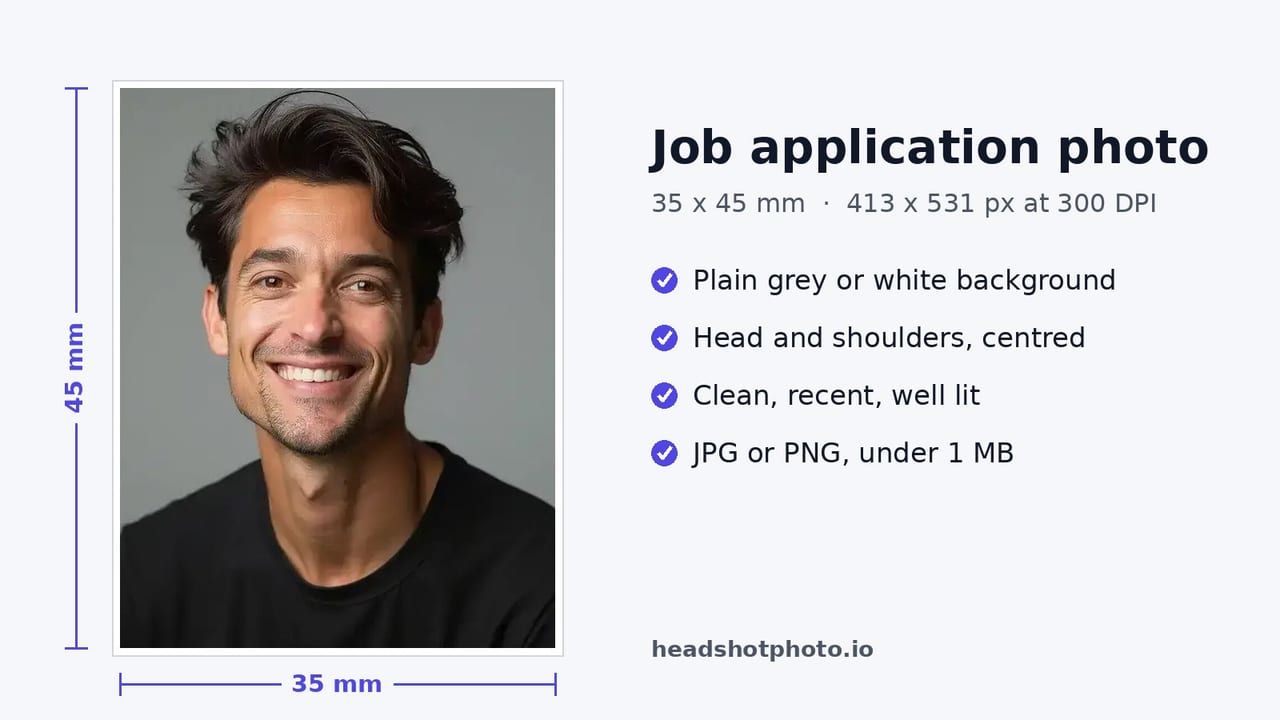

Job application photo: the short answer
- Size: 35 x 45 mm (413 x 531 pixels at 300 DPI), or 2 x 2 inches (600 x 600 pixels) where a square photo is asked for.
- Background: plain and light, such as white, light grey or soft beige.
- Crop: head and shoulders, facing the camera, with your face filling about 70% of the frame.
- Outfit: what you would wear to the interview, in solid colours.
- Age: recent, taken within the last 6 months, so it matches the person who turns up.
A job application photo is a small, professional headshot attached to a CV, resume, cover letter or online application form. Whether you need one depends on where you are applying: it is expected in Germany, Austria, Switzerland and much of Europe, Asia and the Middle East, and usually left off in the US, UK, Canada, Australia and Ireland.
This guide covers which countries expect a photo, what a good one looks like, the correct size, what to wear, examples that pass, and the quickest ways to get one.
Jump to: Examples · When a photo is required · What a good photo looks like · What to wear · Size and file specs · Good vs bad · How to get one · FAQs
Job Application Photo Examples
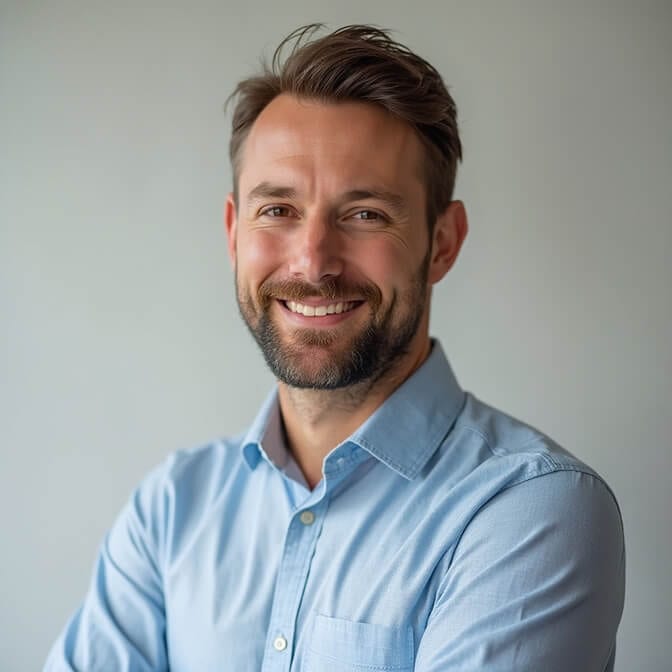
Each of the photos below would work on a job application. They share the same basics: the face is sharp and centred, the light is soft and even, the background stays out of the way, and the outfit matches a real job.
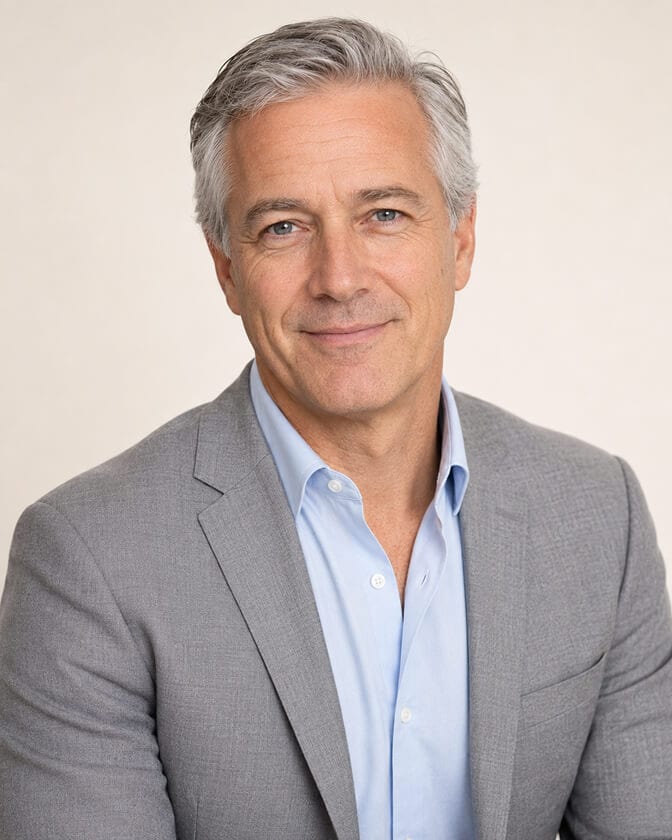
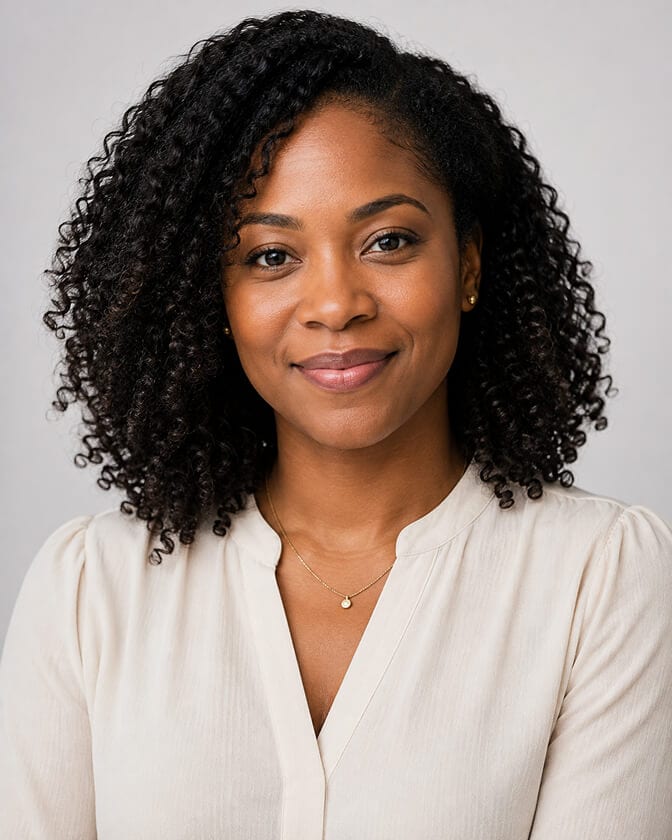
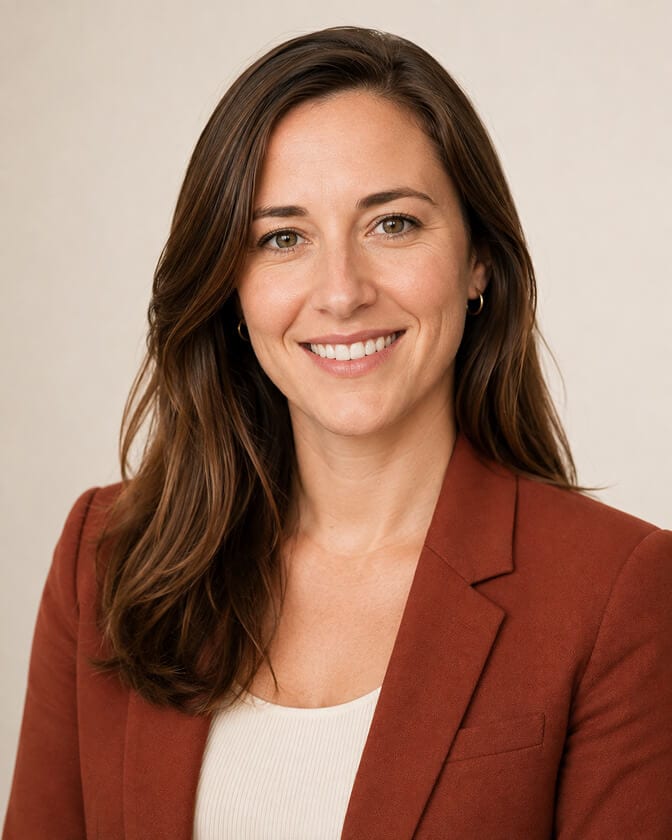

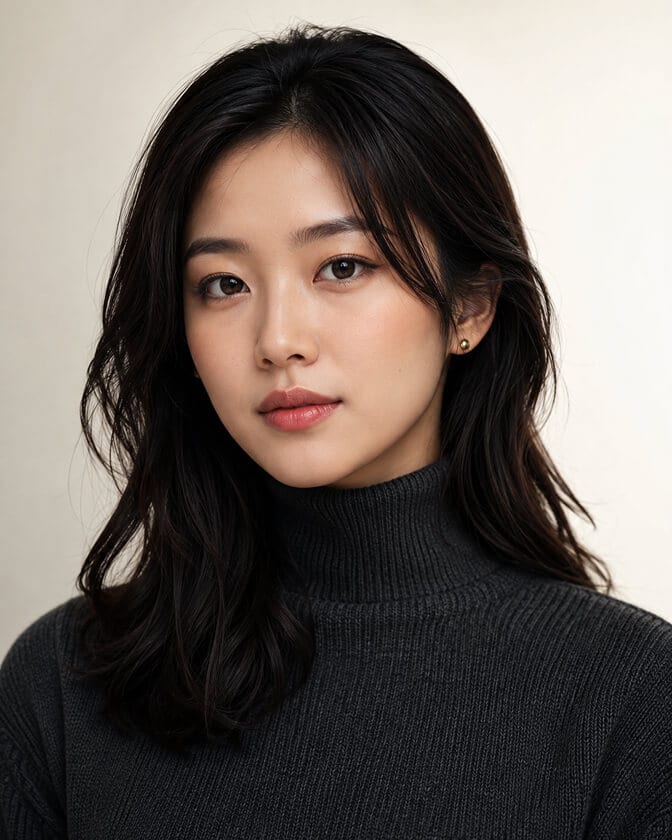

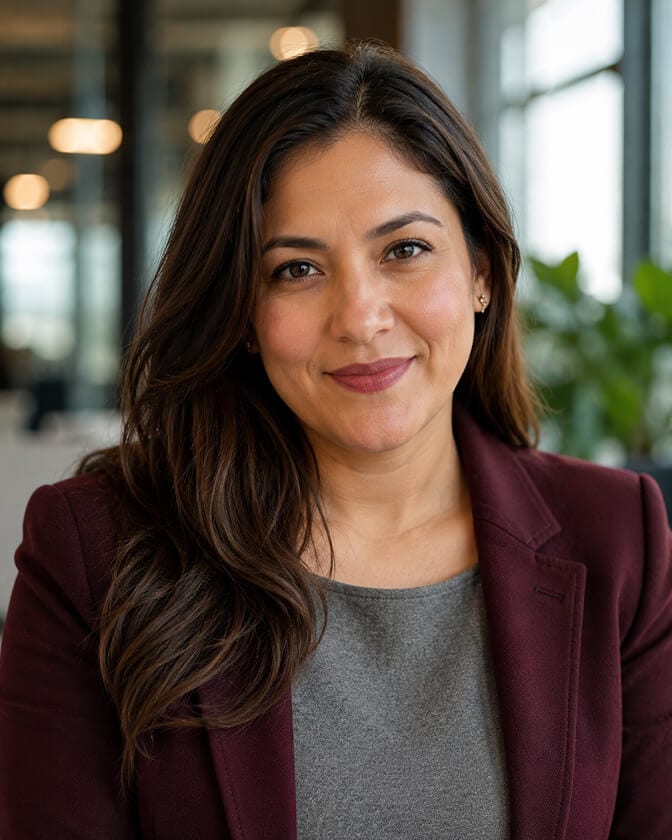
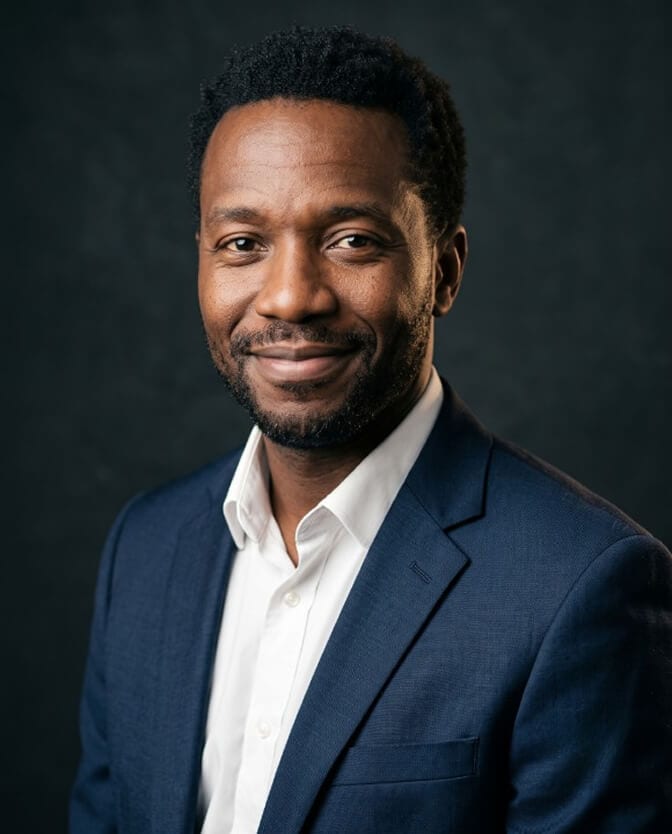
These are AI-generated headshots; an AI headshot generator can produce the same style from ordinary selfies. More examples by style are in our guide to good headshot examples.
When Is a Photo Required on a Job Application?
It depends on the country, not on personal taste. In some countries a photo is so standard that a CV without one looks unfinished. In others, anti-discrimination rules mean a photo can get your application set aside before anyone reads it.
| Photo expected or common | Optional: check the employer | Leave it off |
|---|---|---|
| Germany, Austria, Switzerland | Netherlands | United States |
| France, Belgium | Denmark, Norway, Sweden | United Kingdom |
| Spain, Portugal, Italy | India | Canada |
| China, Japan, South Korea | Mexico, Brazil | Australia, New Zealand |
| UAE, Saudi Arabia and much of the Middle East | Multinationals anywhere | Ireland |
Where a photo is expected. In Germany, Austria and Switzerland a photo on the CV (the Bewerbungsfoto) is still the norm. France, Belgium, Spain and Italy commonly put one in the top corner. Japanese and Korean application forms have a printed photo box, and Chinese applications usually ask for one. Across the Gulf, a photo is a normal part of the CV.
Where to leave it off. In the US and Canada, employers avoid photos because they reveal age, race and gender, which creates a discrimination risk under equal-employment rules. Many recruiters there will remove or discard a CV that has one. The UK, Ireland, Australia and New Zealand follow the same convention. If you are applying in these countries, read should you put a picture on your resume first.
When it is optional. In the Netherlands and Scandinavia, photos are acceptable but no longer expected. In India and Latin America, they are common on CVs, but many larger employers now leave them off. Multinationals usually follow the convention of their headquarters country.
The simple rule: include a photo only when the employer asks for one, or when it is normal in the country or industry you are applying to. If the job ad or portal names a size or format, use that. For country-specific sizes, see CV photo size by country.
What a Good Job Application Photo Looks Like
A recruiter usually sees the photo before reading anything else. These are the details that make it look professional rather than casual.
Framing and camera angle
Use a head-and-shoulders crop, or chest-up at most, with the camera at eye level. Face the camera directly or turn your shoulders slightly with your face toward the lens. Sit or stand up straight, because a slouch shows even in a small photo.
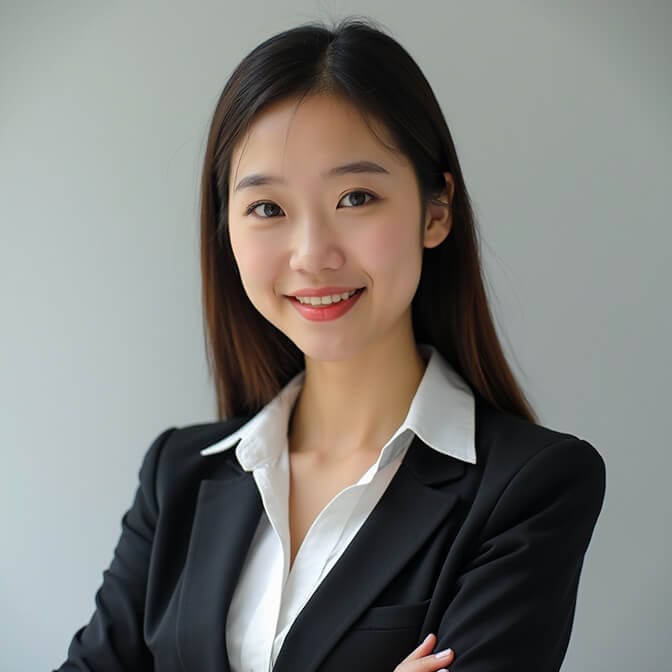
Background
Use white, light grey or light beige. Avoid rooms, patterned walls, outdoor scenes and anything a reader might look at instead of you. A softly blurred office works for online profiles, but a plain background is safest for a printed CV.

Facial expression
A soft, closed-mouth smile reads as friendly and confident almost everywhere. In conservative sectors such as law and finance, and on Japanese and Korean applications, a calm, neutral expression is more usual. Whichever you choose, look relaxed rather than posed.
Lighting
Use soft, even light from the front, such as a window in daylight. Avoid overhead light, which casts shadows under the eyes, and direct flash, which flattens the face and adds glare. If you need help with setup, see our headshot lighting guide.
Placement on the CV
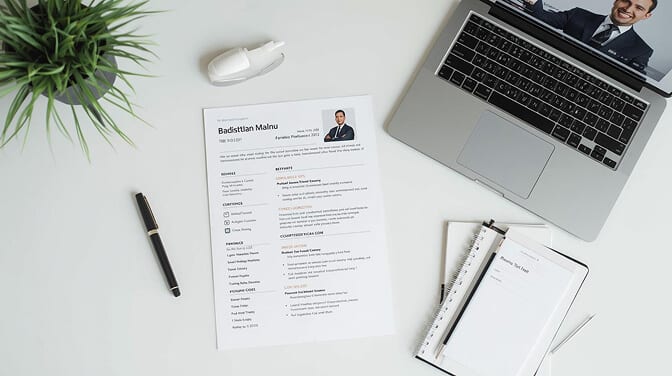
Put the photo in the top-right corner, or at the top of the sidebar in a two-column template, so it sits next to your name without pushing content down. Use the same photo, or the same style, on your CV, cover letter and LinkedIn profile. Our resume photo template guide shows layouts.
What to Wear for a Job Application Photo
Wear what you would wear to the interview for that job. Solid colours work best, because patterns and logos turn into noise at 35 x 45 mm.

| Job type | What to wear |
|---|---|
| Corporate, finance, law | Blazer or suit jacket over a plain shirt or blouse; tie optional |
| Office, admin, sales | Collared shirt, blouse or blazer with no tie |
| Tech, startups, creative | Smart casual: a plain knit, shirt or simple top |
| Healthcare, hospitality, trades | The uniform the role expects, if it is clean and well fitting |
| Graduates and first jobs | One step above the job, such as a collared shirt or simple blouse |
A few rules apply to every job:
- Colours: navy, charcoal, grey, burgundy and muted blues and greens suit most skin tones and backgrounds. Avoid pure white on a white background. See the best colours to wear for a headshot.
- Fit: clothes that fit well matter more than formal clothes. A borrowed suit that is too big looks worse than smart casual that fits.
- Accessories: keep jewellery small and skip anything that catches the light. Wear glasses if you wear them every day.
- Grooming: neat hair and your everyday look. Do not use a photo taken before a big change in hairstyle or facial hair.
For more outfit ideas by role, see what to wear for headshots by profession.
Job Application Photo Size and File Specs
| Format | Size | Pixels (300 DPI) | Where it is used |
|---|---|---|---|
| European standard | 35 x 45 mm | 413 x 531 px | Most of Europe and most international applications |
| Square | 2 x 2 in | 600 x 600 px | Online forms, US-style templates, India, Philippines |
| German Bewerbungsfoto | 4.5 x 6 cm | 531 x 709 px | Germany and Austria (35 x 45 mm is also accepted) |
| Japan, South Korea | 3 x 4 cm | 354 x 472 px | Rirekisho and Korean application forms |
| Screen only | n/a | 400 x 400 to 600 x 600 px | Application portals, LinkedIn, PDF CVs |
- File format: JPG or PNG, ideally under 1 MB.
- Resolution: export at the size you need. Do not stretch a small image up to 413 x 531 px, because it will look blurry.
- Colour: use colour, not black and white.
- Age of photo: taken within the last 6 months, and matching how you look now.
For cropping and resolution in more depth, see professional headshot dimensions. If you already have a photo you like, our free resume photo maker crops and resizes it to 413 x 531 px or 600 x 600 px in your browser.
Good vs Bad Job Application Photos
| Good photo | Bad photo |
|---|---|
| Head and shoulders, face centred | Full body, or cropped from a group shot |
| Plain, light background | Bedroom, car, kitchen, outdoor scene |
| Soft, even front light | Overhead light, harsh shadows, flash glare |
| Interview clothes in solid colours | Gym wear, party outfits, busy patterns, sunglasses |
| Sharp, correctly sized file | Blurry, pixelated or stretched |
| Recent and true to how you look | Years old, heavily filtered or retouched |
The most common mistakes are selfies taken at arm's length, which distort the face, holiday photos with the background cropped tight, and old photos that no longer look like the candidate.
How to Get a Job Application Photo
There are three ways to get one: book a photographer, take it yourself with a phone, or create one with AI from selfies.
Professional photographer
A photographer handles posing, lighting and retouching, and the results are usually excellent. A session typically costs $100 to $300 or more, and you need to book, travel to the studio and wait for edited photos.
DIY with a smartphone
A phone photo costs nothing, and you can take as many as you like. The hard parts are even lighting and a clean background, and photos taken at home often look casual. If you go this way, follow our DIY headshot guide: stand facing a window, use a plain wall, and ask someone else to take the photo from about 1.5 metres away with the camera at eye level.
AI-generated photo
An AI headshot generator turns a set of ordinary selfies into studio-style headshots, with a choice of outfits and backgrounds. Quality varies between tools, so compare a few before you choose. Our roundup of AI tools that create headshots from photos covers the options.
| Factor | Photographer | DIY smartphone | Headshot Photo (AI) |
|---|---|---|---|
| Cost | $100 to $300+ | Free | $34 / $39 / $59 |
| Turnaround | Days to weeks, including booking | Immediate, but many retakes | About 1 hour |
| Number of photos | A few edited shots | As many as you take | 40, 80 or 100 headshots |
| Background and lighting | Professionally set up | Hard to control at home | Chosen from studio and office styles |
| Best for | People with the budget and time | Applications where the photo is optional | Job seekers who need a professional photo quickly |
How Headshot Photo works
- Upload selfies. Upload a set of clear, recent photos of yourself. They do not need to be professional, just well lit and showing your face from a few angles.
- Pick styles. Choose outfits and backgrounds, from business formal to smart casual, and from plain studio backdrops to office settings.
- Get your headshots. The Basic plan ($34) delivers 40 headshots in 3 hours, Premium ($39) delivers 80 in 2 hours, and Enterprise ($59) delivers 100 in 1 hour. You get an email when they are ready.
- Download and crop. Pick the most natural result and download it in high resolution, ready to crop to 35 x 45 mm or 2 x 2 inches.
The tool keeps your real features and skin texture rather than smoothing them away, which matters because the interviewer needs to recognise you. Pick the photo that looks most like you, not the most flattering one. The same set also gives you a matching photo for your LinkedIn profile.
Need a job application photo?
Upload a few selfies and get professional headshots sized for your CV, application forms and LinkedIn, ready in 1 hour. Headshot Photo has created 1.4 million+ headshots for 14,239 professionals.
Get your professional headshot with Headshot Photo →Plans from $34 · See pricing
Job Application Photo Checklist
Before you attach the photo, check that it is:
- The right size for the country or the size the employer asked for
- On a plain, light background
- Cropped to head and shoulders, with your face filling about 70% of the frame
- Lit evenly, with no harsh shadows or glare
- Showing interview clothes in solid colours
- Taken within the last 6 months
- Saved as a sharp JPG or PNG under 1 MB
If you are applying on job boards such as LinkedIn or Jooble, recruiters may see your profile photo before your CV, so use the same professional headshot there too. And if job hunting is new to you, start with a photo you can reuse everywhere.
When you are ready, get your professional headshot with Headshot Photo.
FAQs
Do you need a photo on a job application?
Only when the employer asks for one or it is normal in the country. Photos are expected in Germany, Austria, Switzerland, France, Spain, Italy and much of Asia and the Middle East. They are usually left off in the US, UK, Canada, Australia and Ireland, where they can create a discrimination risk for the employer.
What size should a job application photo be?
35 x 45 mm, which is 413 x 531 pixels at 300 DPI, is the standard in most of Europe and for most international applications. Where a square photo is asked for, use 2 x 2 inches (600 x 600 pixels). Germany commonly uses 4.5 x 6 cm, and Japan and South Korea use 3 x 4 cm. If the employer states a size, use theirs.
What background should a job application photo have?
A plain, light background such as white, light grey or soft beige. It keeps the focus on your face and prints cleanly at a small size. Avoid rooms, outdoor scenes and patterned walls.
What should you wear in a job application photo?
Wear what you would wear to the interview: a blazer or suit jacket for corporate roles, a collared shirt or blouse for most office jobs, and smart casual for tech and creative roles. Choose solid colours and avoid busy patterns, logos and large jewellery.
Where should the photo go on a CV?
The top-right corner of the first page is standard, beside your name and contact details. In two-column templates, it often sits at the top of the sidebar instead.
How old can a job application photo be?
Ideally no more than 6 months old. It should match how you look now, including your hairstyle, facial hair and glasses, so the interviewer recognises you.
Can you use a selfie as a job application photo?
Not straight from your phone. Selfies taken at arm's length distort the face and usually have poor lighting and a busy background. You can ask someone to take the photo at eye level against a plain wall, or use an AI headshot generator to turn selfies into a professional headshot.
Can you use an AI-generated photo on a job application?
Yes, as long as it looks like you. Choose a result that keeps your real features, age and hairstyle, and avoid heavy smoothing or changed features. The interviewer will compare the photo with the person they meet.
How much does a job application photo cost?
A professional photographer usually charges $100 to $300 or more per session. A DIY phone photo is free. Headshot Photo costs $34 for 40 headshots, $39 for 80, or $59 for 100, delivered in 1 hour.