Can You Wear a Turtleneck in a Passport Photo? The Honest Answer (Not the Lazy One)
Everyone says no. The truth is a quiet, conditional yes, and the difference is one inch of fabric.
I was standing in my hallway at 7am, holding a passport renewal form in one hand and a black turtleneck in the other.
Can I just wear this and be done?
I almost did. Then I remembered the last rejection notice a friend got, four weeks lost, twenty dollars wasted, all because of a collar. So I stopped. And I went down the rabbit hole so you don't have to.
Here's the short version, right up top.
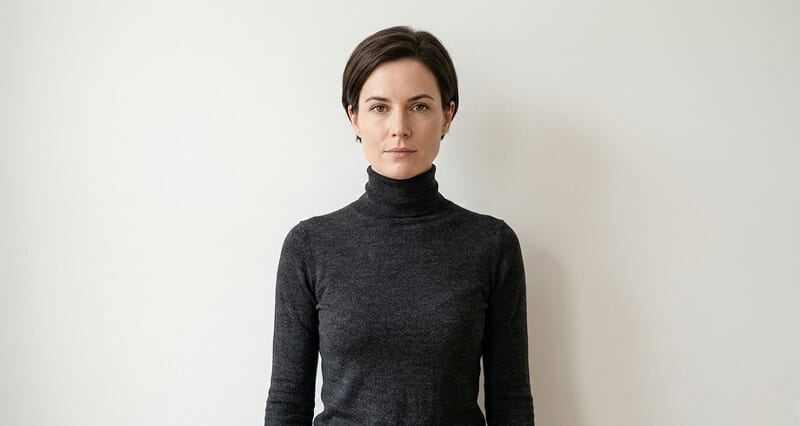
Yes, you can wear a turtleneck in a passport photo. But only if it leaves your chin and jawline fully visible and casts no shadow on your neck or face. A bunched-up, oversized, or shadow-heavy collar is what gets you rejected, not the turtleneck itself.
Now stay with me, because the why is where most people get it wrong.
The rule nobody actually reads
Here's the weird part. There is no line in the official US passport rules that says "no turtlenecks."
I went looking for it. It isn't there.
What the State Department actually cares about is this: your face must be fully visible, your expression neutral, your photo recent, and nothing can obscure your identifying features or throw shadows. That's it. That's the whole game.
So when other guides scream "NEVER wear a turtleneck," they're skipping a step. They're giving you the conclusion without the logic. And the logic matters, because it tells you exactly when a turtleneck is fine and when it's a fast track to a rejection letter.
Where the turtleneck goes wrong
A turtleneck fails the passport test for two boring, mechanical reasons. Not fashion. Not vibes. Physics.
Reason one: the collar swallows your chin. Passport photos are cropped tight, from the top of your head to just below your shoulders. A chunky cowl or a collar that rides up can creep into the bottom of the frame and clip your jaw. Reviewers read that as an obstruction.
Reason two: shadows. Thick knit fabric bunched under your chin creates a dark band right where examiners need to see clean separation between your face and your neck. Shadow equals obscured feature. Obscured feature equals rejection.
That's the part nobody tells you. The turtleneck is not the villain. The shadow is.
So when does it pass?
Picture two versions of the same person.
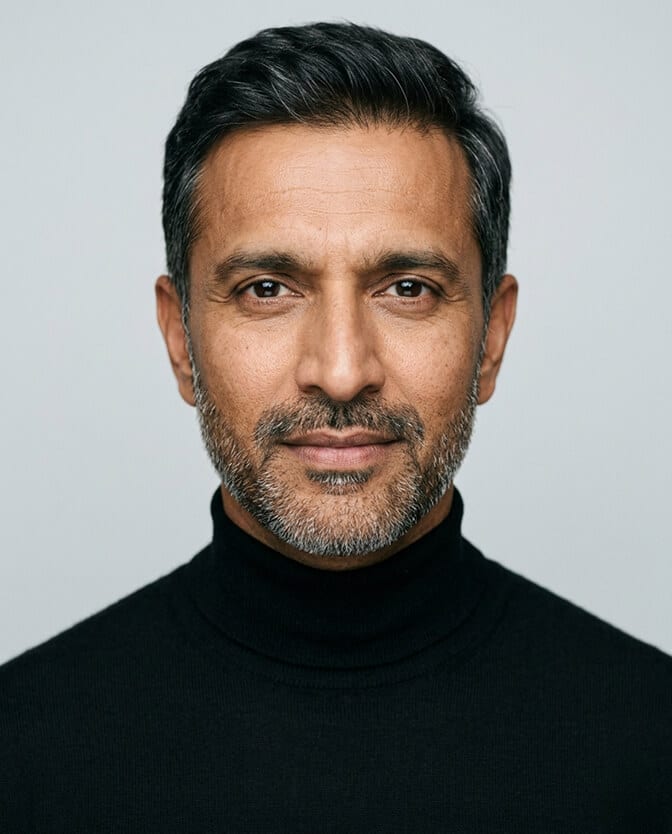
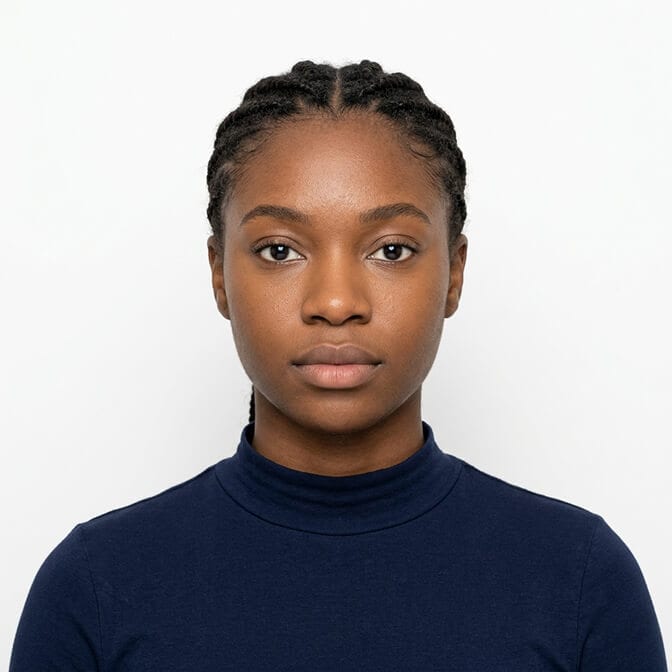
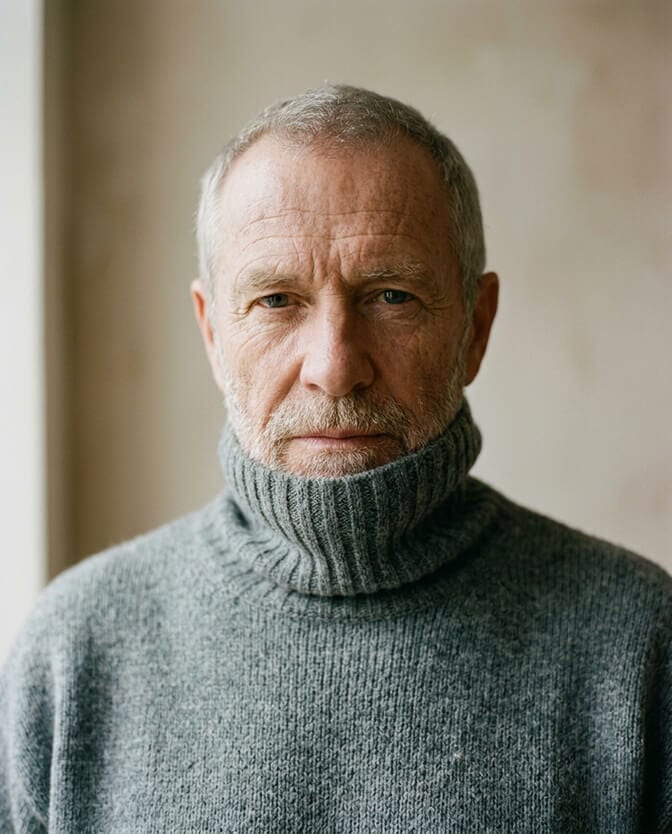
Version one wears a slim, ribbed, low-profile turtleneck in a dark solid color. Chin sits a clear inch above the fabric. Lighting comes from the front, so there's no dark pocket under the jaw. This passes. Easily.
Version two wears a giant slouchy fisherman's knit that piles up to the lower lip, in cream that nearly matches the white background. Chin disappears into wool. Neck blends into the wall. This gets rejected, and honestly it deserves to.
Same garment category. Completely different outcome. The variable was never "turtleneck or not." It was fit, color, and light.
The color trap that ruins more photos than collars do
Quick detour, because this one quietly wrecks people.
Passport photos are shot on a white or off-white background. So a white turtleneck, a cream one, a pale grey one... they melt into the backdrop. Your shoulders vanish. You look like a floating head.
Dark, solid colors win. Charcoal, navy, deep green, black. They give your outline contrast and make the whole image read as crisp and intentional.
If you want a deeper breakdown of how color reads against different backdrops, we wrote a full guide on the best colors to wear for a professional photo. The same physics apply whether it's a passport or a profile picture.
The 2026 rule that changes everything
Now here's the thing I really need you to hear, because it's the part the other articles are silent on.
You cannot use an AI generator to make your passport photo. Not in 2026.
The State Department now explicitly rejects any passport photo that has been generated or altered using AI, filters, or beauty apps. They consider it a change to your biometric data, and it's an automatic rejection. Background swaps and AI face smoothing are out.
I'm telling you this even though we make AI headshots. Especially because we make AI headshots.
Headshot Photo is built for your professional presence. Your LinkedIn, your team page, your speaker bio, your About page. It is not built for your passport, and we will never pretend otherwise.
If you want a compliant passport photo, take a real, unedited photo against a plain wall in good front light, or visit a photo counter. Keep it boring. Boring passes.
Here's where it gets interesting
So a turtleneck in a passport photo is a careful, conditional yes.
But a turtleneck in your professional photo? That's a whole different conversation. And it's the more useful one, because that's the photo people actually judge you on every single day.
Think about it. Nobody looks you up and pulls your passport. They pull your LinkedIn. Your company bio. The little circle next to your name in a Slack thread or a Zoom grid.
And in that world, the turtleneck stops being a liability and becomes a signal.
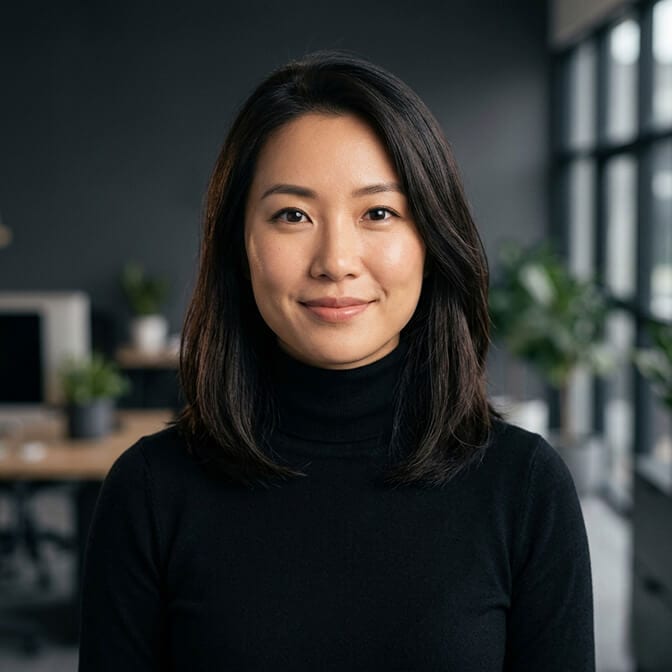
A clean dark turtleneck reads as quietly confident. Creative-director energy. Tech-founder energy. It says you thought about it. Designers, consultants, writers, and execs have used it as a uniform for decades precisely because it's simple and it photographs beautifully.
The constraints that strangle a passport photo, the tight crop, the white wall, the no-shadow rule, simply don't exist when you control the shot. You get warm lighting. A soft charcoal background. A neckline that frames your face instead of fighting it.
If you've been curious how outfit choices play out in that setting, our piece on what to wear for professional headshots for men and women, plus which corporate outfits actually work, walks through it.
This is the part I wish someone had told me earlier: the same turtleneck that's a gamble on your passport can be the strongest thing you wear in your headshot.
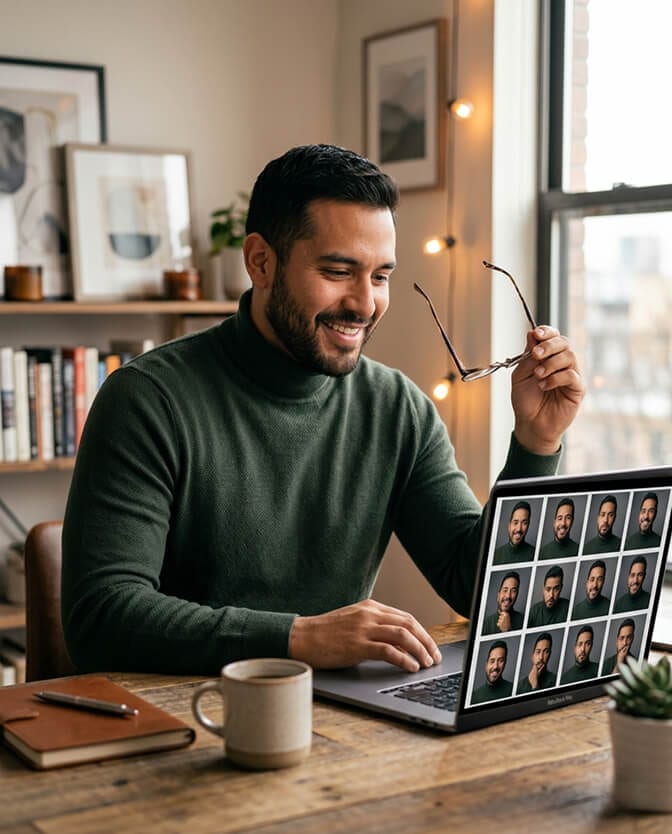
If you've been staring at your closet wondering what photographs well for your professional photo, you can test outfits, necklines, and backgrounds without booking a studio. Pick your wardrobe and backdrop inside Headshot Photo and see how a turtleneck actually lands on you.
A quick checklist before you commit
If you're set on the turtleneck for your passport photo, run this in your head first.
- Can you see the full chin and jawline above the collar? If yes, good.
- Is the fabric thin and fitted rather than chunky and bunched? Thin wins.
- Is the color dark enough to contrast a white wall? Avoid white, cream, and pale grey.
- Is the light hitting you from the front, with no shadow pooling under your jaw? Front light, always.
- Is the photo completely unedited, with no AI, no filters, no smoothing? It has to be.
Five yeses and your turtleneck is fine. One no, and switch to a crew neck or a simple collared shirt. They're lower risk for a reason.
The part that actually matters
Here's the honest takeaway, after all of it.
A passport photo is a compliance document. You're not trying to look good. You're trying to not get rejected. So when in doubt, simplify. Crew neck, dark color, front light, no edits, done.
Your professional photo is the opposite. That one's an invitation. It's the face people meet before they meet you. That's where you get to be deliberate, where a turtleneck can say something, where the lighting and the background are yours to choose.
So wear the turtleneck. Just know which photo you're wearing it for.
When you're ready for the photo people will actually see, the one on your profile, your bio, your team page, get your professional headshot with Headshot Photo. Upload a few selfies, pick your look, and have a polished set back in minutes. No studio, no scheduling, no wasted afternoon.
Frequently Asked Questions
1. Can you wear a turtleneck in a passport photo?
Yes, as long as it's slim, a dark solid color, and leaves your chin and jawline fully visible with no shadow on your neck. The official rules don't ban turtlenecks outright. They reject photos where clothing obscures your face or creates dark patches, so a bulky high collar is the real risk, not the style itself.
2. What should you not wear in a passport photo?
Avoid uniforms, camouflage, hats or head coverings (unless worn daily for religious or medical reasons, with a signed statement), glasses of any kind, and anything white or pale that blends into the background. Sleeveless tops and very high or bunched collars can also cause problems. Plain, dark, everyday clothing is the safest choice.
3. How is a passport photo different from a professional headshot?
A passport photo is a strict compliance document with a white background, neutral expression, tight crop, and zero editing allowed. A professional headshot is a personal-branding image where you control the lighting, background, outfit, and mood. One is built to pass a checklist. The other is built to make an impression.
4. Why do passport photos reject turtlenecks so often?
It usually comes down to two things: a thick collar creeping into the cropped frame and covering the chin, and shadows forming under the jaw from bunched fabric. Both read as obscured facial features to a reviewer. A thin, fitted turtleneck in good front lighting avoids both issues.
5. Can I use an AI headshot for my passport photo?
No. As of 2026, the US State Department rejects any passport photo generated or altered with AI, filters, or editing apps, since it changes your biometric data. AI headshots from Headshot Photo are made for your LinkedIn, company bio, and professional profiles, not for passports or official government IDs.