Can I Wear Stripes in a Passport Photo? Here's the Honest Answer
What nobody tells you about patterns, rejections, and the six-week wait you really want to avoid.
I stood at the pharmacy photo counter holding a striped button-down I'd worn to work that morning.
The clerk looked at my shirt. Then at the white wall behind me. Then back at my shirt.
"You can try," she said. "But I've seen these get bounced."
That was the moment I understood something most people never get told: a passport photo isn't a fashion shoot. It's a security document. And the stripes I loved were quietly working against me.
So let me answer the question you came here for, fast, then explain the part that actually matters.
So, can you wear stripes in a passport photo?
Technically yes. Practically, you shouldn't.
There's no rule in the official US passport photo requirements that says "no stripes." You won't find stripes on a banned list next to camouflage and uniforms. So in the strictest sense, nobody can hand you a written law forbidding them.
But here's the weird part.
Just because something isn't explicitly banned doesn't mean it's safe. Passport photos get rejected for reasons that live in the gray zone, and busy patterns sit right in the middle of that gray.
Stripes aren't illegal. They're risky. And when a rejection costs you weeks, risky is the same as wrong.
Why stripes cause problems (it's not about style)
The whole point of a passport photo is contrast. A clear, clean separation between you and the background.
The background has to be white or off-white. That's not a suggestion, it's a hard requirement. And the reason behind it is facial recognition. Border systems and customs officers need a clean outline of your head and shoulders to match you to your document.
Now drop a high-contrast stripe pattern into that picture.
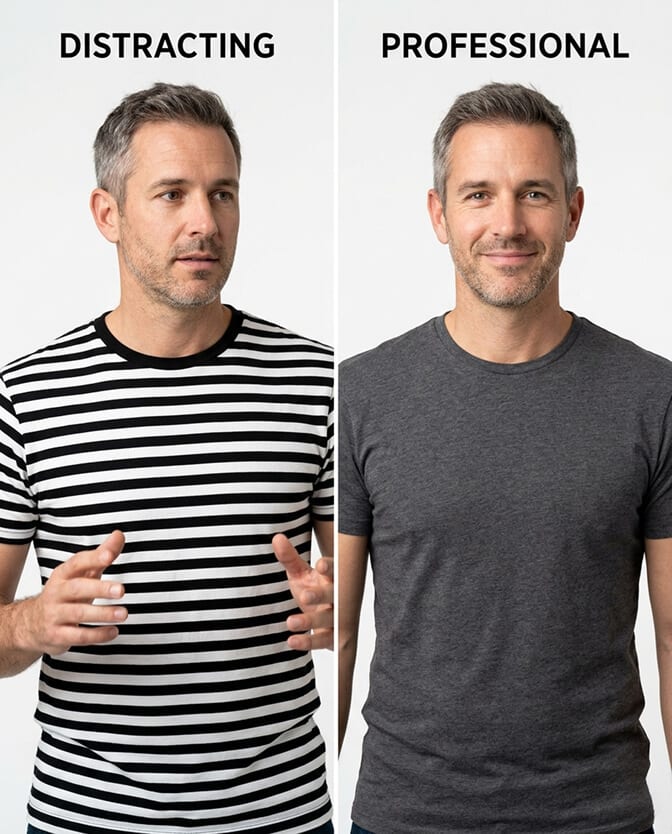
Suddenly the photo has competing visual lines. Bold stripes can confuse automated processing systems, the same systems that decide whether your photo passes or gets flagged. The pattern pulls attention away from your face, which is the one thing the photo exists to capture.
This is where most people get it wrong. They think a rejected photo means they looked bad. It usually means the photo failed a technical check, not a beauty contest.
Thin, subtle stripes in a darker shade? You'll probably get away with them. Bold black-and-white stripes, pinstripes that shimmer, anything that creates strong repeating lines? That's where you're gambling with your application.
The clothing that actually gets rejected
Let me save you a wasted afternoon. Here's what the rules genuinely care about.
Banned outright:
Uniforms are a hard no. Military, police, medical, airline, school, scout, anything that reads as a uniform. The reasoning is real: the government doesn't want you photographed in a way that links you to law enforcement or the military, because it can make you a target. Camouflage is also banned, full stop.
Strongly discouraged (and frequently rejected):
- White clothing. This one surprises everyone. Because the background is white, a white shirt makes your shoulders and neck blend in, and your head can look like it's floating. White is quietly one of the top causes of suspended applications.
- Busy patterns. Stripes, plaids, florals, big logos, graphics. None are explicitly outlawed, but all of them invite trouble.
- Glasses. Removed unless you have a doctor's note for a medical reason. Even then it's rare.
- Hats and head coverings, except for religious or medical reasons, and even then your full face from hairline to chin must stay visible.
What you should actually wear
Here's the boring truth that works every single time.
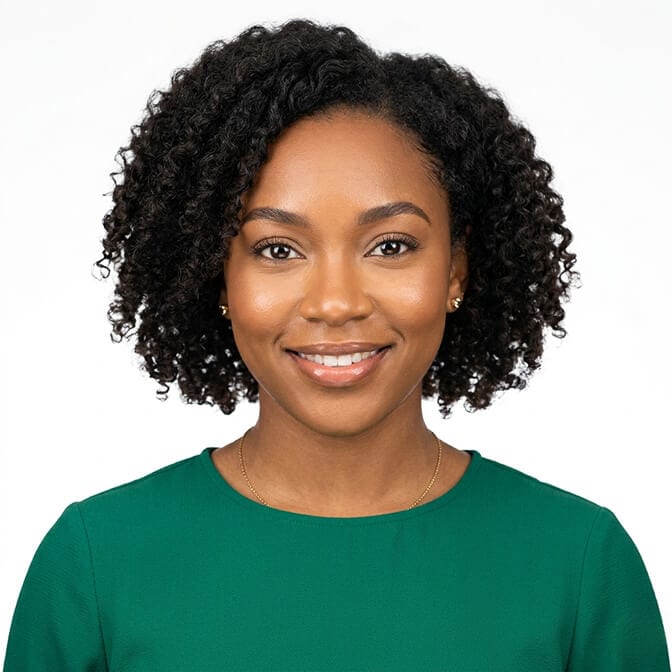
Wear a solid, medium-to-dark color. Navy. Charcoal. Black. Burgundy. Forest green. Jewel tones photograph beautifully and create the strong contrast these photos need.
Wear your everyday clothes. The guidance literally asks for clothing you'd normally wear day to day. A plain crew-neck, a simple blouse, a blazer if you want to look sharper. Nothing structured enough to read as a uniform.
Keep it timeless. This photo follows you for ten years. Whatever trend feels exciting today will look dated by year three. Boring and solid wins.
The best passport outfit is one you'll forget you were wearing. That's the entire goal. If you want a more detailed wardrobe walkthrough, our notes on what to wear for a passport photo and whether a turtleneck passes the passport test both pair well with this.
The part nobody tells you about retakes
A US passport currently takes around four to six weeks to process under normal timelines. A rejected photo doesn't just cost you the reprint. It can reset that clock and push your travel plans into a corner.
That's the real cost of stripes. Not the dollar you spent at the photo booth. The weeks.
And here's something that catches people off guard: you can't fix a non-compliant passport photo afterward with filters, apps, or editing tricks. Passport photos can't be digitally altered to change your appearance. So if the pattern causes a problem, there's no shortcut. You retake the whole thing.
This is exactly why I stopped treating passport photos as an afterthought.
If you're already putting effort into looking polished and professional, it's worth getting a clean, compliant shot the first time instead of gambling at a pharmacy counter. The same instinct that makes a great professional headshot, simple wardrobe, clean background, sharp focus on your face, is what makes a passport photo pass. You can see how that thinking translates into studio-quality results with Headshot Photo without booking a photographer or driving anywhere.
A quick reality check on AI and passport photos
People ask me this constantly, so let's be clear.
For your passport, the US State Department requires an unaltered photo that genuinely represents how you look. You cannot generate a synthetic passport photo. That's not what AI tools are for, and pretending otherwise gets applications rejected.
Where AI genuinely shines is everything else: your LinkedIn, your company bio, your personal brand, your website. The professional headshot that makes a first impression online. That's a completely different job, and it's the one worth automating.
So think of it this way. Your passport photo is a compliance task. Your professional headshot is a branding decision. Don't confuse the two, and don't let one's rules limit the other's potential.

What I wish I knew sooner
I went back to that pharmacy in a plain navy shirt the next day. The photo passed without a second glance.
The striped shirt? It went back in my closet, where it belonged.
The lesson wasn't about fashion. It was about friction. Every avoidable risk you remove from an important document is one fewer thing that can delay your life. Stripes are a small risk. But small risks have a way of stacking up at the worst possible moment.
So wear the solid shirt. Save the stripes for the trip itself.
If you want headshots that look sharp everywhere your face shows up online, not just in a government database, you can get your professional headshot with Headshot Photo in about ten minutes. Real studio quality, no scheduling, no awkward photo counters. It's the easy win your personal brand has been waiting for.
Frequently Asked Questions
1. Can I wear stripes in a passport photo?
You technically can, since stripes aren't on the official banned list, but you shouldn't. Bold or high-contrast stripes can confuse photo processing systems and pull focus from your face, which raises your rejection risk. A plain, solid, darker top is always the safer choice.
2. How do stripes compare to solid colors for a passport photo?
Solid colors win easily. A solid navy, charcoal, or jewel-tone top creates clean contrast against the required white background, while stripes add competing lines that can distract from your face. If you want your photo approved the first time, go solid.
3. What should I actually wear for a passport photo?
Wear everyday clothing in a solid, medium-to-dark color like navy, black, burgundy, or forest green. Avoid white (it blends into the white background), avoid busy patterns, and skip anything that looks like a uniform or camouflage. Keep glasses and hats off unless you have a religious or medical exception.
4. Is it worth retaking a passport photo over clothing?
Yes, completely. A rejected photo can delay an application that already takes four to six weeks, and you can't fix a non-compliant photo with editing afterward. Spending two extra minutes to change into a solid shirt is far cheaper than losing weeks.
5. Can I use an AI-generated photo for my passport?
No. Passport photos must be unaltered and genuinely represent your real appearance, so synthetic or AI-generated images aren't allowed for official passport use. AI headshots are built for your professional presence online, like LinkedIn and your website, which is where they actually add value.