What should you wear for a passport photo?
Wear a solid, medium-toned colour that contrasts with the white background. Avoid white, cream, and very light colours entirely. Skip patterns, logos, uniforms, and anything sleeveless with thin straps. A crew or collared neckline in navy, dark green, or burgundy works for nearly everyone.
That is the short answer. Below are the exact colours to pick, outfit examples for men and women, and the full list of things that get a passport photo rejected, so yours passes the first time.
Best Colors for Passport Photos
Passport photos are taken against a plain white or off-white background, so your top needs enough contrast to keep your shoulders and neckline visible. Solid, mid-tone colors do this best.
The safest colors, in order:
- Navy blue. The single most reliable choice. High contrast against white, flattering on every skin tone, and never reads as informal.
- Deep green. Strong contrast without being severe, and it photographs cleanly under bright light.
- Burgundy or oxblood. Warm, high contrast, and it adds colour to the face rather than draining it.
- Charcoal grey. A safe neutral. Slightly softer contrast than navy, but still passes every automated check.
- Soft rust or terracotta. Good for warm skin tones, and unusual enough that your photo does not look like everyone else's.
These shades read cleanly under bright lighting, keep the focus on your face, and stay timeless for the ten years your photo will be in use. A solid color also avoids any clash with the background or automated facial checks.
Best color to wear for a passport photo if you are female: navy, burgundy, and emerald are the three that consistently photograph best. If you are unsure, navy is the default that has never been rejected for contrast.
Best color to wear for a passport photo if you are male: navy or charcoal, ideally in a crew-neck or collared shirt. A mid-blue Oxford shirt also works and is the most common choice on accepted photos.
Passport Photo Colour Examples That Pass
Each of these is a solid, mid-tone colour photographed against a plain light background — the combination that clears the contrast check.
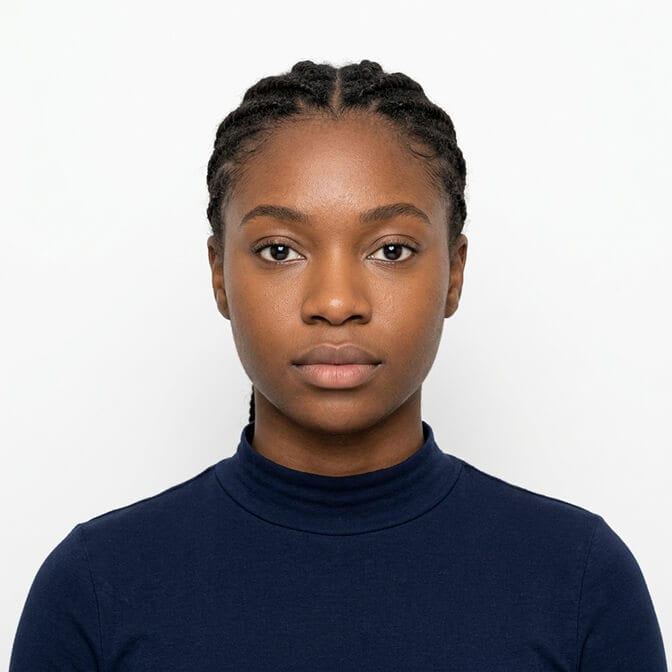
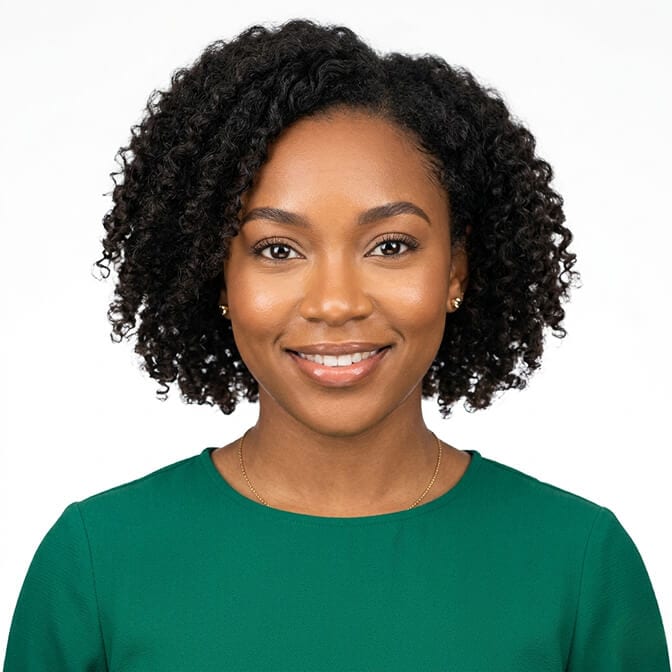
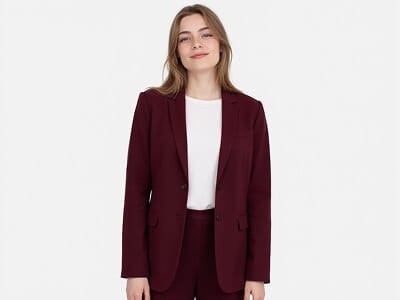
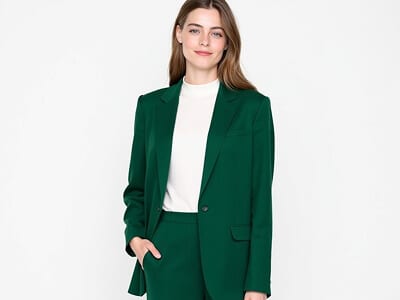
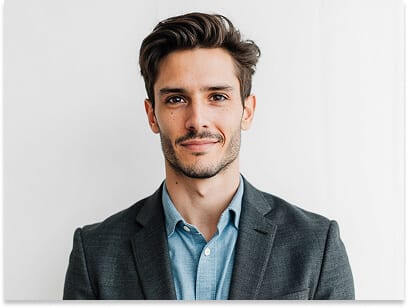
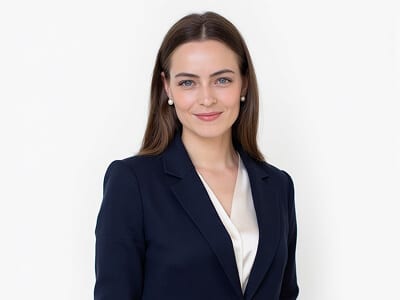
Every photo above started as an ordinary selfie. Get your professional headshot with Headshot Photo in a solid, passport-safe colour — about an hour, from $34.
See Headshot Photo pricing →Colors and Items to Avoid
A few common choices are the reason photos get sent back. Skip these:
- White and very pale tops. Against a white background they blend in and can fail the contrast check. This is the number one reason an outfit causes a rejection.
- Busy patterns. Florals, stripes, plaids, and prints distract from your face and can interfere with facial checks.
- Logos, graphics, or text. Anything printed pulls attention away from you.
- Shiny or sheer fabrics. Satin, silk, and sequins bounce light and create glare, and sheer tops can look like bare skin once the photo is cropped.
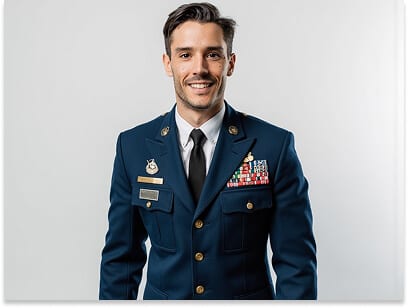
- Uniforms and camouflage. These are not allowed on official passport photos, including military, police, and medical scrubs.
- Pure black in some setups. Very dark tops can cast harsh shadows or lose definition, so a mid-tone is usually safer.
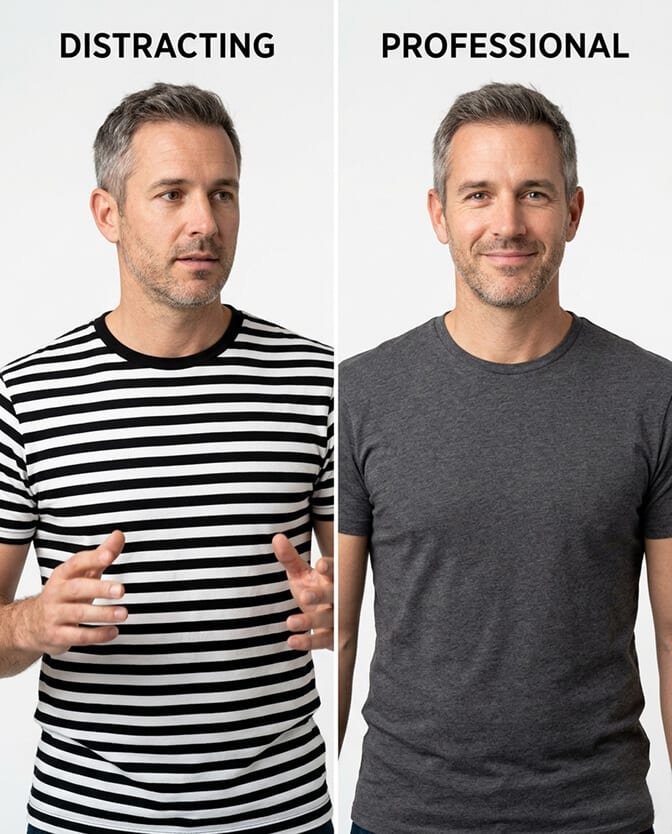
What Gets an Outfit Rejected
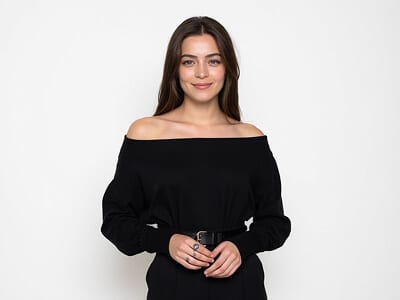
Five outfits that cause a re-take, and the reason each one fails.
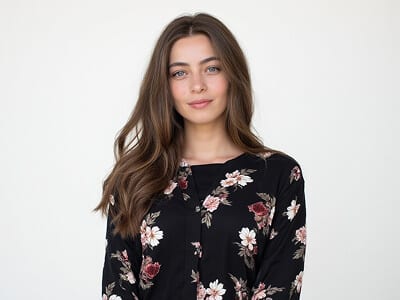
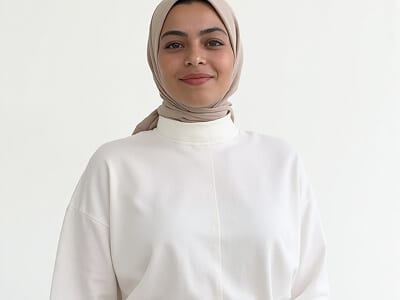
What to Wear for a Passport Photo: Women
You want a top that frames your face and looks structured in a tight crop. These outfit ideas work well:
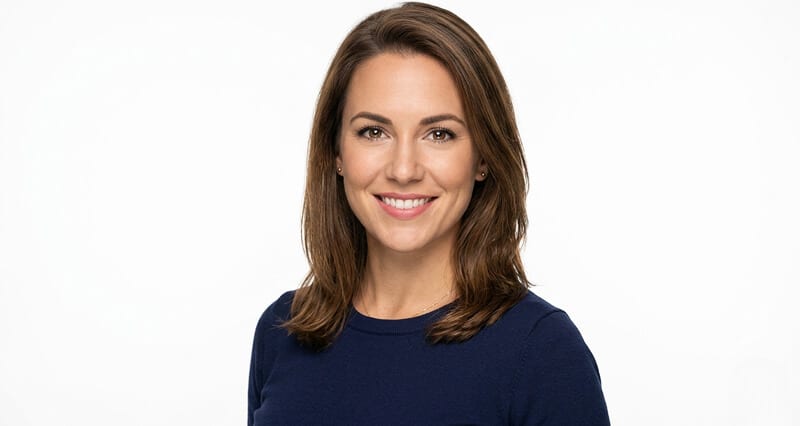
- A navy or burgundy crew-neck top in a matte fabric, simple and high-contrast.
- A collared shirt in deep green or charcoal for a crisp, polished neckline.
- A fitted blouse in a solid jewel tone, such as sapphire, emerald, or ruby.
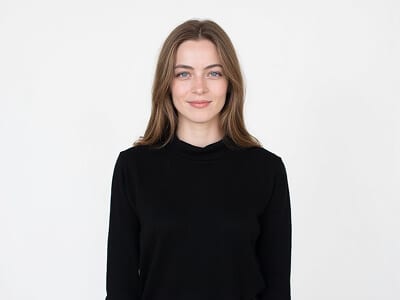
- A slim-fit sweater or mock neck that adds shape without bulk.
- A lightweight blazer or cardigan layered over a solid top for subtle dimension.
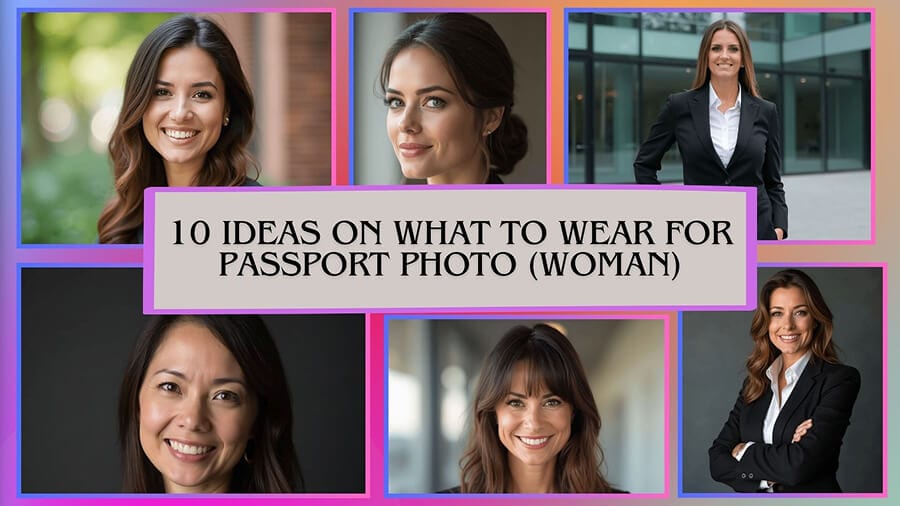
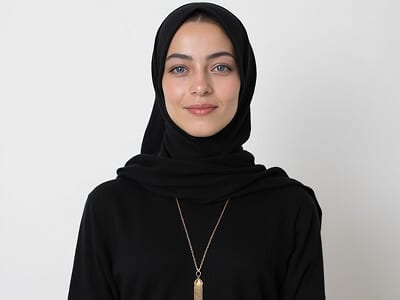
Keep necklines modest. Crew necks, slight V-necks, and boat necks frame your face without slipping out of the crop. Avoid plunging necklines, spaghetti straps, and off-the-shoulder cuts, which can look like you are wearing nothing once the image is cropped close. This is the most common outfit mistake on women's passport photos, and it is an instant rejection in several countries.
What to Wear for a Passport Photo: Women's Examples
Necklines that hold up once the photo is cropped to the head and shoulders.
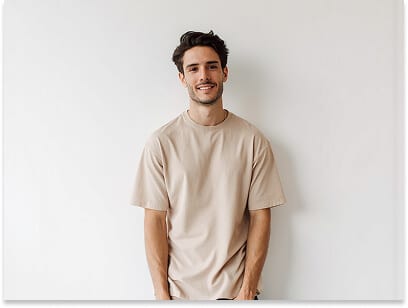
What to Wear for a Passport Photo: Men
The rules are the same, but the practical choices are narrower. What works:
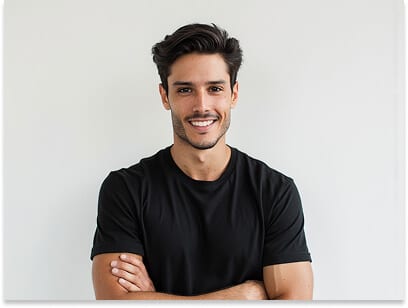
- A plain crew-neck t-shirt in navy, charcoal, or dark green. Simple, high contrast, and it never looks try-hard.
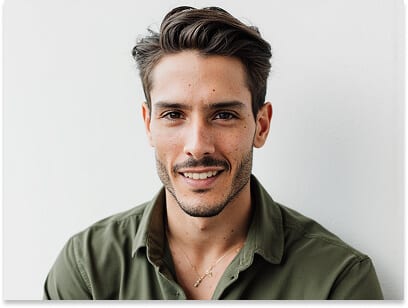
- A collared button-down shirt in navy, mid-blue, or grey, worn with the collar sitting flat. This is the most common outfit on accepted photos.
- A fine-knit jumper or crew-neck sweater over a plain t-shirt, which adds shape without bulk.
- A polo shirt in a solid mid-tone, as long as the logo is small or absent.
What to avoid specifically:
- A white shirt. Extremely common and one of the most frequent contrast failures. If a white shirt is all you have, layer a dark jumper or jacket over it.
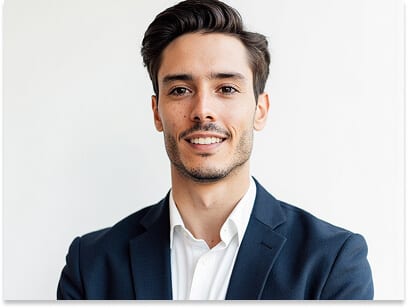
- A suit jacket with a tie in a tight crop. It often crops awkwardly and adds visual clutter around the neck. A plain top is safer.
- Hoodies and anything with a raised collar that obscures the jawline.
- Visible undershirt necklines showing through a thin top, which reads as untidy in a close crop.
What to Wear for a Passport Photo: Men's Examples
Three outfits that clear every check, in rising order of formality.
Facial hair is fine and does not need to match your previous passport, as long as the photo is recent and looks like you. Do not wear a hat, and remove glasses.
Passport Photo Outfit Examples
Here are complete outfits that pass, by situation:
The default that works for anyone: A solid navy crew-neck top, matte cotton, no jewellery beyond small studs, hair neat and away from the face. This is the closest thing to a guaranteed pass.
Business or professional look: A charcoal or deep green collared shirt, optionally under a plain blazer. Keep the collar flat and symmetrical, since a rumpled collar is visible in a crop this tight.
Warm skin tones: Burgundy, rust, or emerald. These add warmth to the face where navy can look slightly cool.
Cool or fair skin tones: Navy, sapphire, or charcoal. Avoid beige and camel, which can blend into both the background and your skin.
Winter photo, taken in a coat: Take the coat off. Bulky outerwear changes your silhouette and creates shadows at the shoulders. Wear the layer underneath instead.
For a baby or young child: A plain mid-tone onesie or top, no hood, no bow or headband. The background must stay plain white behind them, and no other person's hands may be visible in the frame.
What Gets a Passport Photo Rejected
Most rejections are not about your outfit at all. These are the actual reasons photos get sent back, roughly in order of how often they happen:
1. Wrong size or head position. The head must fill a specific proportion of the frame, typically 50 to 69% of the image height depending on the country. Too far away is the most common technical failure.
2. Background is not plain. Shadows on the wall behind you count as a pattern. Stand at least half a metre from the wall to avoid casting one.
3. Glare on glasses, or glasses at all. The US, UK, and most EU countries now require glasses to be removed entirely. Do not wear them.
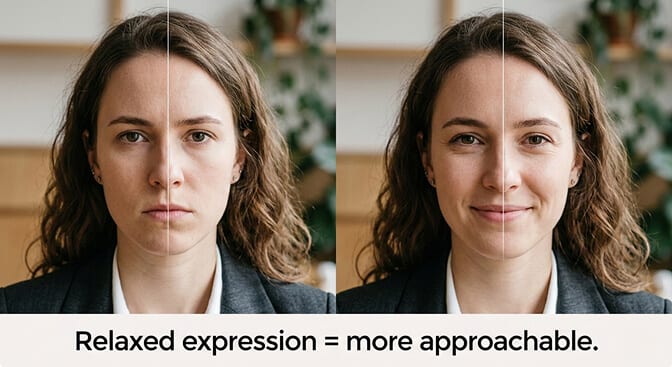
4. Non-neutral expression. An open-mouth smile, raised eyebrows, or a head tilt will fail. Face the camera square with a neutral expression or a light closed-mouth smile.
5. Hair covering the face. Both eyes and the full outline of the face must be visible. Push long fringes to the side.
6. Photo is too old. It must be taken within the last six months and reflect how you currently look.
7. Low resolution or a printed-then-scanned photo. Use the original digital file, not a scan or a photo of a photo.
8. Wearing white against a white background. The outfit failure covered above, and the one this article can actually help you avoid.
9. Hats and head coverings. Only permitted for religious or medical reasons, and even then the full face from chin to forehead must be visible.
10. Red eye, filters, or beauty smoothing. Any digital alteration to your features is grounds for rejection. Phone camera beauty modes are on by default on many devices, so turn them off.
Fabric, Fit, and Accessories
Choose matte, non-reflective fabrics like cotton, linen, or a wool blend. They sit smoothly and avoid glare from the camera flash. Pick a well-fitted, structured top over anything slouchy or oversized, since baggy clothing creates awkward lines and shadows in a cropped shot. For more detail on flattering, camera-ready professional attire, keep the cut clean and the seams neat.
Keep jewelry minimal. Stud earrings or a delicate chain are fine, but skip large statement earrings, chunky necklaces, and anything shiny or dangling that covers part of your face. If you wear glasses, note that most passport rules now ask you to remove them to avoid glare.
Makeup and Hair
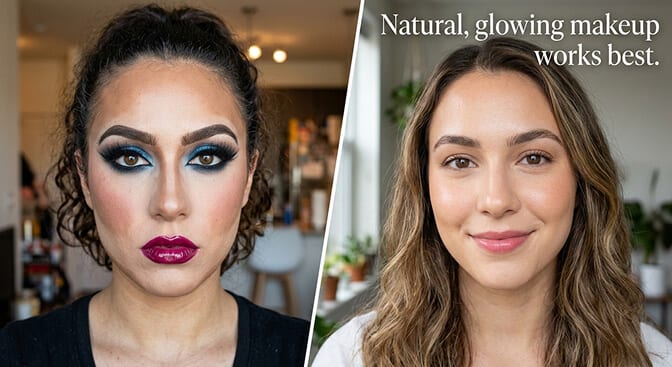
Keep makeup natural so it enhances your features instead of overpowering them under bright lighting.
- Use a matte or soft-finish foundation to even out skin tone and cut shine.
- Apply concealer to brighten under the eyes and smooth blemishes.
- Choose neutral eyeshadow tones like taupe, brown, or soft peach.
- Skip false lashes and clumpy mascara; keep lashes defined but natural.
- Use soft, non-glossy lip colors like nudes, mauves, or dusty pinks.
- Avoid SPF-heavy powders that can cause flashback and wash out your skin.
For hair, pick a neat, face-framing hairstyle that keeps your eyes and eyebrows visible. If your hair is long, leave it down or pull it back cleanly, and avoid bulky styles that change your silhouette.
Rules That Get Your Photo Accepted the First Time
Outfit aside, a few official rules decide whether your photo passes. Follow these to avoid a rejection:
- Neutral expression. Face the camera directly with a natural expression or a light closed-mouth smile, both eyes open.
- Plain white background. Use a plain white or off-white backdrop with no shadows, textures, or objects.
- No hats or head coverings. These are only allowed for religious or medical reasons.
- No glasses. Remove eyeglasses, sunglasses, and tinted glasses to prevent glare.
- Recent and true to life. The photo should be taken within the last six months and reflect how you currently look.
- Good, even lighting. Avoid harsh shadows on your face or behind you.
Check your photo before you submit it
Our free passport photo maker crops to the official size for your country, replaces the background with plain white, and shows you a compliance checklist before you download. No signup.
Open the passport photo maker →Want a studio-quality portrait to work from, rather than a phone shot? Get your professional headshot with Headshot Photo from $34, delivered in about an hour — or see Headshot Photo pricing.
Wrapping Up
What you wear plays a quiet but real role in how polished your passport photo looks and whether it gets accepted. Lead with a solid mid-tone color, keep the neckline modest and the fabric matte, go light on jewelry and makeup, and follow the official rules on expression, background, and glasses.
If you want to look your best in a passport photo before photo day, do a quick test shot to check how your outfit, lighting, and posture read on camera. You can even create a professional photo with Headshot Photo to preview your look in a clean, studio-style setting first.
FAQs
1. What should you wear for a passport photo?
Wear a solid, mid-tone colour that contrasts with the white background, such as navy, deep green, burgundy, or charcoal. Choose a crew or collared neckline in a matte fabric, and avoid white, patterns, logos, uniforms, and anything sleeveless. Keep jewellery minimal and remove hats and glasses.
2. What color should a woman wear for a passport photo?
Wear a solid mid-tone color such as navy, deep green, burgundy, charcoal, or soft rust. These stand out against the required white background and keep the focus on your face. Avoid white or very pale tops, since they blend into the background and can fail the contrast check.
3. What should a man wear for a passport photo?
A plain crew-neck t-shirt or a collared button-down in navy, charcoal, mid-blue, or dark green. Avoid a white shirt, which is the most common contrast failure on men's photos, and skip hoodies, raised collars, and uniforms. A tie is unnecessary and often crops awkwardly.
4. Can you wear black in a passport photo?
You can, but it is not always the safest choice. Very dark tops can cast harsh shadows or lose definition against a white background, so a mid-tone like navy or burgundy usually photographs better. If you do wear black, make sure the lighting is even and your neckline stays clearly visible.
5. What gets a passport photo rejected?
The most common reasons are incorrect head size or position in the frame, a background that is not plain, wearing glasses, a non-neutral expression, hair covering the face, and a photo older than six months. Wearing white against a white background is the most common outfit-related rejection.
6. What should you not wear for a passport photo?
Avoid white or pale tops, busy patterns, logos, and shiny or sheer fabrics, all of which distract or blend in. Uniforms and camouflage are not allowed, and glasses, hats, and head coverings should be removed unless worn for religious or medical reasons. Keep jewelry minimal so nothing covers or competes with your face.