The State of Professional Headshots in 2026: What Actually Changed This Year
An honest industry report from the team that has generated over 1.4 million of them.
A customer emailed us in January with one line. "I got the callback. They said my profile looked like I already had the job."
She had spent eleven dollars and about ten minutes.
Here's the weird part. Two years ago that same result would have cost her a photographer, a scheduling dance, and a few hundred dollars. In 2026 it cost less than lunch. That single shift is the whole story of this year, and the numbers underneath it are wilder than most people realize.
So we pulled the data together. Not to impress you with statistics, but to answer one real question: what actually changed, and what should you do about it?
The short version: the professional headshot did not just get cheaper. It split into two different markets. Where you land in that split decides everything.
Stay with me. The numbers tell a cleaner story than you'd expect.
Finding 1: The market crossed a line nobody was watching
The AI headshot market pushed past roughly 400 million dollars in 2025. Estimates vary depending on how you draw the category, landing somewhere between 350 and 500 million, but every serious model points the same direction. Up, and fast.
For context, the traditional professional headshot photography market sits somewhere around 1.8 to 2.8 billion dollars in 2026. Much bigger. But it is not growing the way the AI side is, and the AI side is eating into it from the bottom.
This is not a novelty anymore. One projection puts the AI headshot niche near 640 million by 2028. Whatever the exact figure, the trend is not subtle.
Finding 2: Adoption stopped being a young person's habit
Here's the stat that surprised us most.
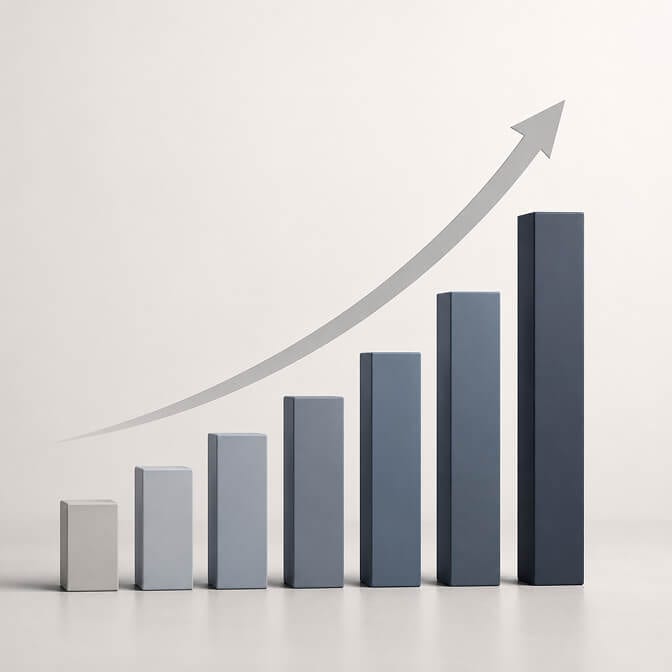
Professional adoption of AI headshots grew from around 8 percent in 2021 to roughly 58 percent in 2025. More than half of professionals now consider an AI-generated headshot normal.
You'd assume that's all twenty-somethings. It isn't.
Yes, the 25 to 34 group leads at about 72 percent. But the fastest relative growth came from professionals 55 and older, jumping from roughly 9 percent to 31 percent in two years. The people who were supposed to resist this the hardest are adopting it the fastest.
That is what a technology looks like right before it becomes the default.
Finding 3: LinkedIn is quietly the whole ballgame
When we ask people why they suddenly need a headshot, almost half point to one place.
Around 47 percent of professionals say LinkedIn is the main reason they need a headshot at all. That single platform drives more demand than every other professional context combined.
And the profile-photo math is brutal. Profiles with a photo pull roughly 21 times more views and 9 times more connection requests than profiles without one. Not a nudge. A different league.
If you have ever wondered whether your LinkedIn photo pulls real weight in a job search, the honest answer is that it does far more lifting than your headline or your summary.
Finding 4: The price gap got impossible to ignore
Let me put the numbers side by side, because this is where most people finally get it.
A traditional professional headshot session in 2026 averages around 295 dollars, and ranges from about 50 dollars to well over a thousand depending on the photographer. One graduate we heard from paid 200 dollars for a fifteen-minute campus session. That is roughly 800 dollars an hour to point a camera.
AI headshots typically run 29 to 59 dollars, and land in your inbox in minutes.
For one person, that gap is annoying. For a company with 300 employees who all need updated photos, it is a six-figure line item versus a rounding error.
This is the part nobody tells you: the pain isn't at the top or the bottom of the market. It's in the middle. The 150 to 300 dollar session that takes two weeks to book and delivers a result you cannot tell apart from a 39 dollar alternative. That middle is quietly collapsing. We broke down how AI headshots compare with a traditional photographer this year if you want the full cost and quality breakdown.
Finding 5: Recruiters mostly stopped being able to tell
For a while, the knock on AI headshots was obvious. Weird hands. Plastic skin. Dead eyes. Fair.
But then something clicked, somewhere around 2024, and the quality crossed a threshold.
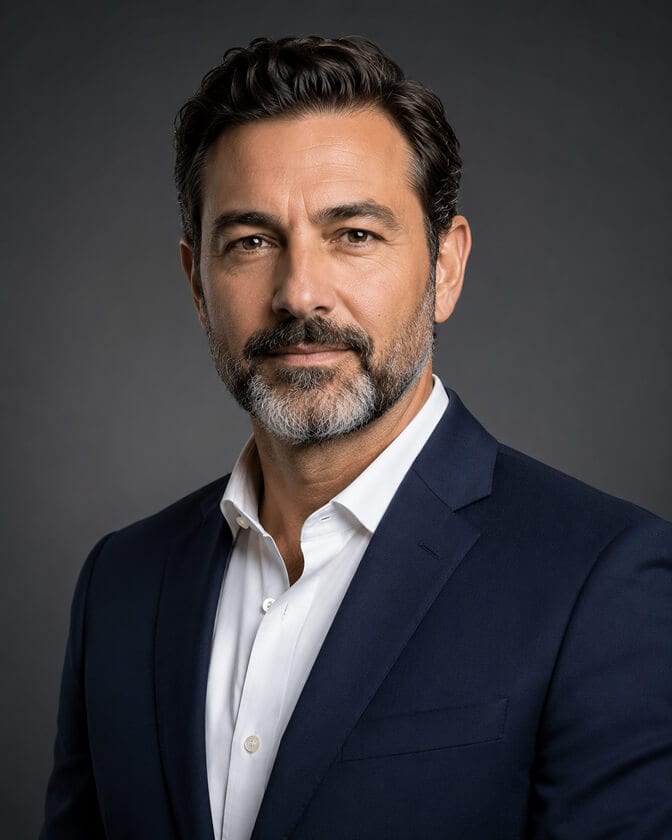
In blind recruiter tests, AI headshots now score equal or higher in four out of five quality categories. And in comparison studies, a large share of recruiters can no longer reliably separate a good AI headshot from a studio one. The tell is mostly gone.
Why does this matter so much? Because of how fast people judge a face.
Research on first impressions is blunt about it. We form a judgment of trustworthiness and competence from a face in about one tenth of a second. Some studies push it lower, to a single glance of a few dozen milliseconds. Extra time barely changes the verdict. It only makes people more confident in the snap judgment they already made.
Your headshot is not decoration. It is the first argument you make, and it lands before anyone reads a single word.
That is also why 85 percent of recruiters say an online reputation influences hiring. The photo is the fastest signal in the stack.
Finding 6: The market split in two, and you have to pick a side
Here's where it gets interesting.
The professional headshot didn't get replaced. It bifurcated. Two markets now, with very different logic.
On one side, the convenience-driven, cost-conscious job. You need a strong LinkedIn photo by Thursday and you are not spending 300 dollars. AI owns this, cleanly.
On the other side, the premium, experience-driven shoot. The executive who wants a personal-brand session. The founder who wants a photographer in the room. That side is holding. Some studios even reported booking around 15 percent more clients recently, focused on the high-touch end.
Remote-first companies tell the same story. They are about 2.4 times more likely to use AI headshots than fully on-site companies, because organizing a photographer across five time zones is a nightmare that AI simply skips.
If you are outfitting a team, this is your unlock point. You can update an entire company without booking a single studio day. We wrote a full guide on outfitting an entire team without a studio day for exactly this.
If your headshot is older than your current haircut, that is the actual problem to fix this quarter. You can generate a full set of professional headshots from a handful of selfies before your next coffee gets cold.
What this actually means for you in 2026
Strip away the numbers and here is the honest takeaway.
The question stopped being "can AI do a professional headshot." It can. The question is now "which side of the split are you on," and "is your current photo helping or quietly costing you."
For most people, most of the time, the math has flipped. A fast, natural, well-lit AI headshot beats an outdated studio photo from four years ago, and it beats no photo by a mile.
But the goal was never to look artificial. The whole point is a picture that looks like you on your best ordinary day. Real eyes. Real skin. A face someone trusts in a tenth of a second.
That is the entire game. It always was. The only thing that changed is how little it now costs to win it.
If you want that photo without the scheduling, the studio, or the three-hundred-dollar invoice, you can see current plans and pricing and have a full set of headshots today. That's the whole promise. No shoot, no wait, just a picture that finally works as hard as you do.
Frequently Asked Questions
What is a professional headshot in 2026, and has the definition changed?
A professional headshot is a clean, well-lit photo focused on your face and shoulders, used for work profiles, hiring, and personal branding. The definition of the photo has not changed. How you get one has. In 2026, a large share of professionals produce theirs with AI in minutes rather than booking a studio.
How do AI headshots compare to a traditional photographer now?
On speed and cost, AI wins by a wide margin, usually 29 to 59 dollars in minutes versus an average near 295 dollars and a multi-week wait. On quality, blind tests now rate good AI headshots equal or better in most categories. A photographer still makes sense for premium personal-brand sessions where being in the room matters.
How much do professional headshots cost in 2026?
Traditional sessions average roughly 295 dollars and range from about 50 dollars to over 1,000. AI headshots typically cost 29 to 59 dollars for a full set of variations. For teams, the per-person gap turns a six-figure project into a minor expense.
Are AI headshots good enough for serious professional use?
For most people, yes. Recruiters increasingly cannot tell a strong AI headshot from a studio photo, and profiles with any clear headshot dramatically outperform profiles without one. The failure cases are low-effort results with plastic skin, which is a tool and input problem, not a limit of the format.
Will AI replace professional headshot photographers entirely?
Not entirely. The market split in two. AI has taken the fast, cost-driven, and remote-team segment, while photographers hold the premium, high-touch, experience-driven end. Both are growing, just in different directions.