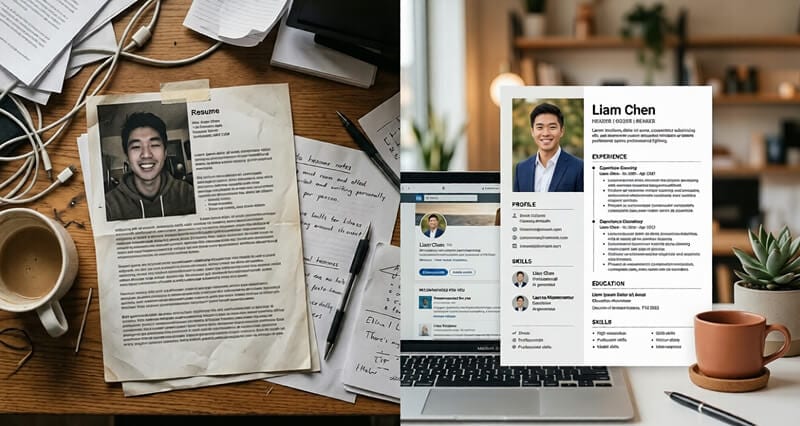
The real answer isn't yes or no. It's: if you do, don't let a bad photo undo everything your experience just proved.
Last month, a friend sent me her resume for feedback.
She'd spent two weeks perfecting it. Every bullet point was tight. The layout was clean. Her experience was genuinely impressive: five years of product management at a fintech startup, a promotion every 18 months, a side project that got covered in TechCrunch.
And right there in the top-left corner was a photo of her at a friend's wedding. Champagne glass half-cropped out. One earring visible. Smile slightly blurry.
That photo was doing more damage than a typo in her job title.
Here's the thing nobody tells you about putting a picture on your resume in 2026: the question isn't really should you. It's can you afford to do it badly.
Because the rules have changed. And most of the advice you'll find online is still stuck in 2019.
Let's fix that.
The short answer (that isn't actually short)
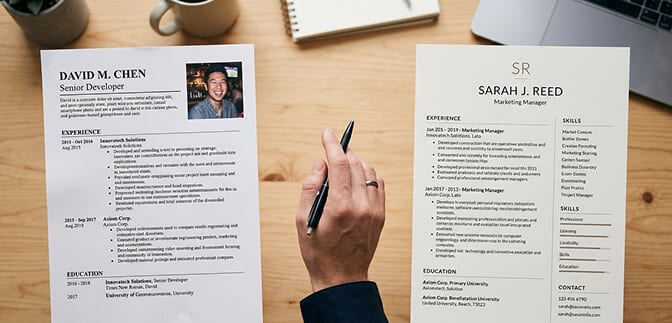
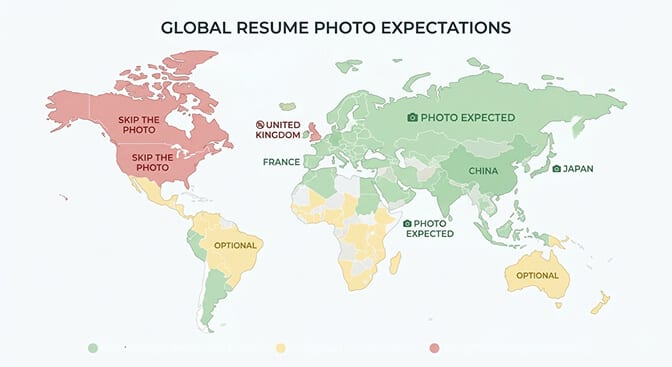
If you're applying for jobs in the United States, United Kingdom, or Canada, the standard advice is simple: leave the photo off.
This isn't arbitrary. The U.S. Equal Employment Opportunity Commission (EEOC) recommends employers avoid requesting candidate photos, because a photo can be used as evidence of knowledge of a protected class in a discrimination claim. Many companies will pull photo-attached resumes out of the pile entirely. Not because they're biased, but because they don't want to appear biased.
And here's a stat that should make you pause: a well-known eye-tracking study found recruiters spend an average of 7.4 seconds on an initial resume scan. If a chunk of that time goes to processing your photo instead of reading your qualifications, you've already lost ground.
So for most U.S. and U.K. job seekers: skip the photo. Full stop.
But, and this is a big but, "most" is not "all."
When a resume photo actually helps
There are real, legitimate cases where a professional photo on your resume is expected, smart, or even required.
If you're applying internationally, the rules flip. In Germany, Austria, and Spain, a CV without a photo may be seen as incomplete. In Japan, the traditional rirekisho resume format includes a passport-sized photo by default. In China, both the Chinese and English versions of your resume should include a headshot. In the UAE, it's not required, but widely included.
If you're in a client-facing or appearance-linked role like real estate, hospitality, media, modeling, or acting, a photo establishes personal brand before you walk through the door.
If the job posting asks for one. Seems obvious, but you'd be surprised how many people agonize over this when the employer has already told them what they want.
And here's one more scenario nobody talks about:
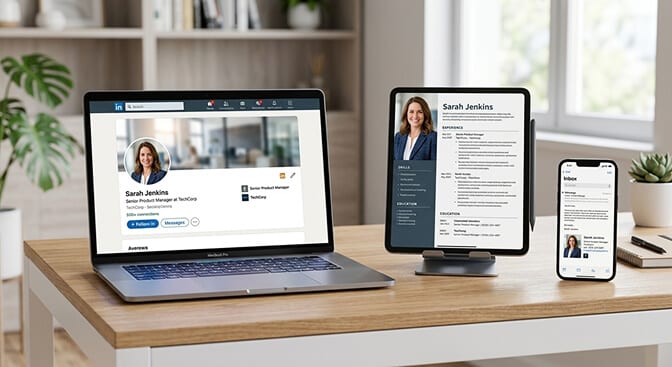
If you're building a personal brand alongside your job search. If your LinkedIn, portfolio, and resume all carry the same clean, professional headshot, you look intentional. Cohesive. Like someone who has their act together. That kind of consistency across your job application photo and social profiles sends a strong signal.
The resume photo isn't about vanity. It's about consistency across every touchpoint where an employer might encounter you.
The part nobody tells you: ATS will probably eat your photo anyway
Here's where most resume photo guides quietly fall apart.
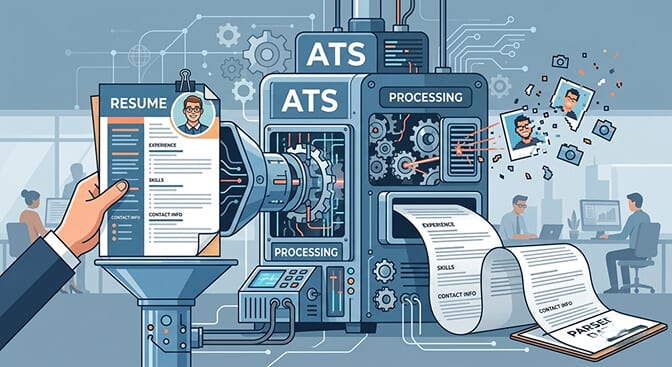
The majority of mid-to-large companies use Applicant Tracking Systems (ATS) to process incoming applications. These systems parse your resume into structured data like name, experience, skills, and education. And many of them strip images entirely.
Which means that beautiful headshot you spent an hour positioning? The ATS might never pass it through.
Even worse, some ATS software chokes on resume formatting that includes embedded images. Your carefully designed resume could render as a garbled mess on the recruiter's screen.
This doesn't mean photos are useless. It means where you use them matters.
Your resume? Optional and risky (in the U.S. and similar markets).
Your LinkedIn profile? Absolutely essential. Profiles with photos get significantly more views and connection requests. That's where your headshot earns its keep. In fact, your LinkedIn photo may have a bigger impact on your job search than anything on your resume.
The real problem: most resume photos are terrible
Let's be honest for a second.
The reason "don't put a photo on your resume" became the default advice isn't just about bias law. It's because most people's photos are bad.
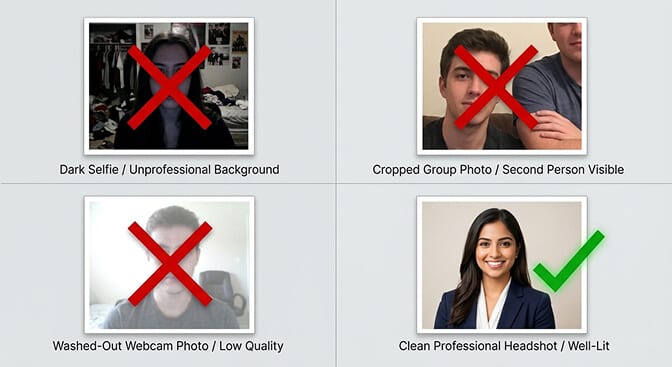
Cropped vacation shots. Dimly lit selfies. That one LinkedIn photo from 2017 where you still had a goatee. A webcam capture where you look vaguely like you're being held hostage.
When career coaches say "skip the photo," what they often mean is: skip the bad photo you were going to use.
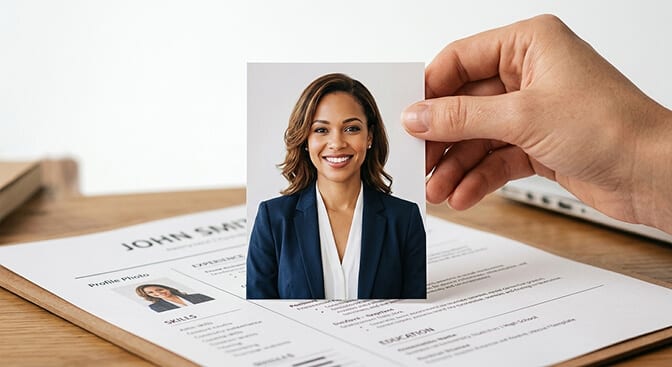
Because a genuinely professional headshot with a clean background, good lighting, appropriate attire, and a natural expression? That photo doesn't hurt your resume. In markets where it's expected, it actively helps.
The problem was never the photo. It was the quality.
And until recently, "quality" meant booking a photographer, spending $150-$400, blocking out half a day, and hoping you didn't blink at the wrong moment. If you want to understand the real cost breakdown, take a look at what professional headshots actually cost in 2026.
That barrier doesn't exist anymore.
How AI headshots changed the math
This is where I get to talk about what we do. But stay with me, because this genuinely matters for the "should I include a photo" question.
The traditional argument against resume photos had a practical layer: professional headshots were expensive, time-consuming, and felt like overkill for a resume. So people either skipped the photo entirely or used a bad one.
AI headshot generators removed that excuse.
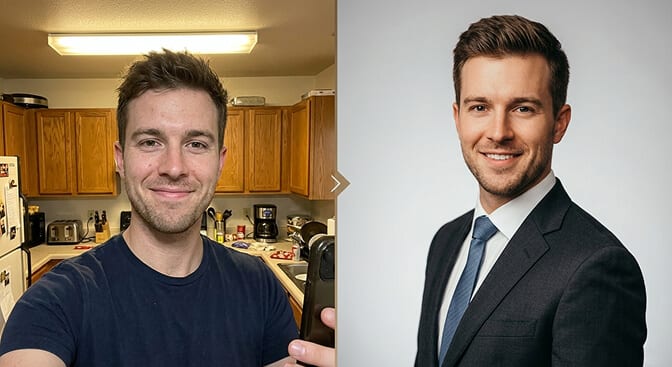
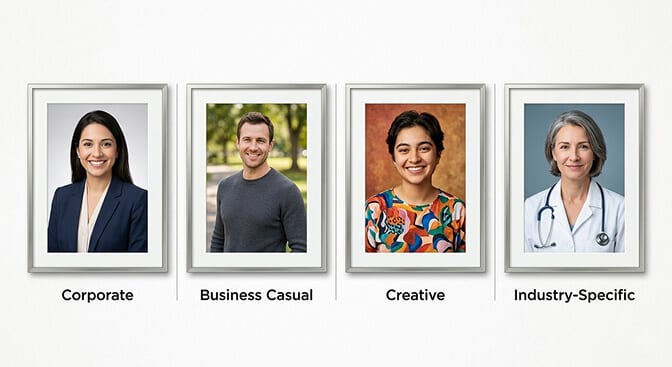
You upload a few selfies. Pick your style: corporate, creative, business casual. In about 1 hour, you get back a set of studio-quality headshots with proper lighting, clean backgrounds, and natural expressions. You can see real before and after AI headshot transformations to get a sense of what's possible.
No photographer. No scheduling. No awkward posing in a strip-mall studio.
At Headshot Photo, we've generated over 1.4 million headshots for more than 50,000 professionals. A big chunk of those are people who need a resume photo for an international application, a personal brand refresh, or a client-facing role, and they need it today, not in two weeks when the photographer has an opening.
If you've decided a photo belongs on your resume, an AI-generated professional headshot is the fastest way to make it look like you meant it.
How to make your resume photo actually look professional
Whether you go the AI route or book a traditional photographer, these rules apply:
Dress for the role, not for yourself. Applying to an investment bank? Suit. Creative agency? A clean, fitted top works. The photo should look like you belong in the environment you're applying to. Not sure what works best? Here's a full guide on the best outfits to wear for headshots.
Use a headshot, not a portrait. Your face should take up at least 60% of the frame. Head, shoulders, a little space above. No full-body shots. No group crops. No scenic backgrounds.
Match your LinkedIn photo. Recruiters will check. When your resume photo and LinkedIn photo are the same (or at least from the same session), it signals consistency and attention to detail.
Keep it current. If the photo is more than two years old, it's time for a new one. You want the hiring manager to recognize you when you walk into the interview.
Neutral background, soft lighting. White, light gray, or gently blurred office settings. Avoid anything distracting like bookshelves, busy wallpaper, or your kitchen.
If someone looked at your resume photo and your LinkedIn photo side by side, would they feel like they're meeting the same person? That's the bar.
Kill the selfie instinct. Even front-facing phone cameras distort your features at close range. If you're taking your own photo, use a timer, prop the phone at arm's length or farther, and shoot in natural light near a window.
The bias question you need to think about
I'd be irresponsible if I didn't address this directly.
A well-cited study by researchers at the University of Chicago and MIT found that resumes with white-sounding names received 50% more callbacks than identical resumes with Black-sounding names. A 2024 University of Washington study found that large language models used in hiring systems favored white-associated names 85% of the time.
That's just names. A photo adds age, gender, ethnicity, and appearance to the mix, all before a single qualification is read.
This is exactly why the EEOC discourages photo requests. And it's why, in markets where photos aren't expected, you should think carefully.
The decision to include a photo is also a decision about how much control you want over your narrative. In some cases, a photo builds trust and personal connection. In others, it hands the reviewer information that should be irrelevant to whether you can do the job.
Know the norms of your target market. Follow them. And if you're unsure, leave it off. You can always add your face to the conversation through LinkedIn, your portfolio, or the interview itself. If you want to understand how recruiters really react to AI photos specifically, this breakdown on recruiter trust and AI LinkedIn photos is worth reading.
The bottom line (no hard sell, I promise)
Should you put a picture on your resume in 2026?
If you're in the U.S., U.K., or Canada and applying through standard channels: probably not, unless the role or posting specifically calls for one.
If you're applying internationally, working in a client-facing field, or building a personal brand across platforms: yes, but only if the photo is genuinely professional.
And if you're in the "yes" camp but don't have a professional headshot? You don't need a photographer anymore. You need 1 hour and a few decent selfies. Check out the examples from real Headshot Photo users and see what AI can do with what you've already got.
The resume photo debate will keep going. But the real takeaway is simpler than any of the arguments:
Your resume is a story about what you can do. Don't let a bad photo become the first chapter.
Frequently Asked Questions
What is the purpose of putting a picture on a resume?
A resume photo adds a personal, human element to your application. In countries and industries where it's expected, it helps recruiters connect a face to your qualifications and establishes visual brand consistency across your resume, LinkedIn, and portfolio. It's not about appearance. It's about professionalism and recognition.
How does a resume photo compare to a LinkedIn profile photo in terms of impact?
A LinkedIn photo is almost universally expected and significantly boosts profile visibility. A resume photo is context-dependent: helpful in international markets and client-facing roles, but risky in the U.S. due to bias concerns and ATS limitations. For maximum impact, use the same professional headshot across both.
How do I take a professional headshot for my resume without hiring a photographer?
Use an AI headshot generator like Headshot Photo. Upload a few clear selfies, choose a professional style, and receive studio-quality headshots in minutes. Make sure you're in good lighting, wearing role-appropriate clothing, and facing the camera directly. AI handles the background, lighting balance, and polish.
Is an AI-generated headshot good enough for a professional resume?
Yes. Modern AI headshot tools produce results that are virtually indistinguishable from traditional studio photos. They handle lighting correction, background cleanup, and natural retouching automatically. Over 50,000 professionals have used Headshot Photo for exactly this: resumes, LinkedIn, and company profiles.
Is it safe to include a picture on your resume, or could it hurt your chances?
In the U.S. and similar markets, a photo can introduce unconscious bias and may even cause some employers to discard your resume to avoid legal risk. In international markets like Germany or Japan, omitting a photo can be seen as incomplete. Research your target market's norms. When in doubt, leave the photo off the resume and let your LinkedIn profile carry the visual.