
Headshot Colors: What Colors Photograph Best (And Worst)
A ranked, honest guide to the shades that make you look sharp, and the ones quietly sabotaging your photo.
I once watched someone reject forty headshots in a row.
Forty. Same face, same lighting, same good photographer. She kept frowning at the screen saying "I don't know, something's off."
It wasn't her smile. It wasn't the angle. It was her shirt.
A pale, washed-out beige that melted into her skin and made her whole face look tired. We swapped it for a deep teal. Same person, same five minutes later, and suddenly she looked awake. Healthy. Like herself on a good day.
That's the thing about headshot colors. The color isn't decoration. It's doing half the work of the photo. And most people never think about it until they're staring at forty bad options.
So let me save you that afternoon.
The one rule that beats every color chart
Here's the truth that took me too long to learn.
There is no single "best" color for a headshot. Anyone who hands you a list of five magic shades is skipping the part that actually matters.
The best color is the one that creates clean contrast with your background and complements your skin, while keeping every bit of attention on your face.
That's it. That's the whole game. Color doesn't exist in a vacuum. It reacts to your skin tone, your hair, your eyes, and the wall behind you. A shade that looks incredible on one person can flatten someone else completely.
But within that rule, some colors are far more forgiving than others. So let's rank them honestly.
The colors that photograph best
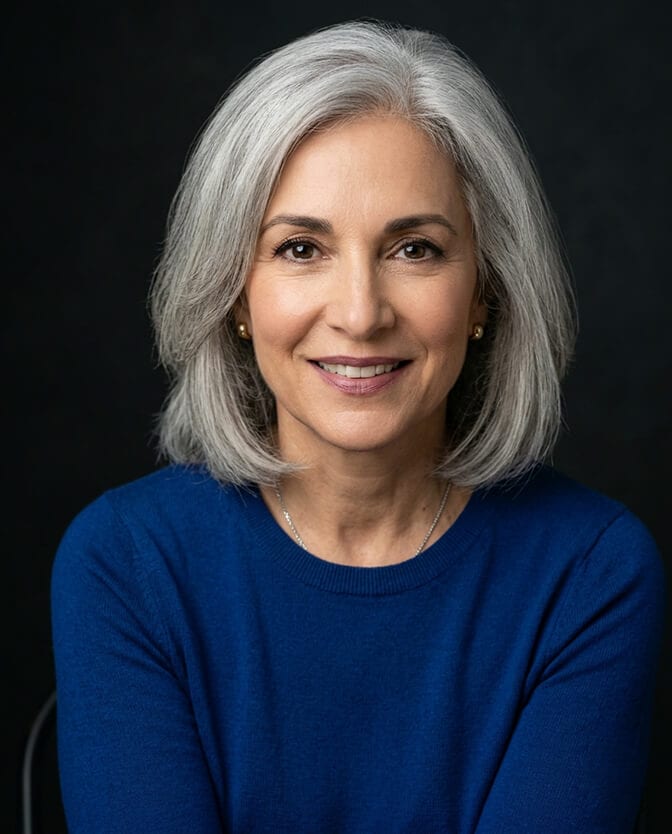
Navy blue. The undisputed workhorse.
If you remember one thing, remember this. Navy is the single most reliable color for a professional headshot.
It reads as trustworthy and competent without being severe. It photographs cleanly under almost any lighting. It works against every standard background, white, gray, dark, or textured. And it flatters a genuinely wide range of skin tones.
Navy absorbs light evenly, so it doesn't create hot spots or glare. It's dark enough to look serious, blue enough to feel approachable. If you own one well-fitted navy blazer or button-down, you already own the safest headshot outfit you'll ever need.
Charcoal gray. Authority without the harshness.
Charcoal is what you wear when you want to look like you're in charge but not intimidating.
It carries the same authority as black, minus the heaviness. It frames the face and pushes the viewer's eye straight to yours. Executives, lawyers, consultants, this is your lane.
Jewel tones. Personality that still looks polished.
This is where it gets fun.
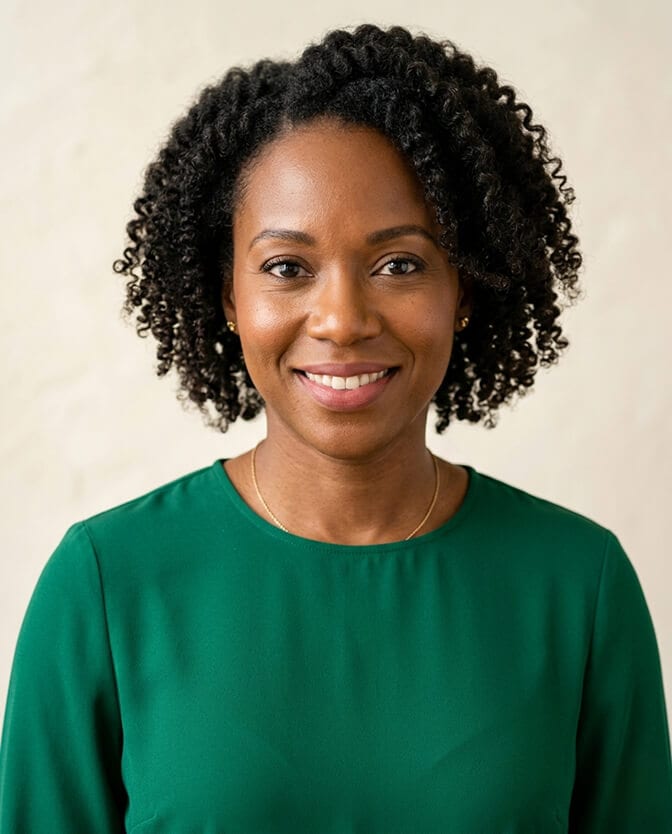
Muted jewel tones (emerald, burgundy, sapphire, plum, teal) add character without screaming for attention. They're the move when you want to look human and memorable instead of like another corporate silhouette.
Here's the part nobody tells you: jewel tones often work better on darker skin tones than navy does. Ruby, sapphire, and emerald create a rich, striking contrast that plain neutrals can't match. If you've always defaulted to gray and felt a little flat, this is your sign to experiment.
Neutrals that aren't your skin color.
Soft blues, warm grays, muted greens, these all photograph beautifully as long as they're not the same tone as your face. More on that trap in a second.

The colors that photograph worst
Now the painful part. These are the shades quietly ruining photos every single day.
Pure white. The disappearing act.
White feels clean and safe. It's a trap.
Against a light background, white clothing blends in and your head can look like it's floating. Even against darker backgrounds, large areas of white pull focus and can blow out in bright lighting. If you want a crisp shirt, go off-white or pale gray instead of stark white.
Pure black. The floating head.
Black has the opposite problem. Against a dark or textured background, an all-black outfit makes your body vanish and leaves a disembodied face hovering in the frame.
Black can work with the right background and lighting. But it's high-risk. Charcoal gives you ninety percent of the authority with a fraction of the danger.
Neon and ultra-bright shades.
Hot pink, electric turquoise, neon green. These reflect colored light back onto your skin, giving you an odd tint, and they scream louder than your face does.
This is where most people get it wrong. They think bright equals memorable. In a headshot, bright usually equals distracting. The viewer remembers the shirt, not you.
Anything too close to your own skin tone.
This is the silent killer. The beige that ruined my friend's forty photos.
When your clothing matches your complexion, your face and chest blur into one flat shape. You lose definition, you lose contrast, and you look washed out even when everything else is perfect. Always put visible distance between your shirt color and your skin.
Busy patterns and fine stripes.
Not a color, but it belongs on this list.
Tight patterns like pinstripes, herringbone, houndstooth, and thin stripes can cause moire on digital cameras. That's the wavy, rainbow distortion you've seen ripple across a TV screen. It happens when a repeating pattern fights the camera sensor, and it can quietly wreck an otherwise great shot. Solid beats patterned almost every time.
Match the color to your skin, not a rulebook
Stay with me here, because this is where you go from "fine" to "wow."
Cool undertones (skin with pink, red, or blue hints) glow in jewel tones. Sapphire, emerald, amethyst. Sapphire blue in particular is close to universally flattering on cool undertones.
Warm undertones (golden, peachy, olive hints) come alive in earthy shades. Olive green, terracotta, warm burgundy.
Neutral undertones get the most freedom. Navy, gray, dusty rose, soft blues, almost all of it works.
And a quick hair note. If you have light or blonde hair, skip very pale colors that blend into it, and reach for darker mid-tones for definition. Dark hair can wear almost anything, just watch the all-black floating-head trap.
If you want to go deeper on matching shades to your exact undertone, we broke that down further in our guide to the best color to wear for a headshot. This post is the quick ranked overview. That one is the deep dive.
Here's why this matters more with AI headshots
When you sit for a traditional photographer, you usually get one outfit, one color, one shot at getting it right. Pick the wrong shade and you've burned the session.
With Headshot Photo, the math flips.
You upload your photos once, and you can generate looks across multiple colors and styles without re-shooting anything. Navy blazer, emerald blouse, charcoal sweater, you see them side by side and pick what actually flatters you instead of guessing in a dressing room. The cost of experimenting drops to basically zero.
That's the quiet advantage. Color choice stops being a one-shot gamble and becomes something you can test. If you want to skip the guesswork entirely, you can see how Headshot Photo handles wardrobe and color and try a few tones before you commit to one.
Match the color to your industry too
A startup founder and a corporate attorney should not wear the same thing.
- Finance, law, consulting: Navy, charcoal, black. Clean and authoritative. Skip anything loud.
- Tech, creative, startups: More freedom. Teal, burgundy, a considered jewel tone signals you're not just another suit.
- Real estate, sales, coaching: Approachable warmth wins. Blues and greens build trust. Avoid anything severe.
- Healthcare and wellness: Soft, calming tones. Light blues, muted greens, gentle neutrals communicate care.
The color is sending a message before you say a word. Make sure it's the message you want.
What I wish someone had told me sooner
The goal of a headshot color isn't to look "professional." That word traps people into safe, forgettable gray.
The goal is to wear a color that makes you look like yourself on a really good day.
A headshot isn't a costume. It's a clear, flattering record of you at your sharpest. Navy is the safe bet. Jewel tones are where personality lives. White, neon, and your-own-skin-tone are the quiet saboteurs.
Pick the color that brings your face forward. Then forget you're wearing it.
If you're tired of guessing which color works and want to see yourself in several before deciding, you can get your professional headshot with Headshot Photo and generate studio-quality looks in about ten minutes. No re-shoots, no dressing room, no forty rejected photos. Just the color that finally makes you look like you.
Frequently Asked Questions
1. What colors photograph best for a professional headshot?
Navy blue is the most reliable choice because it flatters most skin tones, photographs cleanly, and works against any background. Charcoal gray and muted jewel tones like emerald, burgundy, and sapphire are also excellent. The best color is always the one that contrasts with your background and complements your skin while keeping focus on your face.
2. How do navy and black compare for headshots?
Navy gives you trust and approachability with very low risk, while black delivers authority but can create a "floating head" effect against dark backgrounds and may blow out under bright light. For most people, charcoal is the safer middle ground between the two. Navy remains the all-around safest pick.
3. What colors should you avoid wearing in a headshot?
Avoid pure white (it blends into light backgrounds), pure black (it can make your body vanish against dark backgrounds), neon or ultra-bright shades (they tint your skin and distract), and any color too close to your own skin tone (it flattens your face). Also skip fine patterns like pinstripes, which can cause moire distortion on camera.
4. How do I choose a headshot color for my skin tone?
Match your undertone. Cool undertones shine in jewel tones like sapphire and emerald, warm undertones suit earthy shades like olive and terracotta, and neutral undertones can wear almost anything from navy to dusty rose. The key rule is to avoid any color that's too close to your complexion, since that erases contrast and definition.
5. Is it worth using AI to test headshot colors?
Yes, especially if you're unsure what flatters you. With Headshot Photo you upload your photos once and generate looks across multiple colors without re-shooting, so you can compare navy, emerald, and charcoal side by side before committing. It removes the one-shot gamble of a traditional session for a fraction of the cost.