Eye Makeup for Professional Headshots: The Complete Guide (2026)
Why your everyday eye look might be sabotaging your most important professional photo and exactly how to fix it
She'd spent 45 minutes on her eye makeup that morning.
Smoky blend. Perfect wing. The kind of look that got compliments at brunch.
Then she saw the headshots.
"I look exhausted," she told me over email. "My eyes look... smaller? Darker? I don't understand what happened."
I did. Because I'd seen this exact scenario play out hundreds of times since we started HeadshotPhoto.io. Beautiful eye makeup that works flawlessly in person and completely falls apart the moment a camera enters the equation.
Here's the thing nobody tells you: the rules for eye makeup in professional headshots are almost the opposite of what works in real life.
And your eyes? They're doing about 80% of the heavy lifting in your headshot. Get them wrong, and it doesn't matter how perfect your outfit is.
Let me show you what actually works.
Why Your Eyes Are the Whole Game
Before we talk products and techniques, you need to understand something.
Princeton researchers found that people form judgments about your competence and trustworthiness in 100 milliseconds of seeing your face. One-tenth of a second.
And where do their eyes go first?
Your eyes.
Not your smile. Not your jawline. Your eyes.
Your headshot is a trust transaction. Your eyes are the currency.
This is why a technically "perfect" headshot can still feel off and why someone with simpler makeup often photographs as more approachable and competent.
The camera doesn't see what the mirror sees. It sees contrast, shadows, and light reflection. And it interprets them very differently from the human eye standing two feet away from you.
Stay with me here. This matters.
The Mistake That Ruins 80% of Headshot Eye Makeup
I'm going to tell you something that might sound counterintuitive.
Under-eye liner shrinks your eyes on camera.
That dark line along your lower lash line? In person, it creates definition. In photos, especially with studio or ring lighting, it creates a shadow that makes your eyes appear smaller, closer together, and more tired.
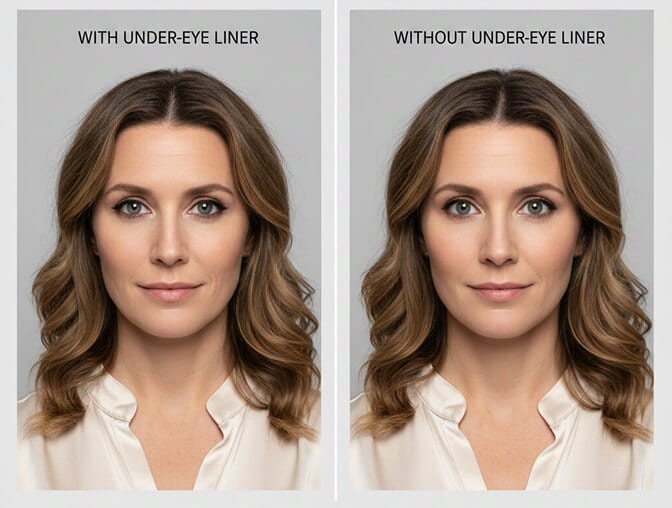
This is the single most common mistake I see.
And it's not just linear. Heavy eyeshadow in the crease, dark colors in the inner corners, thick bands of any product along the lower lid, all of these photograph darker than they appear in your bathroom mirror.
The camera adds weight to everything below your eye.
Here's the fix: keep your lower lid almost bare. A tiny bit of smudged shadow at the outer corner, maybe. Light champagne shimmer in the inner corner to brighten. That's it.
All your drama goes on the top lid. That's where the camera wants it.
The Only Eye Makeup Strategy That Actually Works for Headshots
Let me walk you through this step by step.
Step 1: Prime, but skip the shimmer
Use an eyeshadow primer to prevent creasing and keep colors true. But this is important: avoid primers with sparkle or light-reflecting particles.
Why? Studio lights bounce off those particles and create hot spots that look like oily lids in your final photos.
Matte primer only.
Step 2: Choose your shadow palette wisely
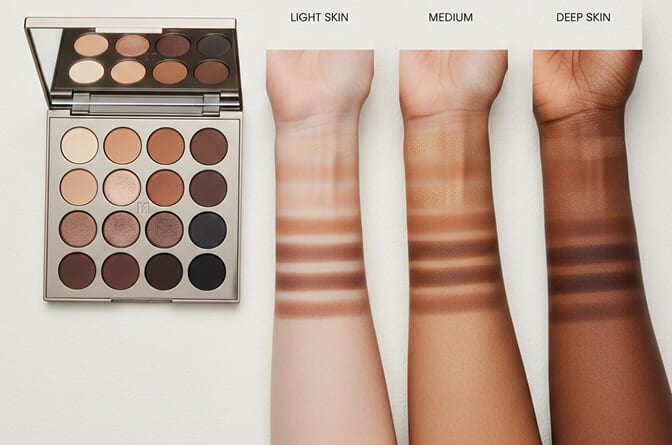
Here's where skin tone matters more than personal preference:
For lighter skin: Warm browns, soft taupes, muted rose. Avoid anything too pink (photographs as irritation) or too gray (photographs as bruising).
For medium skin: Terracotta, bronze, warm caramel. These add depth without muddying the eye area. Stay away from cool purples; they can read as dark circles.
For deeper skin: Rich chocolate, burgundy, warm copper. These colors pop beautifully on camera without looking theatrical. Skip anything too matte and flat, a subtle satin finish photographs best.
The universal rule: neutral doesn't mean boring, it means intentional.
Step 3: Your liner is not the star
Here's where it gets messy for most people.
You've been trained by YouTube tutorials to create bold liner looks. Wings. Graphic shapes. Thick bands of color.
Forget all of that.
For professional headshots, your liner has one job: define the lash line so subtly that people don't notice liner, they just notice your eyes look more awake.
Use a brown liner instead of black (unless you have very deep skin or dark features). Apply it as close to the lash line as possible. No wing. No flick. Just a thin, tight line that disappears into your lashes.
If you absolutely need more definition, smudge a bit of dark shadow along the outer third of your upper lash line with a small brush. It creates depth without that harsh "makeup" look.
Step 4: Mascara is your secret weapon
This is the one place you can go a little heavier than usual.
Studio lights can wash out your lashes completely. Two coats of black mascara (yes, black this is the exception to the "softer is better" rule) will ensure your eyes don't disappear into your face.
Curl your lashes first. This opens up the eye more than any shadow trick ever could.
Skip the falsies. I know, I know. But false lashes, even "natural" ones, create shadows on camera that make your eyes look hooded and heavy. The camera sees the band. It sees the weight. It interprets this as tired.
The goal is not dramatic eyes. The goal is awake, competent, approachable eyes.
The Part Nobody Talks About: Under-Eye Prep
Your eye makeup will fail if what's happening under your eyes isn't handled first.
Dark circles and puffiness don't just photograph; they photograph worse than they look in person. The camera is brutally honest about shadows.
Here's my pre-headshot routine for the under-eye area:
The night before: Sleep. Actually sleep. Hydrate. Use an eye mask or patches if you have them. This isn't just self-care fluff. Puffiness is almost impossible to fully conceal with makeup, and the camera will find it.
Morning of: Apply a color-correcting concealer if you have significant darkness. Peach tones work for lighter skin, orange for medium to deep skin. Then layer a concealer that matches your skin tone on top.
Set with a tiny amount of translucent powder. Emphasis on tiny. Over-powdering the under-eye area creates texture that photographs as aging.
Bring blotting papers to your session. Touch up under your eyes if you've been waiting or if you're nervous (stress sweat is real). The area between your lower lashes and your cheekbone is prime real estate for your headshot. Keep it fresh.
What About AI Headshots? Does This Still Apply?
Here's where things get interesting.
If you're using an AI headshot generator like HeadshotPhoto.io, you're uploading selfies that the AI uses as training data. The makeup you're wearing in those uploads does influence your results.
The same principles apply, but with a twist:
AI tends to average your features across multiple photos. Heavy eye makeup in some uploads and bare eyes in others can confuse the model. Consistency matters. If you want polished, professional results, your uploaded photos should have similar, natural eye makeup across the board.
What works best for AI-generated professional headshots:
- Clean, defined brows (the AI uses these as anchor points)
- Visible lash line (not hidden under heavy shadow)
- Minimal under-eye darkness (the AI will replicate what it sees)
- No glitter or shimmer (this can create artifacts in generated images)
We've generated over 1.4 million headshots at this point. Trust me, the people who get the best results upload photos with intentional, natural makeup. The AI can't fix what isn't there to begin with.
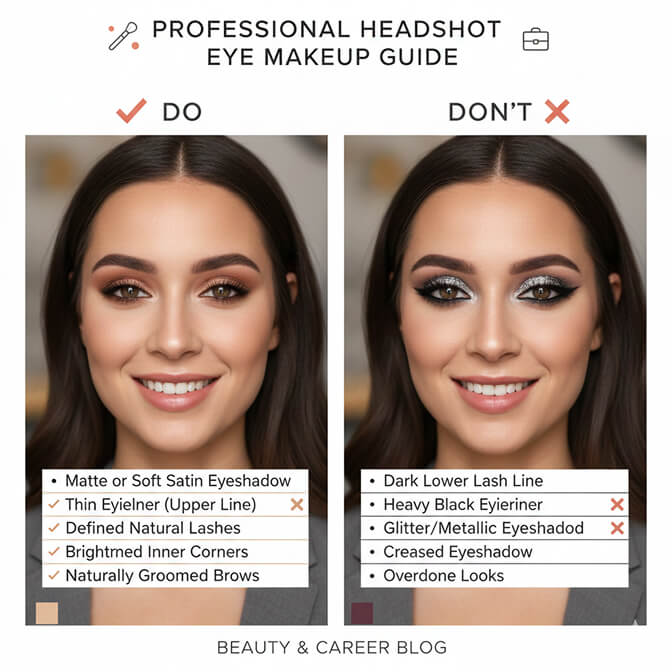
Quick Reference: Eye Makeup Do's and Don'ts for Professional Headshots
DO:
- Use matte or satin-finish shadows
- Keep liner thin and close to the lash line
- Apply mascara generously (but skip falsies)
- Brighten inner corners with light shimmer
- Groom and define brows naturally
DON'T:
- Apply liner to your lower lid
- Use black liner if brown would work
- Wear glitter, sparkle, or metallic shadow
- Skip primer (creasing ruins photos)
- Try a new look on the day of your shoot
The Real Secret to Great Headshot Eyes
I've watched thousands of headshots come through our platform. The patterns are undeniable.
The people with the most magnetic, trustworthy, hire-me eyes in their headshots don't have elaborate makeup. They have clean, intentional, well-executed basics.
They looked like themselves. Just a little more polished.
That's the whole game. Not transformation refinement.
Your headshot should make someone think "I'd trust her" or "He seems competent" before they've read a single word about you.
Your eyes make that happen. The makeup just helps them do their job.
If you're tired of second-guessing your headshot prep, you might want to try generating your professional headshot with AI. HeadshotPhoto.io gives you studio-quality results in minutes, no photographer, no appointment, no anxiety about whether your makeup looks right under their specific lighting.
Upload a few well-prepped selfies using the tips above. Let the AI handle the rest.
Your eyes are already doing the work. Give them a chance to shine.
Frequently Asked Questions
What is the best eye makeup for professional headshots?
The best eye makeup for professional headshots is a natural, matte look using neutral shadows (browns, taupes, warm coppers), thin upper-lid liner, and two coats of black mascara. Avoid shimmer, glitter, and lower-lid liner, which can make eyes appear smaller and more tired on camera.
Should I wear eyeliner for a corporate headshot?
Yes, but keep it minimal and strategic. Use a thin line of brown or soft black liner only on your upper lash line, applied as close to the lashes as possible. Skip the lower lid entirely, under-eye liner creates shadows that make eyes appear smaller in professional photos.
How do I make my eyes look bigger in headshots?
Curl your lashes before applying mascara, use light champagne shimmer in your inner corners, and avoid any dark colors below your eye. Groomed, defined brows also frame your eyes and make them appear more open and awake. The key is drawing attention upward rather than creating shadows underneath.
Is it worth hiring a makeup artist for headshots?
It depends on your comfort level and the stakes of the headshot. If you're doing your own makeup, follow headshot-specific guidelines (not everyday makeup rules). For AI-generated headshots, you'll be uploading selfies anyway, so learning to do natural, camera-ready eye makeup yourself is a valuable skill.
How is makeup for AI headshots different from traditional photography?
AI headshot generators learn from your uploaded photos, so consistency matters more than perfection in any single image. Wear similar, natural makeup across your uploads. Avoid glitter or heavy shimmer (which can create artifacts), and ensure your features, especially brows and lash lines, are clearly defined for the AI to reference.