How AI Headshots Solve the Unphotogenic Problem
If you've spent years believing the camera just doesn't like you, here's the part nobody told you. The problem was always solvable. You just needed the right machine.
She'd dodged the company headshot three years running.
Every time the photographer came to the office, she found a meeting to be in. A deadline. A dentist appointment that conveniently materialized. Anything to avoid standing against that backdrop and watching someone frown at the back of a camera while she died inside.
I'm just not photogenic, she told me. I've made peace with it.
She had not made peace with it. Nobody who reorganizes their calendar to dodge a camera has made peace with anything.
Here's the weird part. Three weeks later she had a headshot she genuinely loved, and she'd never stood in front of a photographer to get it. The "unphotogenic problem" she'd carried for a decade turned out to be a solvable engineering problem. Let me show you how.
First, "Unphotogenic" Was Never the Real Diagnosis
We have to clear this up before anything else makes sense.
Being unphotogenic feels like a fixed trait. Like eye color. Something you were issued at birth and have to live with.
It isn't. What people call "unphotogenic" is almost always a stack of fixable mechanical failures. Bad lighting. A lens held too close. An unflattering angle. A single frozen frame catching an awkward expression. Nerves tightening the face at the exact wrong moment.
Every item on that list is a condition, not a characteristic. And conditions can be controlled.
You were never unphotogenic. You were under-engineered. Big difference.
Once you see the "problem" as a list of solvable variables instead of a personal flaw, the whole thing stops being about your face and starts being about process. And process is exactly what a machine is good at.
Where Traditional Photo Sessions Fail You
Think about how a normal photo gets made. One person, one camera, one room, a handful of minutes, and a lot of pressure.
If the light is wrong that day, you're stuck with it. If your nerves spike, the photographer has maybe twenty frames to catch a good one before everyone gets impatient. If the angle doesn't suit your face, you might not even know until you see the proofs.
It's a high-pressure lottery with very few tickets. No wonder so many people walk away convinced they're the problem.
This is where most people get it wrong. They blame themselves for a system that was stacked against them from the start. We broke down all the specific ways this happens in our piece on the real reasons you look bad in photos, and not one of those reasons is your actual face.
How AI Flips Every One of Those Failures
Now here's the satisfying part. Go down the list of everything that makes someone look "unphotogenic," and watch how AI headshots neutralize each one.
The lighting problem. AI generates your image under consistently flattering, soft, even light every single time. No harsh office ceilings. No midday shadows. The light is effectively perfect on every frame because it's constructed, not gambled on.
The lens distortion problem. No phone held a foot from your nose. The AI renders your features at natural, flattering proportions, the way a professional lens shot from a proper distance would.
The angle problem. Instead of one unflattering angle, you get a range of professionally composed framings, and you pick the ones that suit your face best.
The frozen-frame problem. This is the big one. A photographer might shoot twenty frames. An AI generates dozens or hundreds. The single awkward millisecond stops mattering because you're choosing from a huge pool, not praying one of twenty lands.
The nerves problem. And here's the quiet miracle for camera-shy people. There is no live camera. No countdown. No stranger studying your face. You upload selfies you already have, in your own time, with zero pressure. The single biggest trigger for tense, bad photos simply gets removed from the equation.
The Likeness Question (Because You're Already Thinking It)
I know what the skeptic in you is saying. Sure, but will it even look like me, or like a polished stranger?
Fair. It's the only question that actually matters, and it's the one a lot of AI tools quietly fail.
Here's the honest truth. The quality of an AI headshot depends heavily on the selfies you feed in and on how well the specific tool holds your real features instead of "improving" them into someone else. A good tool keeps you recognizably you, on a genuinely good day. A bad one hands you a glossy impostor.
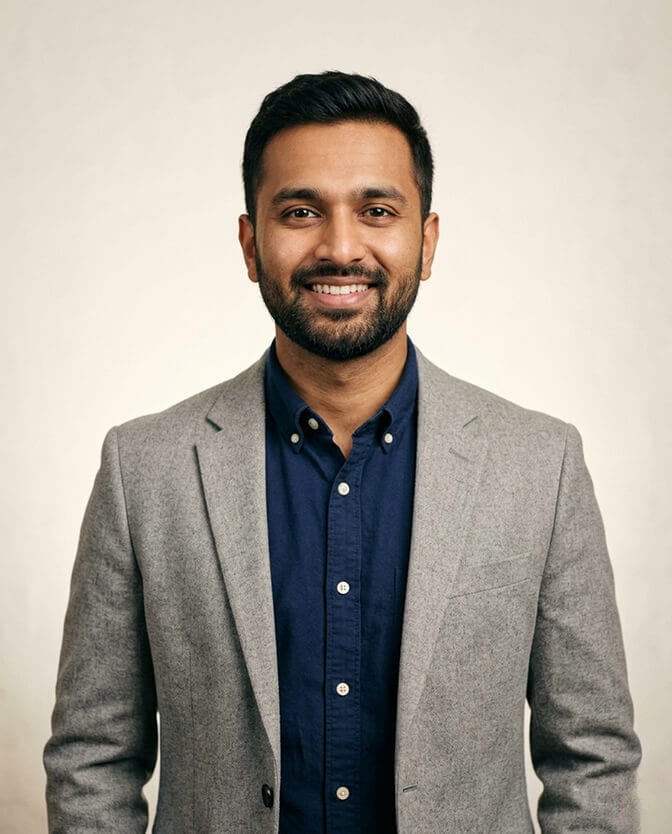
That's why we obsess over likeness more than style count. A hundred headshots are worthless if none of them look like you. If you've ever been burned by results that felt off, our guide on what to do when your AI headshot doesn't look like you explains exactly why it happens and how to fix it on the input side.
If your selfies are clear and well lit, a quality tool gives you something that feels less like a generated image and more like the photo you'd have gotten if everything finally went right.
What This Actually Feels Like
Let me bring it back to the woman who dodged the camera for three years.
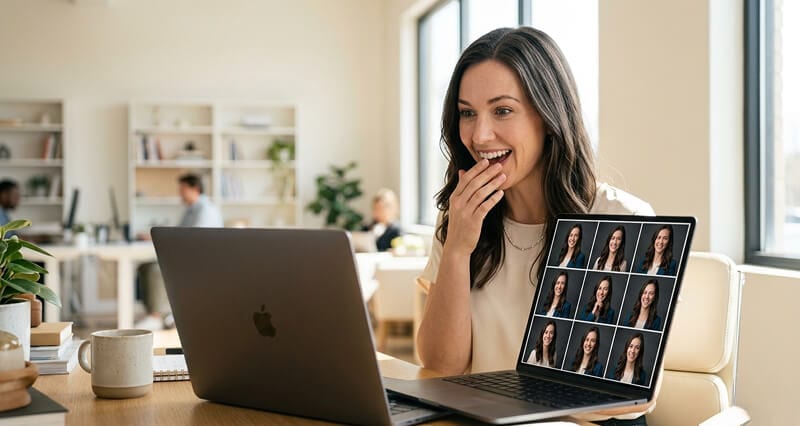
What changed for her wasn't her face. It was that the entire dreaded ritual disappeared. No backdrop. No frowning photographer. No held smile. She uploaded a dozen casual photos from her phone on a Sunday afternoon, in pajamas, with a cup of tea, feeling exactly zero pressure.
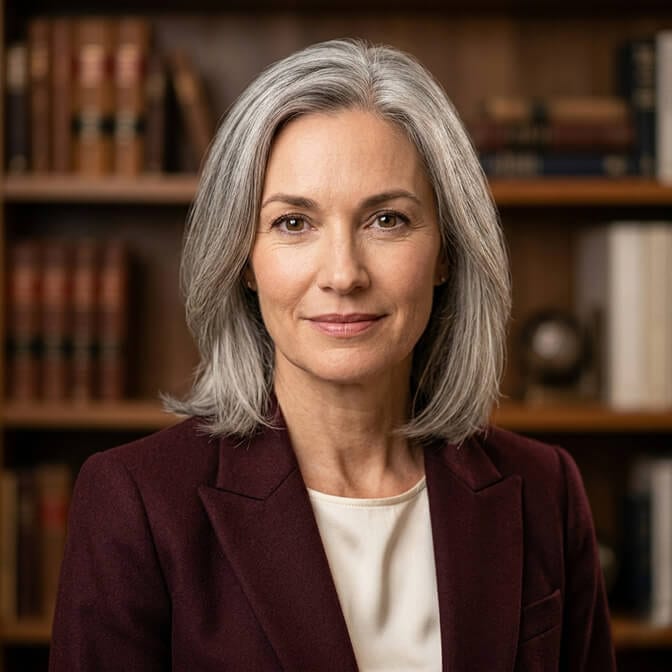
And the version that came back looked like her. Not a stranger. Her, lit well, framed right, caught in a good expression... the version her friends always saw but the camera never had.
The magic isn't that AI makes you look like someone else. It's that it finally captures the you that bad conditions kept hiding.
That's the whole pitch, honestly. If you've been carrying the "I'm not photogenic" label like luggage, this is the thing that quietly sets it down. You can see how simple and affordable the whole process is and find out for yourself, without booking a single anxious session.
The Honest Limits
I'm not going to tell you it's magic with no catch. That's not how we talk here.
AI headshots can't fix selfies that are blurry, dark, or all shot from the same bad angle. Garbage in, garbage out still applies. The tool needs a few clear, varied, decently lit photos of you to work with. Feed it good raw material and it shines. Feed it ten identical dim bathroom selfies and it struggles.
It also won't turn you into a different person, and honestly, you shouldn't want it to. The goal is the best, most authentic version of you, not a face you'll have to live up to in every video call afterward.
But within those honest limits? It solves the unphotogenic problem more completely than any posing tip, lighting tutorial, or expensive studio session I've ever seen.
What I Wish More People Understood
For years, "I'm not photogenic" has been a quiet little prison sentence people hand themselves.
It made a fixable, mechanical thing feel permanent and hopeless. It made people hide from cameras, skip the team photo, leave the dating profile blank, show up to the conference with no decent headshot to their name.
You don't have to keep serving that sentence.
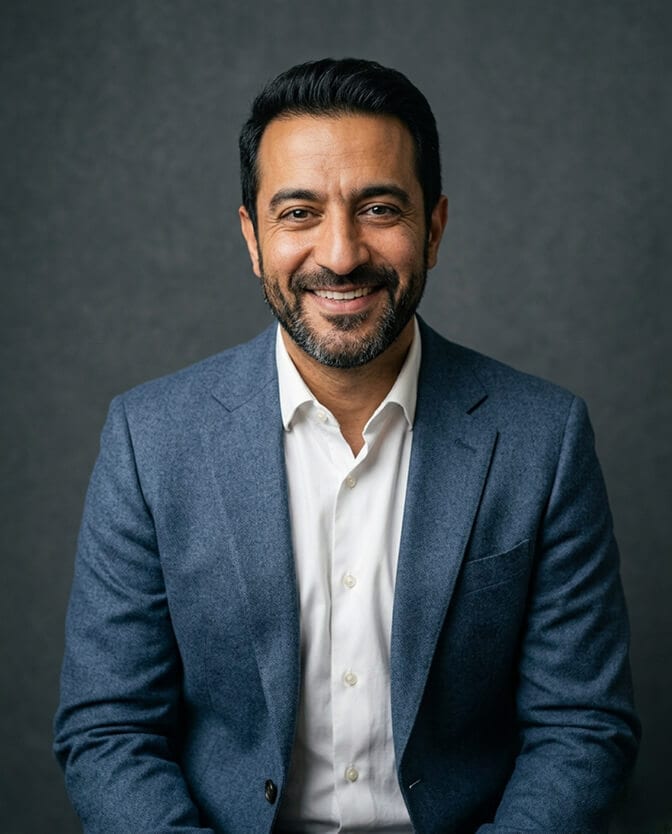
The camera was never the judge of your face. It was just a flawed instrument used under flawed conditions. Fix the conditions, remove the pressure, generate enough frames, and the "unphotogenic" person vanishes... because they were never really there.
You were always photogenic. You just needed the right machine to prove it.
Frequently Asked Questions
1. Can AI headshots help if I'm not photogenic?
Yes, this is exactly what they are best at. What people call being unphotogenic is usually a stack of fixable problems like bad lighting, lens distortion, awkward angles, and nerves. AI headshots control the lighting, render natural proportions, generate many frames, and remove the pressure of a live camera, which solves those problems at the source.
2. How do AI headshots compare to a traditional photo session for unphotogenic people?
A traditional session is a high-pressure moment with one set of lighting conditions and only a handful of frames to get it right. AI headshots remove the live pressure entirely and generate dozens or hundreds of options under consistently flattering light. For anyone who tenses up or has been disappointed by studio proofs, that difference is significant.
3. How many photos do I need to upload for good AI headshots?
Most quality tools need several clear, well lit selfies taken from a few different angles, rather than many identical ones. The variety helps the AI learn your real features accurately. Good, varied source photos are the single biggest factor in getting results that look like you.
4. Are AI headshots worth it if I've never liked any photo of myself?
For many people who have never liked their photos, AI headshots are worth it precisely because they fix the conditions that caused the dislike. Compared to a studio session that can cost several hundred dollars for just a few images, generating a large batch of polished options at a low one-time price is a low-risk way to finally get a photo you like.
5. Will AI headshots still look like me, or like a fake version?
A good AI headshot tool keeps you recognizably yourself, capturing you on a genuinely good day rather than turning you into someone else. The accuracy depends on your source selfies and on how well the tool preserves real features instead of over-smoothing them. Clear, varied input photos give you the most authentic and natural looking results.