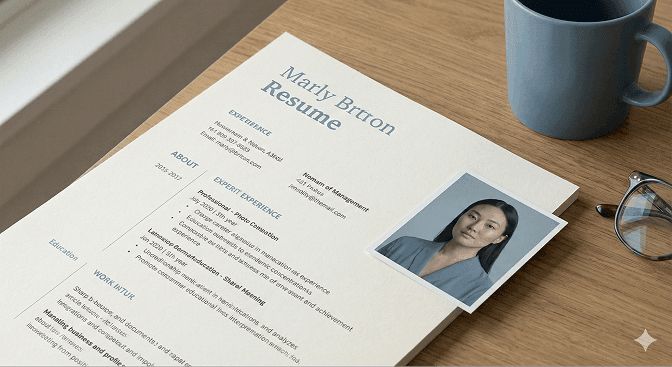
The real reasons resume photos hurt your chances have nothing to do with how you look
The recruiter never saw my face.
I spent 45 minutes getting the lighting right. Adjusted my collar three times. Used a proper camera, not my phone. The headshot was sharp, professional, and perfectly sized in the top-right corner of my resume.
It didn't matter.
The Applicant Tracking System cropped my entire document at the header. My name, contact info, and that carefully positioned photo? Gone. What the hiring manager received was a resume that started mid-sentence, somewhere around "Proficient in Python."
I didn't get the interview.
Here's the thing: I wasn't rejected because of bias. I wasn't filtered out because someone didn't like my face. I was rejected because the system couldn't process my formatting.
And that's the conversation nobody's having about resume photos.
The Question Everyone Asks (But Frames Wrong)
"Should I put a picture on my resume?"
I hear this constantly. Job seekers agonize over it like it's a personality test. They wonder if their appearance will help or hurt. They read conflicting advice, some articles say yes, others say absolutely not.
But here's what I've learned after years of hiring, being hired, and watching hundreds of applications flow through screening systems:
The question isn't whether YOU should include a photo. The question is whether the SYSTEM can handle it.
Let me explain.
The Technical Problem Nobody Talks About
Most job applications in 2024 don't go directly to a human. They go through an ATS, Applicant Tracking Systems like Workday, Greenhouse, Lever, or Taleo.
These systems are parsing machines. They extract text, categorize skills, and rank candidates based on keyword matches. They were not designed for visual elements.
When you add a resume photo, several things can break:
Parsing errors. The ATS might interpret your image file as corrupted data, causing the entire document to render incorrectly.
Layout destruction. Many systems strip formatting and convert resumes to plain text. Your carefully designed two-column layout with a photo? It becomes gibberish.
File size rejection. High-resolution headshots increase your PDF size. Some systems have upload limits. Your resume might not even make it through.
According to Jobscan's 2024 ATS research, over 97% of Fortune 500 companies use applicant tracking systems to filter candidates. If your resume picture causes a parsing error, you're eliminated before a human ever sees your name.
That's not bias. That's infrastructure.
The Legal Minefield (Especially in the US)
Here's where it gets uncomfortable.
In the United States, including a photo on your resume creates legal risk, for the employer. Not for you.
Why? Discrimination laws.
Under Title VII of the Civil Rights Act, employers cannot make hiring decisions based on race, color, religion, sex, or national origin. When a resume includes a photo, it introduces visual information about protected characteristics before the interview stage.
Smart HR departments know this. Many have explicit policies: reject resumes with photos to avoid even the appearance of bias.
I spoke with a talent acquisition director at a mid-size tech company last year. She told me something that stuck:
"When I see a resume with a headshot, I don't think 'oh, they're confident.' I think 'this person doesn't understand how hiring works here.' It's a yellow flag for cultural fit, not because of the photo itself, but because of the judgment it represents."
Harsh? Maybe. But honest.
This isn't universal, though. In Germany, France, and much of Asia, resume photos are standard, sometimes expected. If you're applying internationally, the rules change completely.
When a Resume Photo Actually Makes Sense
I'm not here to tell you photos are always wrong. Context matters.
There are legitimate scenarios where including a professional photo on your resume helps:
Acting, modeling, or on-camera roles. Your appearance is literally part of the job. A headshot isn't optional, it's required.
Personal branding in creative industries. Graphic designers, photographers, and creative directors often submit portfolio-style resumes where visual identity matters. A photo reinforces your brand.
International applications. Applying for jobs in Germany? Include the photo. Japan? Same. Many European and Asian markets expect it. Research the local norm before assuming the American standard applies everywhere.
Networking-first contexts. If you're handing your resume directly to a hiring manager at a conference, not submitting through a portal, a photo helps them remember you. Faces stick better than names.
LinkedIn-optimized applications. Some companies pull your LinkedIn profile photo anyway. If you know they'll see your face regardless, consistency might matter.
But notice the pattern: these are exceptions, not the rule. And even in these cases, the photo needs to be good.
If You Do It, Do It Right
Let's say you've decided a resume photo makes sense for your situation. Fine. But a bad photo is worse than no photo.
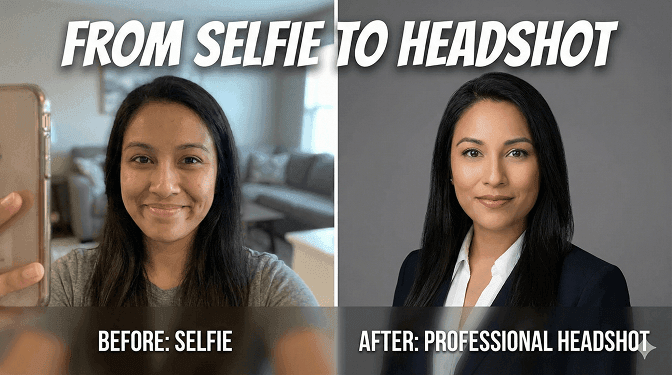
Here's what separates a professional photo for resume use from a selfie disaster:
Lighting. Natural light, facing a window. No harsh overhead shadows. No flash.
Background. Solid color or subtle gradient. Nothing distracting. Definitely not your kitchen.
Framing. Head and shoulders only. Centered. Eyes at roughly one-third from the top of the frame.
Expression. Slight smile. Approachable but professional. Not a LinkedIn "thought leader" smolder.
Resolution. High enough to look crisp, low enough to keep file size reasonable. Aim for 300-400 pixels wide.
Format. Embed the image properly in your PDF. Don't just paste a JPEG and hope for the best.
Or, honestly, consider AI headshot generators. They've gotten remarkably good at producing professional-looking results from casual selfies. Tools like Remini, Aragon, and HeadshotPro can create polished images that meet all the criteria above, often for under $40.
The Psychology You're Not Considering
Here's the uncomfortable truth about resume photos: they introduce variables you can't control.
Hiring managers are human. Humans have unconscious biases. Studies have repeatedly shown that physical attractiveness influences hiring decisions, even when evaluators believe they're being objective.
A 2021 study published in the Journal of Business and Psychology found that attractive candidates were rated higher on competence, even when qualifications were identical.
But attractiveness isn't universal. It's cultural, subjective, and often influenced by factors like race, age, weight, and gender presentation. When you add a picture on your resume, you're gambling that your face will trigger the right biases.
That's a gamble I wouldn't take.
Some people argue that showing your photo "filters out" companies that would discriminate anyway. I understand the logic. But it assumes you can afford to lose opportunities. Most job seekers can't.
What I Do Now
After my ATS disaster, I changed my approach.
My resume has no photo. It's a single-column, ATS-optimized PDF with clear section headers and parseable formatting. It works.
My LinkedIn profile? Different story. That's where my professional headshot lives. It's high-quality, well-lit, and updated annually. When recruiters look me up, and they always do, they see my face there.
This separation makes sense. The resume is for the machine. LinkedIn is for the human.
The Real Answer
So: should you put a picture on your resume?
For most people, in most situations, applying to most jobs in the US?
No.
Not because there's anything wrong with your face. Not because you should hide who you are. But because the systems that process your resume weren't built for images, the legal landscape discourages it, and the psychological variables work against you more often than not.
The exceptions exist. Know them. Use them when they apply.
But don't add a headshot to your resume because you think it makes you memorable. It might. Just not in the way you want.
Your skills should be the thing that stands out. Your experience. Your results.
Let LinkedIn carry the photo. Let your resume carry the proof.