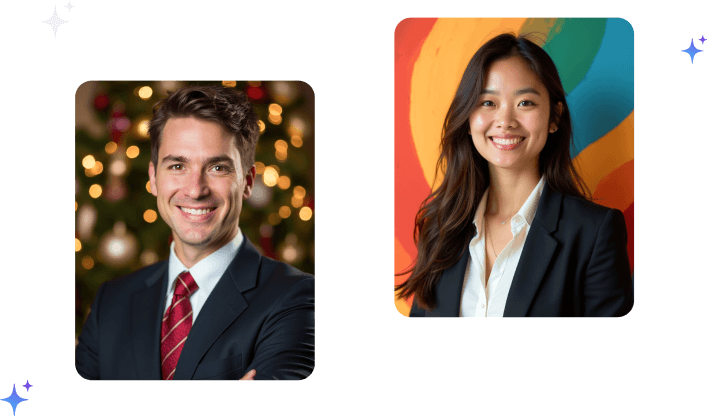
Everything you've been told about professional headshots is either outdated, biased, or flat-out wrong. Here's what really works.
I was sitting in a coffee shop last year when I overheard a conversation that made me want to flip the table.
A woman was telling her friend about her upcoming headshot session. She'd spent $400 booking a photographer. Another $150 on a new blazer. And she was genuinely stressed about whether to "smile with teeth or without."
Her friend's advice? "Just wear blue. I read somewhere that blue photographs well."
That's it. That's the advice.
I wanted to interrupt. I wanted to tell her that the color of her shirt matters about 10% as much as she thinks it does. That her $400 photographer might take technically perfect photos that make her look like a stranger. That the "rules" she's memorized are mostly recycled nonsense from 2015 photography blogs.
But I didn't. I just sat there, quietly frustrated.
Here's the thing: I've spent years in the headshot space. I've seen thousands of professional photos. Good ones. Terrible ones. Expensive disasters. Cheap wins. And I've learned that most advice about headshots focuses on the wrong things entirely.
So let me give you what I wish someone had given that woman in the coffee shop.
The real playbook.
The Only Thing That Actually Matters (And It's Not Your Outfit)
Before we get into specific dos and don'ts, I need to tell you something that might sound obvious but gets ignored constantly.
Your headshot has one job: to make people want to talk to you.
That's it. Not to show off your jawline. Not to prove you own a nice blazer. Not to look "professional" in some abstract, corporate way.
It needs to make a stranger think, "This person seems competent and approachable. I'd take a meeting with them."
Everything else is noise.
The best headshot isn't the one where you look most attractive. It's the one where you look most yourself on a good day.
Once you internalize this, all the dos and don'ts start making sense.
The Dos: What Actually Moves the Needle
Do: Match Your Expression to Your Industry
This is where most generic advice falls apart.
A warm, open smile works beautifully if you're in sales, real estate, coaching, or any client-facing role. People want to see approachability.
But if you're a surgeon? A lawyer handling serious litigation? A cybersecurity expert? That same big smile might undercut your credibility.
I'm not saying you need to look stern. But there's a difference between "friendly and competent" and "I'm posing for my cousin's wedding."
The move: Think about your ideal client or employer. What emotion do they need to feel when they see your face? Trust? Warmth? Expertise? Calm authority? Let that guide your expression.
Do: Get the Framing Right
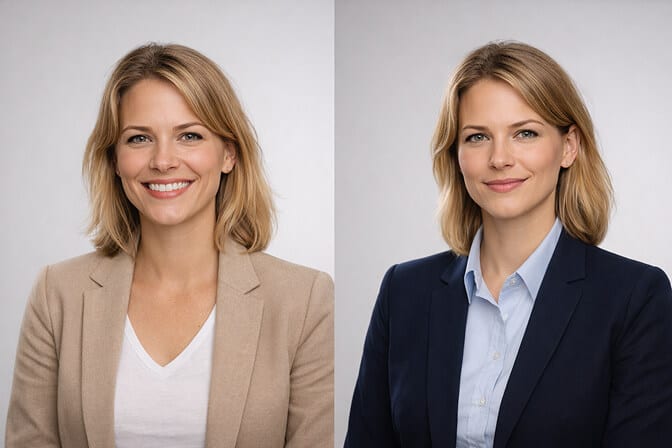
Your headshot should show your face and the top of your shoulders. That's the sweet spot.
Too tight (just your face) feels intense. Too wide (half your torso) looks like a cropped vacation photo.
LinkedIn specifically recommends your face take up about 60% of the frame. This isn't arbitrary. It's how our brains process faces on small screens and mobile devices.
The move: Whether you're working with a photographer or using an AI headshot generator, check that final crop. Your eyes should land roughly in the upper third of the image.
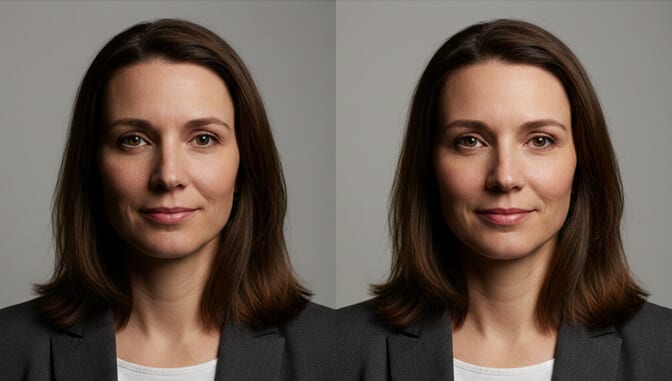
Do: Pay Attention to Lighting (More Than Anything Else)
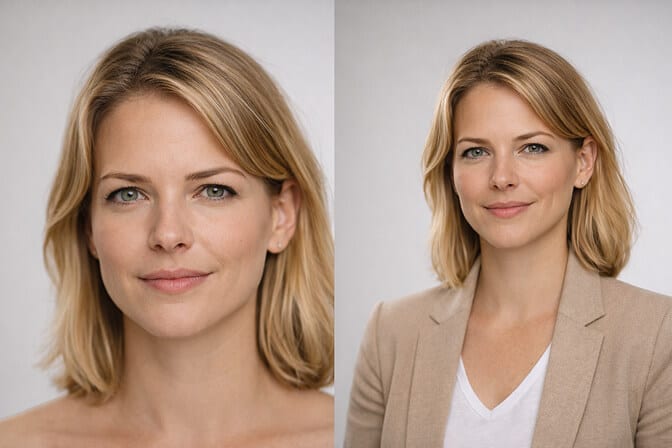
Here's a controversial take: lighting matters more than your camera, your outfit, or your background.
Bad lighting creates harsh shadows under your eyes. It emphasizes every pore, wrinkle, and imperfection. It makes you look tired even when you're not.
Good lighting does the opposite. It softens. It flatters. It makes you look like you actually slept last night.
The move: Natural light from a window (not direct sunlight) is your friend. If you're taking your own photo, face the window. If you're hiring a photographer, ask how they handle lighting before you book.
Do: Keep Your Background Simple
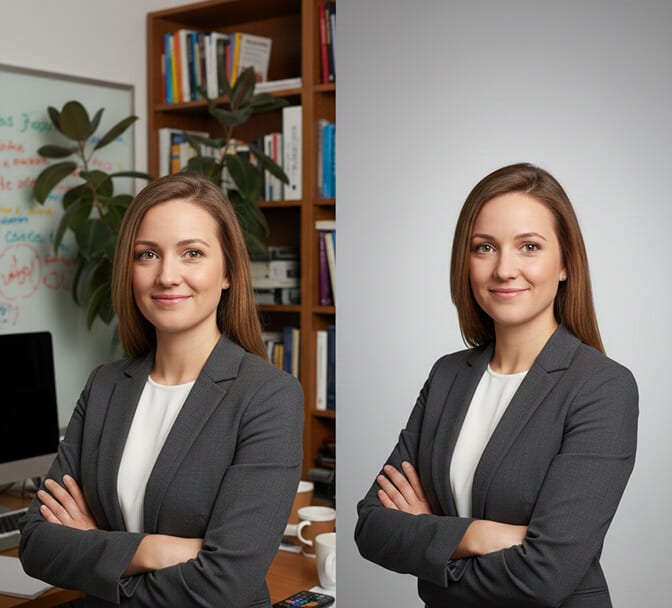
I've seen headshots ruined by busy backgrounds. Bookshelves with distracting titles. Office plants that look like they're growing out of someone's head. Conference rooms with other people visible.
Your background should be boring. Intentionally boring.
A plain wall. A softly blurred outdoor scene. A neutral studio backdrop. Something that puts all the focus on your face.
The move: If you're shooting at home, find the most blank wall you can. If your space is cluttered, professional AI headshots can place you on clean, appropriate backgrounds automatically.
Do: Dress One Level Up From Your Daily Wear
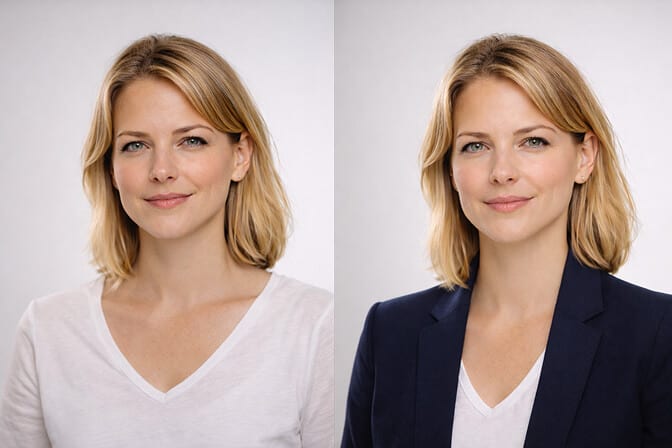
The old advice was "dress for the job you want." That's fine, but it's incomplete.
Better advice: dress one notch above what you'd wear on a normal workday.
If you usually wear casual clothes, throw on a nice button-down or blouse. If you're normally in business casual, add a blazer. If you're already in suits daily, make sure it's your best suit.
You want to look polished, not costumed.
The move: Avoid loud patterns, large logos, and anything you wouldn't wear to an important meeting. Solid colors in the mid-tone range (navy, burgundy, forest green, charcoal) tend to photograph well across skin tones.
The Don'ts: Mistakes I See Every Single Day
Don't: Use a Photo That Doesn't Look Like You
This is the biggest mistake I see. And it happens constantly.
People use headshots from five years ago. Or heavily filtered photos that smooth away every natural feature. Or AI-generated images that look like a better-looking cousin.
Then they show up to a video call or interview, and there's a visible disconnect.
If someone meets you in person and feels deceived by your headshot, you've already lost trust before saying a word.
The fix: Your headshot should look like you on a good day. Not you from 2019. Not you with a filter that removes your actual face. The version of you that shows up when you've had enough sleep and put in a little effort.
Don't: Overthink Your Outfit
I know I just gave you clothing advice. But here's the counterpoint.
I've watched people spend weeks agonizing over what to wear. They buy new clothes. They poll their friends. They read 15 articles about "the best colors for headshots."
And then the photo still doesn't work because they were so focused on the shirt that they forgot to relax their face.
The fix: Pick something simple that fits well and feels comfortable. Then stop thinking about it. Your expression and energy matter 10x more than whether you chose navy or charcoal.
Don't: Skip the Editing (But Don't Overdo It Either)
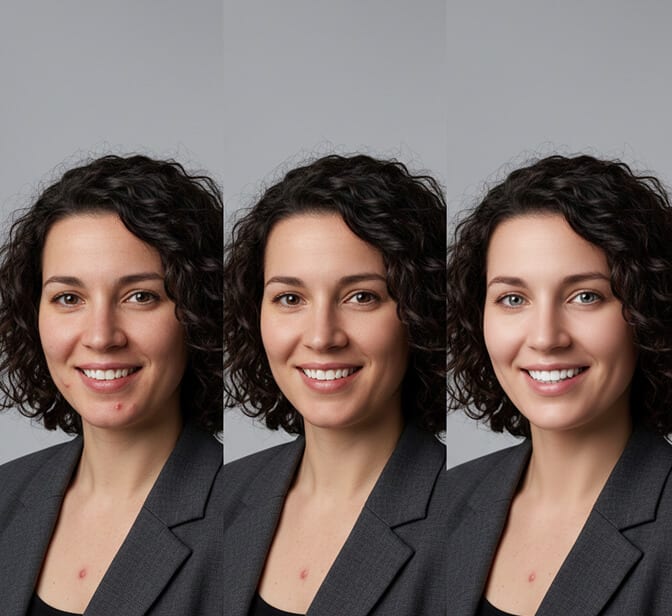
Raw, unedited headshots almost never look as good as they could. Even professional photographers do basic retouching.
But there's a line.
Light editing that removes temporary blemishes, evens skin tone, and adjusts lighting? Totally fine. Heavy editing that reshapes your face, removes all texture from your skin, or makes you look AI-generated? That's a problem.
The fix: If you're editing yourself, less is more. If you're using a professional or an AI tool, make sure the final result still looks human and recognizable.
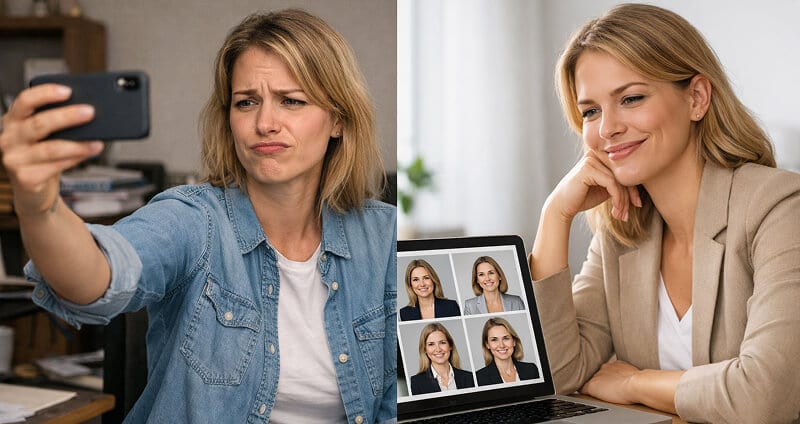
Don't: Use Your Phone's Front Camera
I need to say this clearly: front-facing phone cameras distort your face.
They use wide-angle lenses that make your nose look bigger, your ears look smaller, and your face look generally... off. It's why selfies never look quite like what you see in the mirror.
The fix: If you're doing a DIY headshot, use the rear camera with a timer. Or better yet, use a tool specifically designed for professional headshots. Speaking of which...
The AI Question: When It Makes Sense (And When It Doesn't)
Here's where I'll be honest about what we do at HeadshotPhoto.io.
AI headshot generators have gotten remarkably good. They can take a handful of your photos and generate professional-quality headshots in minutes, for a fraction of the cost of a traditional photographer.
But they're not for everyone.
AI headshots make sense when:
- You need a professional headshot quickly
- You don't have $200-500 to spend on a photographer
- You want multiple style options to test
- You're comfortable with technology and can spot which outputs look most natural
Traditional photography makes sense when:
- You're in a very senior role where the headshot will be heavily scrutinized
- You need photos for large-format printing (billboards, conference banners)
- You want the experience of working with a professional who can direct you
For most people updating their LinkedIn or company profile? AI is more than good enough. And often better, because you get dozens of options instead of whatever the photographer captured in 30 minutes.
If you're curious, you can try HeadshotPhoto.io and see the results.
The Stuff Nobody Tells You
A few final things I've learned that don't fit neatly into "dos and don'ts":
Update your headshot more often than you think. Every 1-2 years minimum. Every time your appearance changes significantly. People notice when your photo doesn't match reality.
Test your headshot before committing. Show it to 2-3 people you trust and ask: "Does this look like me? Would you take a meeting with this person?" Their gut reactions are valuable data.
Your headshot is not permanent. If you hate it, change it. If it's not working, try something different. The stakes feel high but they're really not. It's just a photo.
Confidence shows. I can't explain the mechanics of this, but it's true. People who feel good when their photo is taken look better in the final image. It's not about being photogenic. It's about being present and comfortable.
What Actually Matters, One More Time
Let me bring this back to where we started.
That woman in the coffee shop? She was worried about all the wrong things. The blazer color. The smile-or-no-smile debate. The pressure of getting it "right."
The truth is simpler.
A good professional headshot is one where you look like yourself, on a good day, in appropriate context for your industry.
That's it.
You don't need perfection. You don't need to look like a model. You don't need to spend a fortune.
You just need to look like someone worth talking to.
And honestly? That's probably already true. You just need a photo that shows it.
Ready to skip the stress and get a professional headshot in minutes? Try HeadshotPhoto.io and see what AI can do with your photos.
Frequently Asked Questions
What are the most important professional headshot tips?
The most critical tips are: match your expression to your industry, get proper lighting (natural light from a window works great), keep your background simple and distraction-free, frame the shot to show your face and top of shoulders, and most importantly, look like yourself on a good day. Technical perfection matters less than authenticity and approachability. Read more.
How do AI headshots compare to traditional photography?
AI headshots can produce professional-quality results at a fraction of the cost ($20-50 vs $200-500) and time (minutes vs hours). They work well for LinkedIn profiles, company websites, and digital use. Traditional photography may be better for senior executives, large-format printing, or when you want hands-on direction. For most professionals, AI headshots are now more than sufficient.
How often should I update my professional headshot?
Update your headshot every 1-2 years, or immediately after significant appearance changes like a new hairstyle, glasses, or weight change. Your photo should accurately represent how you look today. Using an outdated headshot can create an awkward disconnect when people meet you in person or on video calls.
Is it worth paying for a professional headshot photographer?
It depends on your situation. Professional photographers ($150-500+) offer expertise in posing, lighting, and direction. But for most people needing a LinkedIn or company profile photo, AI headshot generators deliver comparable results for under $50. Consider your budget, timeline, and how the photo will be used before deciding.
What should I avoid wearing in a professional headshot?
Avoid busy patterns, large logos, very bright or neon colors, and anything that feels like a costume rather than your authentic style. Solid, mid-tone colors (navy, charcoal, burgundy, forest green) photograph well. Most importantly, wear something comfortable that you'd actually wear to an important meeting. Discomfort shows in photos. Read more.