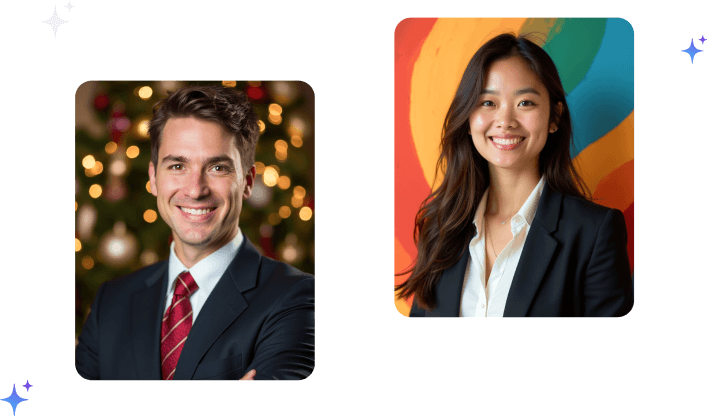
Office Headshot Poses: How to Look Approachable AND Powerful
The two-signal trick most people miss when posing for an office headshot.
I once watched a brilliant operations director get passed over for a board photo wall.
Not because of her work. Because of her headshot.
She looked cold. Arms locked, chin up, dead-straight at the camera. The kind of photo that says "do not approach this person." And the wild part? In real life she's the warmest person in the building.
Here's the thing nobody tells you about office headshots. The hardest part isn't looking good. It's looking like two things at once. Powerful enough that people respect you. Approachable enough that people actually want to talk to you.
Get that balance wrong and your photo works against you every single day it sits on your profile.
So let's fix it.
Why your face is doing two jobs at once
When someone sees your headshot, their brain runs a snap judgment in under a second. And it's measuring two separate things.
One is competence. Can this person do the job? The other is warmth. Do I like this person? Can I trust them?
You need both. High competence with zero warmth reads as arrogant or intimidating. High warmth with zero competence reads as friendly but lightweight. The whole game of an office headshot is hitting both meters at the same time.
Power says "I'm good at this." Approachability says "and you'd enjoy working with me." A great office headshot says both before you've spoken a word.
Most posing advice only solves for one. You'll see lists telling you to square your shoulders for authority, or tilt your head for friendliness. Pick one and you've lost the other half of the room.
The trick is layering them. Power in the body. Warmth in the face. Let me show you how.
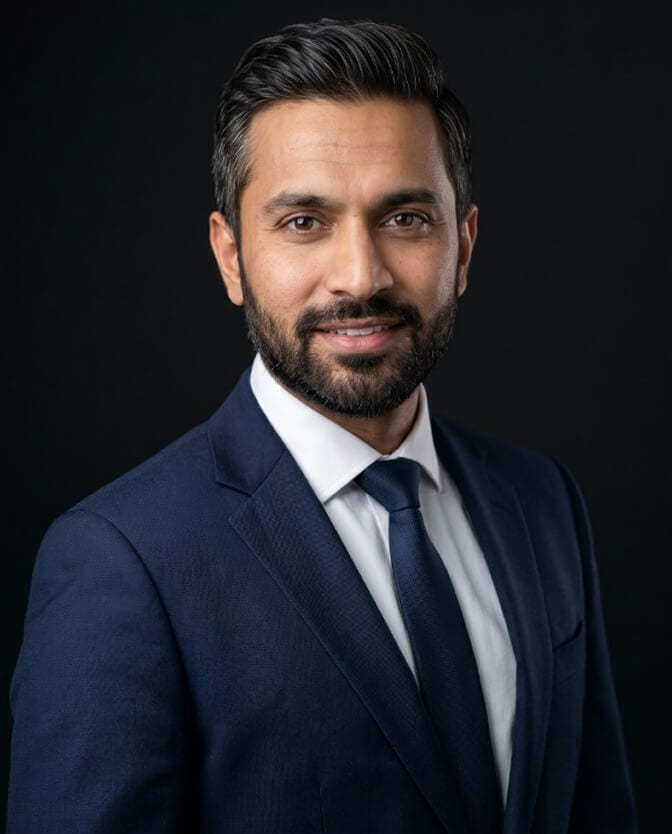
The power layer: what your body is saying
Power lives below the neck. It's posture, angle, and how much space you take up.
Square just enough, then turn. Facing the camera dead-on can read as confrontational. So angle your body roughly 30 to 45 degrees away, then bring your face back to the lens. This is the single most useful adjustment you can make. Your shoulders create a line that pulls the eye toward your face, and the slight turn instantly softens you without making you look weak.
Drop your shoulders. When people get nervous, shoulders climb toward the ears. It reads as tension every time. Roll them down and back once before the shot. You'll look taller and calmer.
Stop leaning back. Leaning away from the camera, even by a degree, reads as guarded or checked-out. Lean in slightly from the waist instead. Not a lurch. An inch. It signals "I'm engaged and I'm listening."
This is where most people get it wrong. They think power means stiffness. Chin up, chest out, frozen. But rigid doesn't read as strong. It reads as uncomfortable.
Real power in a photo is relaxed. The person who's genuinely in control doesn't have to perform it.
The approachability layer: what your face is saying
Now the warmth. This all happens above the neck, and it's mostly in two places: your eyes and the corners of your mouth.
The eyes do the heavy lifting. A real smile reaches the eyes. A fake one stops at the mouth and everyone can feel the difference, even if they can't name it. The fix is stupidly simple and it works: think of something that actually makes you happy a half-second before the shot. A person, a dog, a stupid inside joke. Your eyes change on their own.
You don't need teeth. A soft closed-lip smile often reads more approachable than a wide grin in a professional context, because it looks effortless instead of staged. If a full smile feels natural to you, great. If it feels forced, don't fake it. A warm, slightly amused expression beats a strained smile every time.
Soften the jaw, not the spine. Here's a small thing with a big payoff: push your forehead slightly toward the camera and tip your chin a touch down and forward. It sounds unnatural. It feels ridiculous. But it defines your jawline and stops your face from flattening out. Powerful jaw, warm eyes. That's the combo.
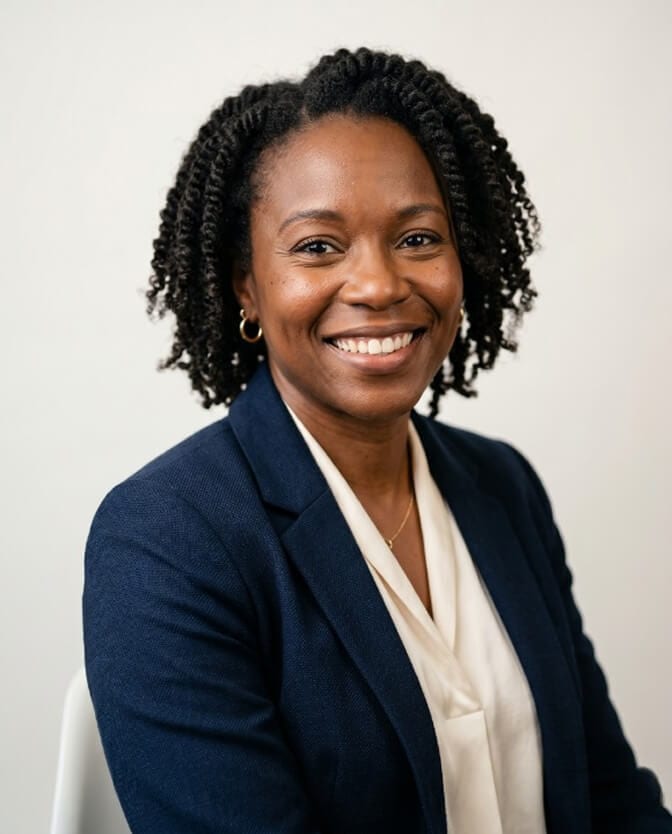
The poses that actually balance both
Enough theory. Here are the office headshot poses that consistently land both signals.
The classic angle. Body turned 30 degrees, face to camera, shoulders down, soft smile. This is your safe default. It works for almost everyone and almost every role, from a first job to a CEO bio.
The slight lean. Same setup, but lean in an inch from the waist. Adds energy and signals warmth. Great for team pages, sales profiles, anyone whose job is connecting with people.
The relaxed cross. Arms loosely crossed, body angled, easy expression. Done wrong this is a wall. Done right, with dropped shoulders and a real smile, it reads as confident and grounded. The difference is entirely in the face. Tense face plus crossed arms equals defensive. Warm face plus crossed arms equals self-assured.
The seated lean. Sitting, leaning slightly forward, forearms resting. This is one of the most approachable poses there is because it mimics how you'd sit across from someone in a real conversation. Strong choice for founders, consultants, and anyone selling trust.
The over-the-shoulder. Body turned mostly away, face coming back to the lens. A little more dynamic, a little more personality. Use it when your role allows some character, like creative or leadership profiles.
Stay with me here, because there's a piece almost everyone skips.
The part nobody tells you about
You can know every pose in this article and still freeze up the second a camera points at you.
That's normal. The face you make when you're trying to look approachable is almost never the face that actually looks approachable. Effort reads as effort.
So the real skill isn't memorizing poses. It's getting relaxed enough that a good one happens naturally. Shake out your hands. Talk to whoever's shooting. Take a few throwaway frames you know you'll delete, just to burn off the nerves. The good shot usually comes after you stop performing.
And here's the genuinely freeing part if you're generating your headshots from photos instead of standing in a studio.
When you create office headshots from your own selfies, you're not trying to nail the perfect pose in one tense moment. You upload a handful of natural photos, the ones where you actually look like yourself, and the angle, lighting, and background get handled for you. The pressure to perform on command just... disappears. You pick the version that already has the warmth, because you weren't faking it for a lens.
That's the whole reason we built Headshot Photo the way we did. You bring the real you. We handle the studio part.
If you want to see how different poses and angles actually translate, our professional headshot examples page is the fastest way to find a look that fits your role.
Common mistakes that quietly kill your headshot
A few things I see over and over, all easy to avoid.
Chin too high. Reads as looking down on people. Literally. Bring it down and forward instead.
Dead eyes. Technically perfect pose, nobody home behind the eyes. Always the missing warmth. Always.
Over-smiling. A grin held two beats too long curdles into a grimace. Shoot in bursts so you catch the relaxed middle, not the strained edges.
Wearing the wrong thing. Pose can only do so much if your outfit fights it. If you're unsure what works, our guide on what to wear for a professional headshot saves a lot of second-guessing.
Trying to look like someone else. The most powerful and approachable version of your headshot is the one that still looks like you on a good day. Not a stiffer, more "corporate" stranger.
What I wish more people understood
Your headshot isn't a photo of your face. It's a tiny argument about who you are.
Every day it sits there making the case for you, to recruiters, clients, colleagues you haven't met yet. Power without warmth wins respect and zero rapport. Warmth without power wins smiles and no authority.
You want the photo that does both. The one where someone glances at it and thinks I'd trust this person, and I'd actually want to grab coffee with them.
That balance isn't a talent. It's a few small adjustments, repeated until they feel like nothing.
Body angled. Shoulders down. Lean in an inch. Jaw forward. And a reason to mean the smile.
That's the whole thing. Now go take the version of yourself you'd want to work with.
For more pose ideas, from the classic straight-on to the laptop-in-frame shot, see our professional headshot poses guide. And if the whole office needs matching photos for the team page, AI headshots for your company keep every employee's pose, background and crop consistent.
If you'd rather skip the studio entirely and get polished, balanced office headshots from photos you already have, get your professional headshot with Headshot Photo. Your finished shots arrive in one to three hours, depending on the plan, and you choose the pose that already looks like the best version of you.
Frequently Asked Questions
What are the best office headshot poses for looking professional?
The most reliable office headshot poses angle your body 30 to 45 degrees from the camera while your face turns back to the lens, with shoulders dropped and a soft, genuine smile. The classic angle and the slight lean are the safest choices because they signal competence and warmth at the same time. Add a slightly forward chin to define your jaw and avoid looking flat.
How can a headshot look powerful and approachable at the same time?
Split the job between your body and your face. Power comes from posture and angle below the neck (relaxed shoulders, a confident turn, a slight lean in). Approachability comes from above the neck, mainly warm eyes and an easy expression. When the body looks self-assured and the face looks genuinely friendly, you hit both signals at once.
How do I pose for an office headshot if I feel awkward in front of the camera?
Stop trying to hold a pose and focus on getting relaxed instead. Shake out your hands, talk to whoever is shooting, and take a few throwaway frames to burn off nerves. The natural shot almost always comes after you stop performing. If you generate headshots from your own photos, you skip the on-the-spot pressure entirely and just pick the relaxed image that already looks like you.
Is it worth getting professional office headshots, or can I take my own?
It depends on how much the photo has to do for you. A profile that recruiters, clients, and colleagues see daily is worth getting right, and professional-quality headshots consistently earn more trust and attention than casual selfies. The good news is you no longer need a paid studio session to get there. You can create studio-level office headshots from your own photos in minutes, which is why so many people skip the traditional shoot. See Headshot Photo pricing to compare.
Are AI office headshots good enough to look natural and professional?
Yes, when the source photos are natural and the output keeps real skin texture and genuine expression. The mistake people make is uploading stiff, posed selfies, which produces stiff results. Upload relaxed photos where you actually look like yourself, and the finished office headshots read as authentic, polished, and professional rather than artificial.