How the LinkedIn Algorithm Works in 2026 (And the Profile Mistake Killing Your Reach)
The algorithm isn't sabotaging you. Your profile is.
I spent three weeks posting what I thought was solid LinkedIn content.
Industry insights. Original takes on AI trends, real stories from building HeadshotPhoto.io.
Crickets.
Not zero engagement, just that deflating kind where your mom's "Great post, honey!" comment is doing all the heavy lifting.
So I did what any obsessive founder would do: I went down the rabbit hole. LinkedIn's engineering blog. Algorithm research papers. Hours of testing.
And here's the thing nobody told me.
The LinkedIn algorithm wasn't ignoring my posts. It was ignoring me.
More specifically, it was making split-second judgments about my profile before my content had a chance to be seen.
Let me explain.
The Three-Stage Filter (And Where You're Getting Stuck)
When you hit "Post" on LinkedIn, your content doesn't go straight to your network's feed.
It enters a sorting machine.
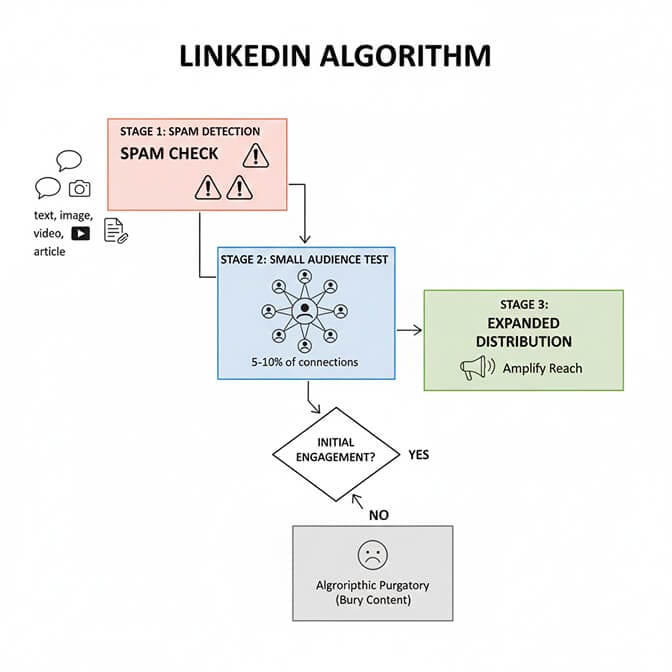
Stage 1: The spam filter. LinkedIn's bot categorizes your content instantly. Text, image, video, article. It checks for red flags: spammy language, engagement bait, excessive links.
Stage 2: The small audience test. Your post gets shown to a tiny slice of your network. Maybe 5-10% of connections. LinkedIn watches what happens next.
Stage 3: Expand or bury. If that small group engages real comments, shares, and thoughtful reactions, LinkedIn opens the gates. If they scroll past? Your post dies in algorithmic purgatory.
Most advice stops here.
"Post valuable content." "Engage in the golden hour." "Use 3-5 hashtags."
Fine. But here's where it gets interesting.
The Part Nobody Talks About
LinkedIn's algorithm doesn't evaluate your posts in isolation.
It evaluates you.
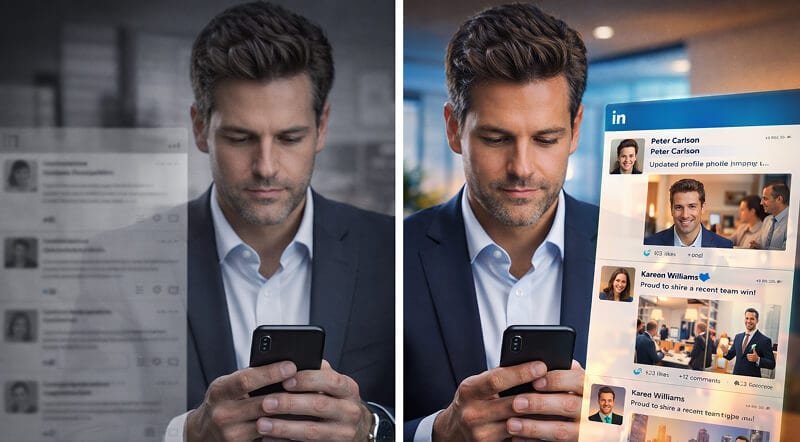
Think about it. When LinkedIn shows your post to that initial test audience, they're not just seeing your words. They're seeing your name. Your headline. Your photo.
In a fraction of a second, they're making a judgment: Is this person worth my attention?
Your profile is the pre-filter before the algorithm even scores your content.
This is where the psychology gets brutal.
Research on first impressions shows humans form judgments about trustworthiness and competence in as little as 100 milliseconds. On LinkedIn, that judgment happens before anyone reads a single word of your post.
A blurry photo? Scroll.
A cropped group shot from 2016? Scroll.
No photo at all? LinkedIn's own data shows profiles without photos get far fewer views.
The algorithm notices this behavior. When your test audience scrolls past without engaging, LinkedIn interprets it as a signal: This content isn't resonating.
But here's the twist it might not be your content at all. It might be that your profile failed to earn the three seconds of attention your post needed.
What the 2026 Algorithm Actually Rewards
Let's get specific about what's changed.
Expertise signals are everything now.
LinkedIn has been explicit: they're prioritizing "knowledge and advice" content from people who demonstrate real expertise. Generic motivational posts are dying. Hot takes with no substance are dying.
What's working? Original insights. Industry-specific analysis. Lessons from actual experience.
But here's the catch: LinkedIn determines "expertise" partly through your profile.
Your headline, your About section, your work history, your endorsements. These aren't just vanity metrics. They're signals the algorithm uses to decide whether you're qualified to speak on a topic.
Post about marketing strategy with a headline that says "Marketing Director | 10 Years B2B Experience"? The algorithm pays attention.
Post the same content with a headline that says "Open to opportunities"? Different outcome.
The "golden hour" still matters but differently.
You've probably heard that the first 60 minutes after posting are critical. That's still true. LinkedIn's engineering team has confirmed that they use early engagement velocity to decide distribution.
But here's the 2026 update: LinkedIn now surfaces older posts if they're highly relevant to a user's interests.
This is huge.
It means evergreen, valuable content can keep working for weeks. But it also means LinkedIn is getting better at matching content to the right audiences, which requires understanding who you are as a creator.
Your profile is that identity signal.
Engagement bait is dead. Conversation is king.
"Comment YES if you agree!"
LinkedIn's algorithm now actively detects and suppresses engagement bait. The platform has gotten sophisticated at distinguishing between genuine discussion and manufactured interaction.
What performs instead? Posts that spark real conversation. Questions that invite perspective. Stories that make people want to share their own.
Here's what I've noticed: posts where I share something slightly vulnerable or counterintuitive generate 3-4x more comments than posts where I just share information.
Vulnerability creates connection. Connection creates conversation. Conversation signals the algorithm.
The Profile Photo Problem
I need to be direct here, because this connects to what we do at HeadshotPhoto.io.
After analyzing thousands of LinkedIn profiles, we've noticed a pattern that most people miss.
Your headshot isn't just about looking professional. It's about looking approachable enough to engage with.
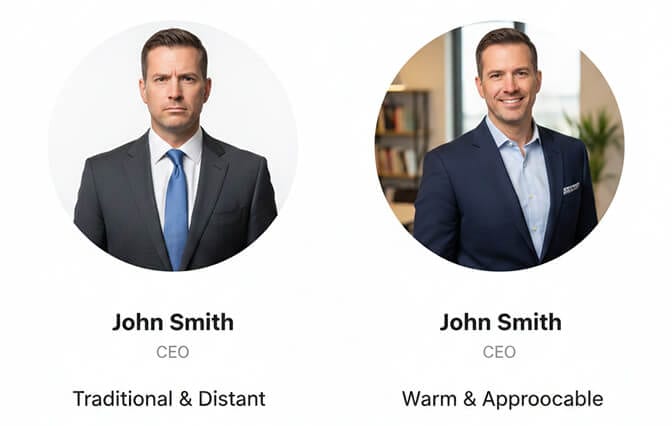
Too formal, and people subconsciously categorize you as "corporate" someone talking at them rather than with them.
Too casual, and you lose credibility before you start.
The sweet spot? Professional quality with genuine warmth. A photo that says: "I know what I'm talking about, and I'd be interesting to talk to."
This isn't vanity. It's algorithmic strategy.
When your photo builds instant trust, people pause on your posts instead of scrolling. That pause becomes a view. The view becomes potential engagement. Engagement becomes distribution.
If your LinkedIn photo is more than two years old, or it was cropped from a group shot, or it's a selfie with weird lighting you're leaving reach on the table.
We've helped over 50,000 professionals create AI-powered headshots that nail this balance. Not because everyone needs a new headshot, but because the ones who do often don't realize how much it's costing them.
The Content Formats Actually Working Right Now
Let's talk tactics.
According to the latest data from LinkedIn experts like Richard van der Blom, here's what's performing in 2026:
Native video: +69% performance boost especially when your face (or brand) appears in the first four seconds. LinkedIn wants to keep users on-platform, and video does that.
Carousels and document posts these generate dwell time. When someone swipes through your slides, LinkedIn registers extended engagement. That's a strong signal.
Text-only posts with clear formatting not dead, but harder to make work. They need to be genuinely insightful and easy to read. Short paragraphs. Line breaks. A hook in the first two lines.
External links: handle with care LinkedIn doesn't love sending traffic away. If you must share a link, consider putting it in the comments instead of the main post. Or create zero-click content that delivers value without requiring a click.
The thread connecting all of this? LinkedIn rewards content that keeps people engaged on LinkedIn.
The Posting Cadence That Actually Works
More isn't better.
The data suggests posting 2-4 times per week is the sweet spot for most professionals. That cadence can increase visibility by up to 120% compared to sporadic or over-frequent posting.
Post every day and you might actually hurt your reach LinkedIn's algorithm may interpret it as lower-quality output.
What matters more than frequency? Consistency and timing.
Best times to post in 2026:
- Tuesday through Thursday: 10 AM - 12 PM (your audience's timezone)
- Monday: 10 AM - 1 PM
- Friday: 10 AM (then engagement drops)
But honestly? These are starting points. Your audience might behave differently. Test, watch your analytics, adjust.
The Strategy Nobody's Using
Here's what I wish someone had told me earlier.
Optimize your profile before you optimize your posts.
Before you spend another hour crafting the perfect LinkedIn post, spend 30 minutes on this:
- Headline audit. Does it communicate expertise and value? "Marketing Director" is fine. "Marketing Director | Helping B2B SaaS companies 3x demo rates" is better.
- Photo check. Is it recent? High-quality? Does it make you look approachable and competent? If you're unsure, ask three people for honest feedback. Or get a professional headshot that removes the guesswork.
- About section. First-person, conversational, specific about what you do and who you help. Not a resume a story.
- Featured section. Showcase your best work. Give the algorithm (and visitors) more signals about your expertise.
These elements create the foundation that makes your content strategy actually work.
What This Means for 2026
LinkedIn's direction is clear.
They're building a platform that surfaces genuine expertise and meaningful professional conversation. The era of growth-hacking your way to visibility is ending.
What's coming:
- More AI-powered content matching (your posts shown to people most likely to find them valuable)
- Continued suppression of engagement bait and viral-chasing tactics
- Greater emphasis on creator credibility and authority signals
The winners will be people who build genuine expertise, communicate it clearly, and present themselves professionally.
Your content matters. But it doesn't exist in a vacuum.
It exists attached to you your profile, your photo, your credibility signals.
The algorithm isn't just asking "Is this post good?" It's asking "Is this person worth listening to?"
Make sure your profile answers that question before your posts have to.
Ready to Fix the Foundation?
If you've been grinding on content strategy while neglecting your profile, you're fighting with one hand tied behind your back.
Start with the basics. Update that headshot. Sharpen that headline. Make your profile work for you instead of against you.
And if you want a professional headshot without the hassle of booking a photographer, try HeadshotPhoto.io. We've generated over 1.4 million headshots for professionals who understand that first impressions happen before the first word.
Frequently Asked Questions
How does the LinkedIn algorithm work in 2026?
The LinkedIn algorithm uses a three-stage process: spam filtering, small audience testing, and expanded distribution based on engagement. In 2026, it prioritizes expertise-driven content, meaningful conversations, and knowledge sharing over viral tactics. Your profile credibility and early engagement velocity heavily influence how widely your posts get distributed.
What is the LinkedIn golden hour?
The golden hour refers to the first 60 minutes after you publish a post. During this window, LinkedIn tests your content with a small audience and measures engagement velocity. Strong early engagement especially thoughtful comments and shares signals the algorithm to show your post to a broader audience.
Does my LinkedIn profile photo affect my post reach?
Yes. Your profile photo influences whether people pause on your posts or scroll past. Since LinkedIn's algorithm uses early engagement as a distribution signal, a low-quality or outdated photo can indirectly hurt your reach by reducing the trust and attention your content receives.
What's the best time to post on LinkedIn in 2026?
Research suggests Tuesday through Thursday between 10 AM and 12 PM performs best for most audiences. Mondays from 10 AM to 1 PM and Friday mornings also show solid engagement. However, optimal timing varies by industry and audience test different slots and track your analytics.
Is LinkedIn's algorithm biased against certain content?
LinkedIn has stated its algorithm doesn't use demographic information like age, race, or gender to determine visibility. However, the algorithm does deprioritize engagement bait, excessive external links, and content that doesn't generate genuine conversation. Focus on authentic expertise and meaningful interaction for best results.