
Lawyer Headshots: What to Wear (And Why Your Outfit Choice Sends a $500/Hour Message)
The difference between "I trust this attorney" and "I'll keep looking" often comes down to what you wore for 15 minutes in front of a camera.
I watched a partner at a mid-size firm lose a $2 million case.
Not in the courtroom. Before the client even walked through the door.
She'd updated her headshot the week before. Wore a trendy blazer with oversized buttons. Thought it looked "modern." The prospective client, a Fortune 500 CFO facing an SEC inquiry, saw that photo on the firm's website and called someone else.
Too casual. Not serious enough for my situation.
He told me this at a conference six months later. I still think about it.
Here's the uncomfortable truth about lawyer headshots: your outfit isn't about fashion. It's about trust. And trust, in legal services, is worth hundreds of dollars per hour.
So let's talk about what to actually wear.
The Psychology Nobody Explains
Most "what to wear" guides give you a checklist. Navy suit. White shirt. Conservative tie. Done.
But they never explain why these choices matter.
Here's what's actually happening in your potential client's brain when they see your headshot:
They're scared. Confused. Facing a divorce, a lawsuit, a criminal charge, a business dispute. They need someone who looks like they've handled this a thousand times before.
Your outfit is a visual shortcut. It answers the question they're too afraid to ask: Can I trust this person with the worst moment of my life?
The goal isn't to look good. It's to look like someone who wins.
That's a fundamentally different approach than "wear something professional."
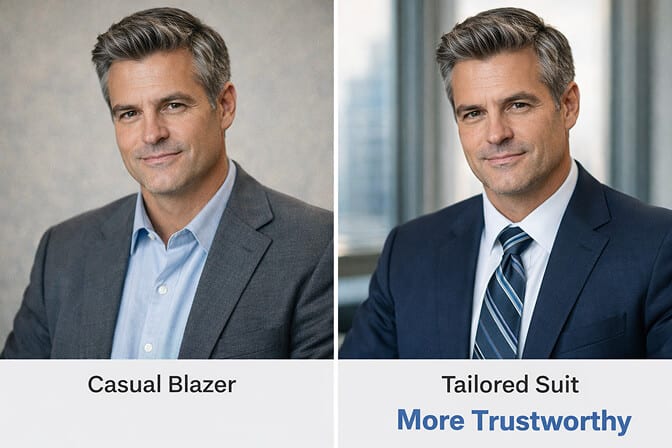
The Foundation: What Actually Works
Let me be direct about the baseline.
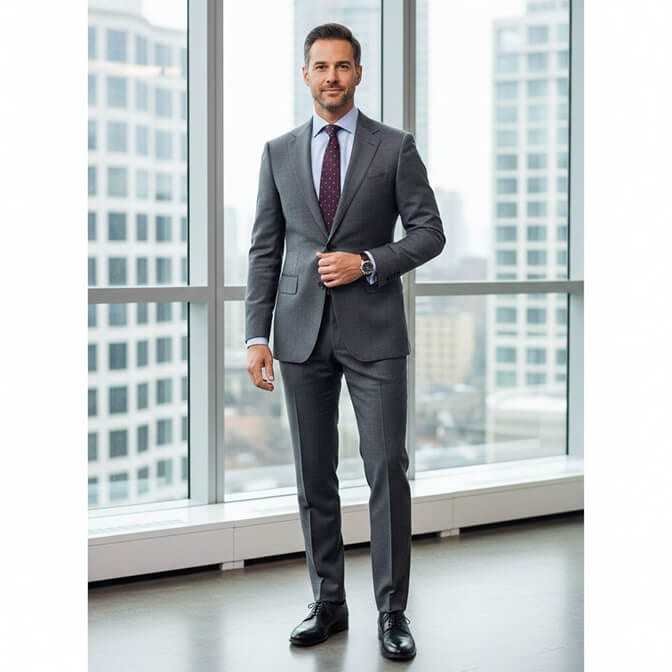
For men: A well-tailored dark suit (navy, charcoal, or black) with a light dress shirt and a conservative tie. That's it. That's the formula that's worked for decades and will work for decades more.
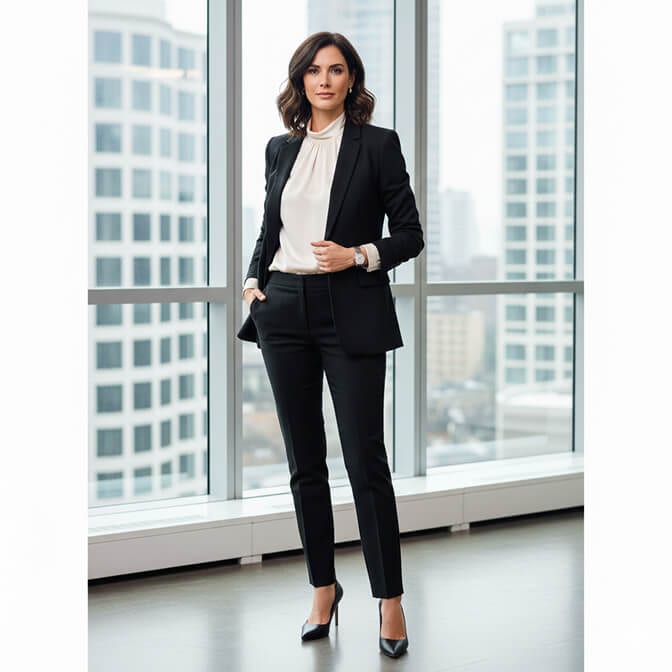
For women: A tailored blazer over a solid-colored blouse, or a structured dress with a blazer. Dark neutrals. Clean lines.
But here's where most guides stop, and where we need to go deeper.
Fit Matters More Than Price
I've seen attorneys spend $3,000 on a suit and look worse than someone in a $400 option from Suitsupply.
The difference? Tailoring.
An ill-fitting jacket bunches at the shoulders. Shirt collars gap. Sleeves fall at the wrong length. The camera catches all of it.
Get your outfit tailored before the shoot. Not the week before. At least two weeks out, so you have time for adjustments.
This single step separates amateur headshots from ones that command respect.
Colors That Build (or Break) Trust
Not all "professional" colors photograph the same way.
Best choices:
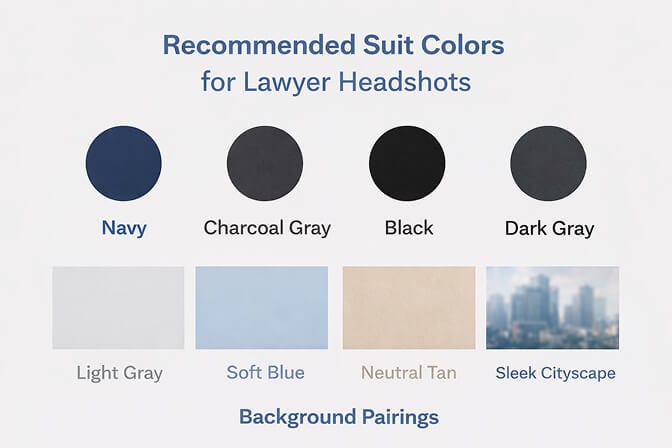
- Navy blue (universally trustworthy, photographs beautifully)
- Charcoal gray (authoritative without being harsh)
- Black (powerful, but can feel intimidating for some practice areas)
- Deep burgundy or forest green for accent pieces
Avoid:
- Bright white shirts directly against fair skin (creates harsh contrast)
- Light pastels (can wash you out, look less authoritative)
- Anything too close to your skin tone (you'll blend into yourself)
- Busy patterns, bold stripes, or loud plaids (the camera hates them)
Here's a detail most photographers won't tell you: the background matters as much as your outfit. If your headshot will be taken against a gray backdrop, don't wear gray. You'll disappear.
Ask about the background before you plan your wardrobe.
The Part Nobody Talks About: Practice Area Adjustments
A family law attorney and a white-collar defense lawyer shouldn't have identical headshots.
Stay with me here.
Your outfit should match the emotional state of your ideal client.
Criminal defense: Clients are terrified. They need strength, not warmth. Darker suits, serious expressions, minimal softness. You're their protector.
Family law: Clients are heartbroken. They need empathy with competence. Slightly softer colors, approachable posture, a subtle warmth in the eyes. You're their guide through chaos.
Corporate/M&A: Clients are sophisticated. They need to see a peer, not a service provider. The sharpest tailoring, the most polished details. You're their strategic partner.
Personal injury: Clients are overwhelmed. They need someone who will fight. Confident colors, strong stance, determined expression. You're their advocate.
Your headshot should answer your ideal client's unspoken question before they contact you.
This is strategy, not vanity.
What to Avoid (I've Seen All of These)
Let's talk about the mistakes I've watched attorneys make. Some of these still haunt me.
The "I'm Still Young and Hip" blazer: Oversized buttons, trendy cuts, unusual textures. You might love it. Your 60-year-old client facing a business dispute will scroll right past.
The wrinkled disaster: You drove to the studio in your suit. It creased. You didn't notice. Your headshot now screams "I don't pay attention to details." For an attorney, that's fatal.
Too much jewelry: One watch. Maybe a wedding band. That's it. Dangling earrings, chunky bracelets, statement necklaces all compete with your face for attention. Your face should win.
The five o'clock shadow surprise: Men, if you typically get stubble by mid-afternoon, schedule your shoot for the morning. Or shave right before. Gray stubble on camera looks like you just rolled out of bed.
The "my glasses don't have anti-glare coating" situation: Studio lights bounce off lenses and create bright white spots over your eyes. Either get anti-glare coating, remove your glasses, or work with a photographer who knows how to light around this problem.
Seasonal confusion: Your headshot will be used year-round. That cozy winter sweater under your blazer will look bizarre in your July email signature.
The Details That Signal "Senior Partner" vs "First-Year Associate"
Small things communicate more than you realize.
Collar stays: Use them. A floppy collar looks sloppy.
Pressed everything: Your shirt, your jacket, your pants if they'll be visible. Wrinkles photograph terribly.
Proper sleeve length: Your shirt cuff should show about half an inch below your jacket sleeve. This is a detail that expensive lawyers get right and everyone else misses.
Subtle patterns only: If you must wear a pattern, make sure it's not visible from five feet away. Micro-patterns can add sophistication. Bold patterns create visual noise.
One accent color maximum: A burgundy tie with a navy suit works. A burgundy tie with a patterned shirt and a pocket square becomes a circus.
The most trustworthy headshots have one thing in common: intentional simplicity.
Everything looks deliberate. Nothing competes for attention. The focus stays on your face, your eyes, your competence.
A Faster Way to Get This Right
Here's what I wish someone had told me years ago.
You can spend $800 on a photographer. Block half a day for travel and the session. Stress about every detail. Wait a week for edited photos. Discover you hate all of them because you blinked weird or the lighting was wrong.
Or you can try an AI headshot generator that lets you test different outfits, backgrounds, and expressions in minutes.
I know that sounds like a pitch. It is. But it's also just true.
At Headshot Photo, attorneys upload 8 casual photos and get dozens of professional headshot options back. Different suits, different backgrounds, different lighting styles. You pick the ones that match your practice and your clients.
No scheduling. No travel. No photographer awkwardly telling you to "relax your shoulders."
For lawyers specifically, this solves the biggest problem: you can actually see how different outfit choices look before committing.
The Pre-Shoot Checklist (Save This)
Whether you're doing a traditional shoot or using AI headshots, prep the same way:
One week before:
- Get your outfit dry-cleaned and tailored if needed
- Test how it looks in photos (phone selfie works)
- Confirm the background color with your photographer
- Get a haircut (not the day of; give it 3-5 days to settle)
The day before:
- Lay out your complete outfit
- Check for loose threads, missing buttons, lint
- Prep your grooming supplies
Day of:
- Shower and style hair normally
- Shave (men) or apply natural makeup (if applicable)
- Iron your shirt one final time
- Bring a lint roller
- Arrive early enough to not look rushed or sweaty
That's it. Simple preparation eliminates 90% of headshot disasters.
The Real Point of All This
Your headshot isn't a photo.
It's a first impression that happens thousands of times without you present. On your firm's website. On LinkedIn. In email signatures. On conference materials.
Every time a potential client sees it, they're deciding: Is this someone I trust?
The right outfit doesn't just make you look professional. It communicates that you understand what your clients need before they say a word.
That's the difference between a headshot that sits there and one that actually brings in business.
Get the outfit right. The rest follows.
Ready to skip the photographer and get a professional lawyer headshot in minutes? Create your AI headshot at HeadshotPhoto.io and see how different outfits and styles look before you commit to anything.
Frequently Asked Questions
What is the best color to wear for a lawyer headshot?
Navy blue is the most universally effective color for lawyer headshots. It photographs well against most backgrounds, conveys trust and authority, and works across all practice areas. Charcoal gray is a close second. Avoid colors too close to your skin tone or the background you'll be photographed against.
Should lawyers wear a tie in their headshot?
For men in traditional practice areas like corporate law, litigation, or criminal defense, yes. A conservative tie completes the professional look and signals formality. However, attorneys in more casual practice areas or startup-focused firms may opt for an open collar with a blazer. Match your client expectations.
How does a lawyer headshot differ from other professional headshots?
Lawyer headshots prioritize trust, authority, and competence over approachability or creativity. The legal profession is inherently conservative, and clients facing legal issues need to see someone who looks capable of handling serious matters. This means more formal attire, more traditional poses, and less experimentation than headshots for tech professionals or creatives.
Is it worth getting AI headshots as an attorney?
AI headshots can be an excellent option for attorneys who want professional results without the time investment of a traditional photoshoot. Services like Headshot Photo generate multiple outfit and background options from casual uploads, letting you see exactly how different looks will appear before selecting your final images. Many attorneys use AI headshots for LinkedIn and firm websites.
How often should lawyers update their headshots?
Update your headshot every 2-3 years, or sooner if your appearance has changed significantly (new hairstyle, glasses, weight change). Clients should be able to recognize you from your photo when they meet you in person. An outdated headshot that looks nothing like you undermines trust before the relationship even begins.