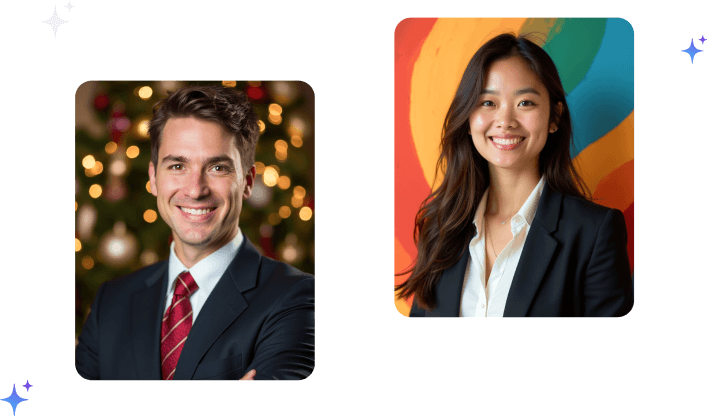
I Hate How I Look in Pictures. And It Took Me Years to Realize It Wasn't My Face
The real reason photos feel wrong has nothing to do with how you look. Here's what's actually happening, and the 1-hour fix that 14,000+ professionals already use.
I deleted 37 photos of myself last Tuesday.
Not because they were blurry. Not because someone blinked. Because in every single one, I looked like a stranger wearing my clothes.
You know that feeling. You're at a dinner, a conference, a family thing. Someone snaps a photo and you think that can't be me. Your jaw looks weird. Your eyes are doing something your eyes have never done before. Your smile looks like you're trying to pass a kidney stone while pretending to enjoy a joke.
And then your friend looks at the same photo and says, "What are you talking about? You look fine."
You don't feel fine. You feel like the camera just exposed something about you that the mirror has been hiding for years.
Here's the thing nobody tells you: that feeling isn't a you problem. It's a camera problem. And once I understood the science behind it, everything changed.
Why You Look "Wrong" in Photos (It's Not What You Think)
There's a psychological concept called the mere-exposure effect, first studied by researcher Robert Zajonc in the 1960s. The idea is simple: we prefer things we see most often.
And how do you see yourself most often?
In a mirror.
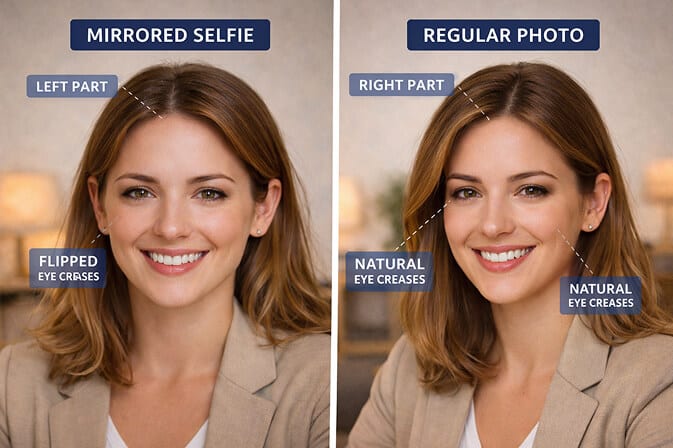
But here's where it gets messy. A mirror shows you a reversed image of your face. Your left side appears on the right. Your slightly crooked smile goes the other direction. Your hair parts the opposite way.
That's the version of you that you've stared at for thousands of hours. That's the face you've learned to like, or at least tolerate.
A camera doesn't flip the image. It shows you the way everyone else sees you. And because that version is slightly different from the mirror version, your brain short-circuits. Something feels off, even though it's technically more accurate.
So when you think I hate how I look in pictures, what your brain actually means is: this version of me is unfamiliar, and unfamiliar feels wrong.
You're not ugly. You're just not used to the non-mirrored you.
The Confirmation Bias Trap
It gets worse.
Once you've decided you "look bad in photos," your brain starts doing something sneaky. It's called confirmation bias, the tendency to search for evidence that supports what you already believe.
So the next time someone shows you a photo, your eyes don't scan the whole image. They zoom straight to your jawline, your forehead, that one wrinkle you obsess over in the bathroom mirror.
See? I knew it. I look terrible.
Meanwhile, everyone else in the room looked at the photo and saw... you. Normal, regular, perfectly fine you. They didn't even notice the things you're fixating on.
The way you see yourself in photos is filtered through years of self-criticism. Other people don't have that filter. They just see a person.
This is why models, literal professional models, also hate most of their photos. It's not about being attractive enough. It's about a brain that's wired to spot "flaws" that only exist relative to the mirror image you've memorized.
And Then There's the Camera Itself
Let's talk about something the self-help articles always skip: your phone camera is lying to you.
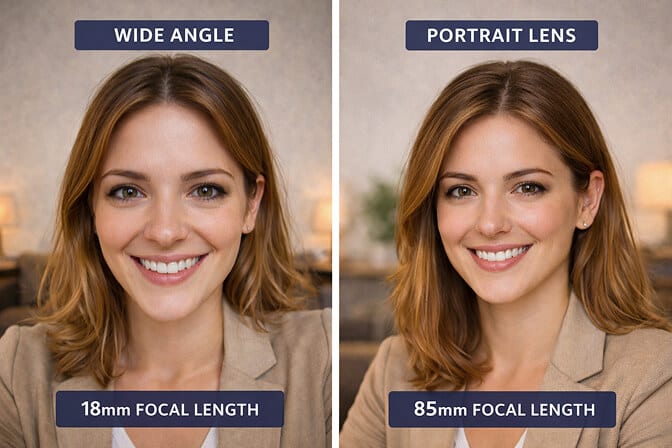
Lens distortion is real. When you take a selfie at arm's length, the wide-angle lens on your phone exaggerates features closer to the camera. Your nose looks 30% bigger. Your forehead stretches. Your ears disappear.
This isn't metaphorical. There are actual studies showing that close-range phone photos distort facial proportions enough to make people consider plastic surgery for problems that don't exist in real life.
Then there's lighting. The overhead fluorescent light at your office? It creates shadows under your eyes and chin that make you look exhausted. The flash on your phone? It flattens your features into a pale, dimensionless version of yourself.
You're not unphotogenic. You're being photographed with a $1,000 computer that wasn't designed to be a portrait studio.
The Part Nobody Tells You About Professional Headshots
So you accept the science. You understand it's the mirror thing, the bias thing, the lens thing. Great.
But here's the practical problem: you still need a photo.
Your LinkedIn profile is either a cropped vacation photo from 2019 or a selfie you took in your car because the lighting was decent. You know it's not great. You know your profile photo matters. Recruiters spend an average of 7 seconds scanning a profile, and the photo is the first thing they see.
So you think about booking a professional photographer.
And then you check the pricing. $200-$500 for a session. Plus travel. Plus the awkwardness of standing in a studio while a stranger tells you to "relax your shoulders" and you somehow become more tense than you've ever been in your life.
For someone who already hates how they look in photos, a traditional headshot session can feel like signing up for an hour of targeted discomfort.
There has to be a better way.
Stay with me here.
What If the Problem Was Never "You in Front of a Camera"?
About two years ago, we started building HeadshotPhoto.io because we kept hearing the same thing from professionals:
"I need a headshot but I hate getting my photo taken."
The insight was simple. If the camera is the problem (the lens distortion, the bad lighting, the awkward posing) what if you could skip the camera entirely?
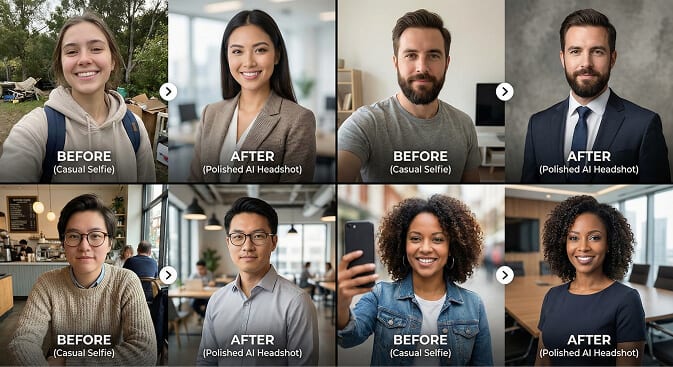
Here's how it works: you upload a few casual selfies (yes, the imperfect ones from your camera roll), and our AI generates studio-quality professional headshots. Perfect lighting. Flattering angles. Multiple background and outfit options.
No photographer. No studio. No standing under hot lights while someone says "give me a natural smile" and your face forgets how smiling works.
Over 14,000 professionals have used it. That's 1.4 million headshots generated, for people who, in many cases, had been avoiding professional photos for years.
📹 Watch: Real AI Headshot Transformations, Before and After If you've ever wondered what AI-generated headshots actually look like compared to your original selfies, this quick comparison video shows real results from actual users. The difference between a casual phone photo and an AI-polished professional headshot is kind of wild.
🎥 Headshotphoto.io Is The Best Ai Headshot Generator? | Headshotphoto.io Headshot Generator Review
"But Won't It Look Fake?"
This is the most common objection we hear, so let's address it directly.
Early AI headshot tools? Yeah, they were rough. Uncanny valley territory. Weird skin textures. Eyes that looked slightly... haunted.
That was 2022.
The technology in 2025 is different. The AI doesn't fabricate a new face. It enhances your actual features with professional lighting, color grading, and composition that would normally require a photographer, a studio, and two hours of editing.
Think of it this way: when a professional photographer edits your headshot in Photoshop (and they all do), they're adjusting your skin tone, smoothing shadows, correcting color balance, and sometimes subtly reshaping angles. AI does the same thing, just faster and cheaper.
If you want to see what I mean, check out our before-and-after examples. The transformations speak for themselves.
How to Actually Start Liking Your Photos (5 Things That Helped Me)
I'm not going to pretend AI headshots are the only answer. If you hate how you look in pictures, here are some things that genuinely shifted my perspective:
1. Flip your selfies. Most phones have a setting to save selfies without mirroring. Turn it off. Start getting used to the non-mirrored version of your face. It'll feel weird for a week. Then it'll feel normal.
2. Stop zooming in. Nobody, nobody, looks at your photo the way you look at your photo. People see the whole image. You see pores. Stop zooming. Seriously.
3. Understand that "photogenic" is a skill, not a trait. Models learn their angles over years. The rest of us have never practiced. That doesn't mean we're bad at being photographed. It means we're beginners.
4. Fix the lighting before fixing yourself. Stand facing a window. Natural, diffused light is the most universally flattering thing on the planet. It costs nothing.
5. Let technology handle the hard part. If you need a professional headshot and the thought of a photo session makes you anxious, AI headshot generators exist precisely for this. Upload selfies you already have. Get results in minutes, not hours. No one has to see you awkwardly posing in a studio.
This Isn't Really About Photos
Here's what I've come to realize.
When we say "I hate how I look in pictures," we're rarely talking about the photo itself. We're talking about the gap between how we feel inside and how we appear to the outside world.
That gap is uncomfortable. And traditional photography, with its pressure to "look natural" under profoundly unnatural conditions, actually makes that gap wider.
The real question isn't how do I become more photogenic. It's: how do I get a professional image that represents who I actually am, without the anxiety?
For some people, that means working with a patient photographer they trust. For others, it means learning their angles and building confidence over time.
And for a growing number of professionals who just need a great headshot without the drama, it means letting AI do the heavy lifting.
Whatever path you choose, stop blaming your face. Your face is fine. It always was.
The camera was just never your friend. Now you have better options.
Frequently Asked Questions
Why do I look so bad in pictures but good in the mirror?
This is caused by the mere-exposure effect, a psychological phenomenon where you prefer the mirror image of your face because that's the version you see most often. Cameras show the non-mirrored version, which looks unfamiliar and "wrong" to your brain. Other people actually see the camera version as the real you, and they think you look perfectly normal.
How does an AI headshot compare to a traditional professional headshot?
AI headshots use the same principles as traditional photography: professional lighting, flattering angles, clean backgrounds. But they generate these digitally from your existing selfies. The result is comparable to what you'd get from a studio session, often at 90% less cost and without the scheduling hassle. For LinkedIn profiles and corporate directories, most people can't tell the difference.
How do I look more photogenic in professional photos?
The biggest tips are: face a natural light source (like a window), angle your chin slightly down and forward, wear solid colors, and genuinely think of something that makes you happy right before the shot. But if posing for cameras stresses you out, AI-generated headshots from HeadshotPhoto.io skip the photoshoot entirely. You just upload casual selfies and get polished results.
Is an AI headshot generator worth it for LinkedIn?
Absolutely. Your LinkedIn photo is the first thing recruiters and connections see, and profiles with professional photos get significantly more views. An AI headshot costs a fraction of what a photographer charges and takes about 1 hour. Over 14,000 professionals have used HeadshotPhoto.io for this exact reason.
Are AI-generated headshots realistic enough for professional use?
Yes. Modern AI headshot technology produces results that are virtually indistinguishable from studio photography. The AI doesn't create a fake face; it enhances your actual features with professional-grade lighting and composition. They're widely used on LinkedIn, company websites, business cards, and corporate directories without any issues.