
How to Look Credible to Investors: The Visual Signals That Win Funding (Before You Say a Word)
Science says investors judge your trustworthiness in 100 milliseconds. Here's how to make every millisecond count.
I was sitting across from a partner at a well-known venture fund when he said something that changed how I think about fundraising.
"I'd already made up my mind about you before the meeting started."
I laughed nervously. He didn't.
"Your LinkedIn photo. Your team page. The way you showed up on Zoom for our intro call. I knew within seconds whether I wanted to hear more."
That conversation haunted me. Not because it was unfair. But because it was true.
And if you're raising capital right now - or planning to - you need to understand what's really happening in those first few seconds.
Here's the weird part.
Investors don't consciously decide to judge you by your appearance. Their brains do it automatically. And by the time they're shaking your hand or clicking into your pitch deck, they've already formed opinions about whether you're competent, trustworthy, and worth their time.
This isn't speculation. It's neuroscience.
The 100-Millisecond Problem Nobody Talks About
Princeton researchers Willis and Todorov discovered something uncomfortable: humans form judgments about trustworthiness in just 100 milliseconds. That's one-tenth of a second.
Their study found that trustworthiness assessments made after a brief glimpse of someone's face correlated almost perfectly with assessments made without any time constraint.
In other words, that snap judgment? It sticks.
For founders walking into pitch meetings, this creates what I call the 100-millisecond problem.
Before you deliver your opening line. Before you show your traction. Before you explain your market opportunity. The investor's brain has already categorized you.
Trustworthy or suspicious. Competent or amateur. Credible or risky.
"Investors often talk about 'founder-market fit,' but what they really mean is: Do I believe this person is the right one to build this business? That belief is built in conversation, not just pitch decks." - ThatRound
The conversation they're referring to? It starts with your face.
What Investors Actually See (That You're Probably Ignoring)
Let me be direct about something most fundraising advice ignores.
Your headshot matters. Your LinkedIn photo matters. The team photo on your pitch deck matters.
A recent study of sell-side analysts found that professionals perceived as more trustworthy based on their photos received better outcomes - even when controlling for actual performance.
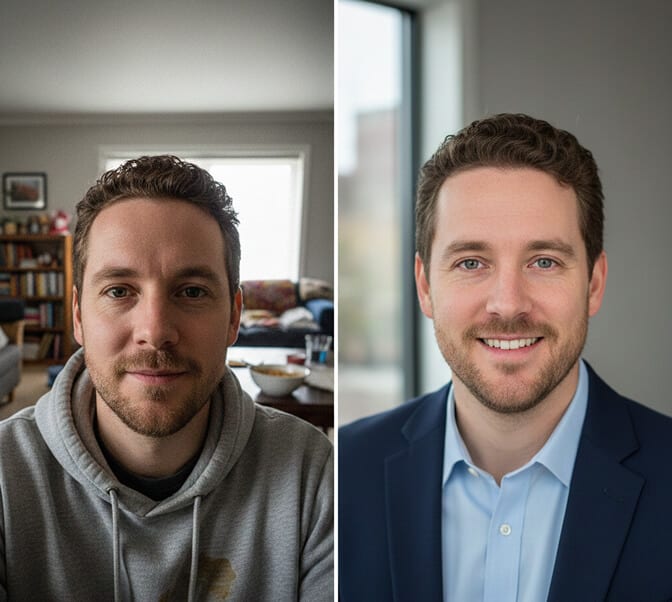
Think about where investors encounter your face before they ever meet you:
- Your LinkedIn profile (where they research you first)
- Your company's "About" page
- The team slide in your pitch deck
- Your email signature
- Your Twitter/X profile
- Conference speaker bios
Each of these touchpoints triggers a trustworthiness assessment. And if your photo looks like it was cropped from a group shot at your friend's wedding, you've already lost ground.
But then something clicked.
The founders who seemed to "get" meetings effortlessly weren't necessarily smarter. They weren't always more experienced. But they looked the part.
Not in a superficial way. In a "I take myself seriously, and you should too" way.
The Three Visual Signals That Build Investor Credibility
After years of working with founders on their professional image, I've identified three visual signals that consistently build investor credibility.
Signal #1: Consistency Across Platforms
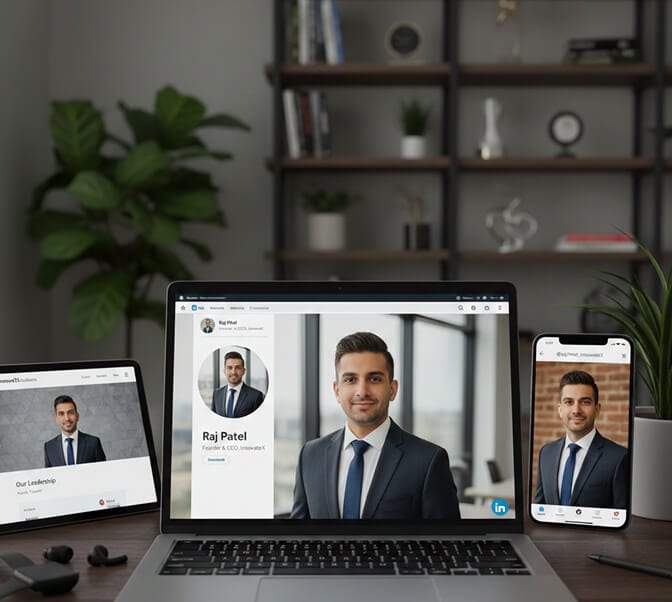
Investors Google you. They check your LinkedIn. They look at your company website. They might even find your Twitter profile.
If each platform shows a different photo - different lighting, different quality, different vibe - it creates subtle cognitive dissonance.
Is this person established or just getting started? Are they detail-oriented or careless? Can I trust them with my capital?
Consistency signals professionalism. One strong professional photo, used everywhere, tells investors you understand branding. And if you understand branding for yourself, you probably understand it for your company.
Signal #2: Appropriate Professional Presentation
Here's where founders often get confused.
"Professional" doesn't mean stuffy. It means appropriate for your context.
If you're building a fintech company targeting institutional investors, a crisp suit and clean background makes sense. If you're building a consumer app targeting Gen Z, that same outfit might signal you're out of touch with your market.
The goal isn't to look like everyone else. The goal is to look like someone who belongs in the room you're trying to enter.
One headshot photographer put it perfectly: "Investors will typically prefer formal attire, as this clothing conveys credibility and reliability."

Signal #3: Confidence Without Arrogance
Body language in photos speaks louder than most founders realize.
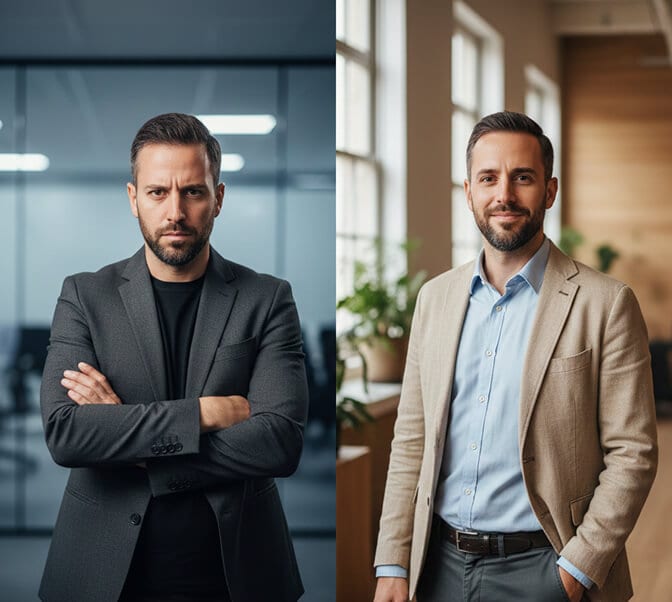
A study on executive headshots noted that visitors notice small details: your posture, your expression, the clarity in your eyes. These communicate whether you take your role seriously.
The sweet spot? Calm confidence.
Not arms crossed defensively. Not an aggressive power pose. A relaxed, direct expression that says: "I know what I'm doing, and I'm happy to show you."
This Is Where Most People Get It Wrong
Most founders preparing for fundraising obsess over the pitch deck.
They'll spend weeks refining their TAM calculation. They'll agonize over their competitive positioning slide. They'll rehearse their delivery until it's smooth.
Then they'll walk into the meeting with a LinkedIn photo from 2019 and a team page that looks like mugshots.
Stay with me here.
I'm not saying visuals matter more than substance. They don't.
But visuals affect whether your substance gets a fair hearing.
Remember that 94% of first impressions are design-related according to research on web credibility? The same principle applies to how investors perceive founders.
You're not just pitching a business. You're pitching yourself as the person who can build that business.
And that pitch starts the moment someone sees your face.
The Practical Playbook for Looking Credible
Enough theory. Here's what to actually do.
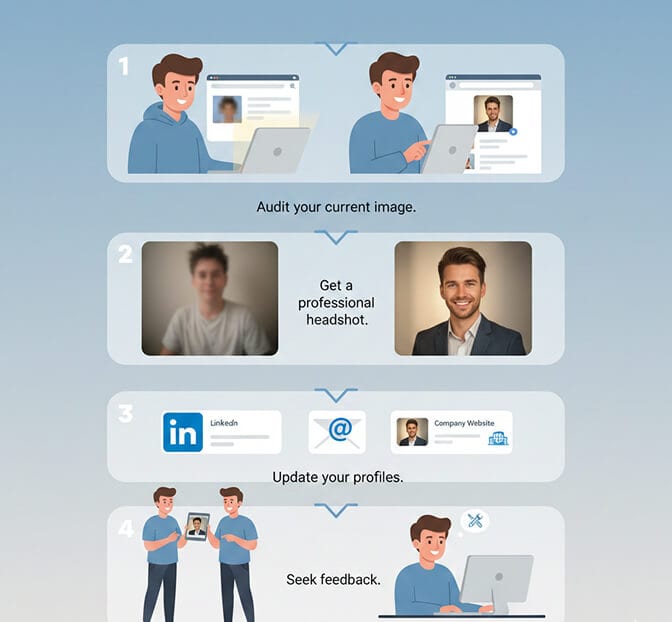
Step 1: Audit Your Visual Presence
Open an incognito browser. Search your name. Search your company.
What photos appear? Are they consistent? Do they convey competence and trustworthiness?
If the answer is "not really," you have work to do.
Step 2: Invest in Professional Headshots
This doesn't mean spending thousands on a fancy studio session (though that works too).
At HeadshotPhoto.io, we've helped thousands of founders get investor-ready headshots in under 1 hour. You upload a few casual photos, and AI generates professional headshots that actually look like you - just the most polished, credible version of you.
The traditional alternative? Scheduling a photographer, finding a studio, blocking half a day, spending $300-800, and hoping the shots turn out usable.
Most founders don't have that time. Especially during fundraising.
Step 3: Update Every Touchpoint
New headshot in hand? Now update:
- LinkedIn profile photo AND banner
- Company website team page
- Pitch deck team slide
- Email signature
- Twitter/X profile
- Any other professional profiles
Do this for your entire founding team if possible. Consistent, professional team photos on your About page make you look more established - even if you're a three-person startup.
Step 4: Get External Feedback
Show your new photos to someone outside your company. Not a friend who'll be nice. Someone who'll be honest.
Ask: "If you saw this person's profile, would you trust them with your money?"
Their reaction will tell you if you've hit the mark.
The Part Nobody Tells You
Here's something most fundraising advice glosses over.
Investors invest in people.
Yes, they care about your metrics. Yes, they want to see product-market fit. Yes, your financial model matters.
But at the earliest stages - pre-seed, seed, even Series A - they're betting on you as much as your business.
"A founding team that combines technical expertise with commercial savvy will always stand out. The team slide is always the first one I scroll to." - Cambridge Angels Managing Director
That team slide isn't just names and titles. It's faces.
And those faces need to communicate credibility before the investor reads a single line of text.
What I Wish I Knew Sooner
That VC partner who told me he'd made up his mind before the meeting? We didn't close that round with him.
But his honesty was a gift.
It forced me to think about fundraising differently. Not just as a pitch to be delivered, but as an experience to be designed - starting from the very first visual touchpoint.
The founders I've seen succeed at fundraising understand this intuitively. They show up looking like founders who get funded. Not because they're performing. Because they've done the work to present themselves with the same care they bring to their product.
If you're heading into fundraising and want to make sure your visual presence matches your ambition, try HeadshotPhoto.io. Professional headshots, done in 1 hour, designed to make you look credible before you say a word.
Because you've only got 100 milliseconds to make it count.
Frequently Asked Questions
What makes a founder look credible to investors?
Credibility comes from multiple signals: consistent professional imagery across platforms, appropriate attire for your industry, confident body language in photos, and attention to detail in your visual presentation. Research shows investors assess trustworthiness within 100 milliseconds of seeing your face, so professional headshots and a polished LinkedIn profile can significantly impact first impressions.
How important is a LinkedIn photo for fundraising?
Extremely important. LinkedIn is typically the first place investors research founders before meetings. Profiles with professional photos receive up to 21 times more views and 36 times more messages than those without. A low-quality or outdated photo can create doubt about your professionalism before you've had a chance to pitch.
Do AI headshots look professional enough for investor meetings?
Modern AI headshot tools produce results that are often indistinguishable from traditional studio photography. The key is choosing a service that creates natural-looking, high-quality images that accurately represent you. HeadshotPhoto.io specializes in professional AI headshots specifically designed for business contexts, including fundraising.
Should my whole founding team have matching headshots?
Consistency helps. When your team page shows cohesive, professional headshots with similar styling and backgrounds, it signals organization and attention to detail. This is especially valuable for early-stage startups trying to appear more established to investors.
How often should founders update their professional photos?
Every 2-3 years is a reasonable baseline, or whenever your appearance changes significantly. During active fundraising, ensure your photos accurately represent how you'll appear in meetings. An outdated photo that doesn't match your current look can create awkward disconnect during in-person pitches.