
The gap between a one-person business and a fully staffed company has never been smaller. Here is the AI stack that is closing it.
A client does not know you are a one-person operation until you tell them.
Think about that for a second. When someone lands on your LinkedIn profile and sees a polished headshot, reads a sharp bio, and then gets a reply to their inquiry within minutes at 10 PM on a Tuesday, they are not thinking "solo freelancer working from a kitchen table." They are thinking "this person runs a tight operation."
That perception used to require money. A professional photographer for $200 to $400. A virtual assistant for $500 to $2,000 per month. A scheduling tool, a CRM, a project manager, and enough hours in the day to stitch it all together.
In 2026, a growing number of solopreneurs have replaced most of that with AI. Not in a gimmicky, "I asked ChatGPT to write my email" way. In a structural, "I have AI systems handling entire workflows while I focus on the work that actually requires me" way.
This article breaks down the exact AI stack these solopreneurs are using. Not theory. Not a list of 47 tools you will never try. The actual layers that let one person credibly look and operate like a team of ten.
Layer 1: The Visual Layer (How You Look)

Let us start with the most obvious one, because it is also the most underestimated.
A study by PhotoFeeler found that having a professional headshot on LinkedIn makes you 14 times more likely to be viewed. Not 14 percent. Fourteen times. And yet the majority of solopreneurs are still using cropped vacation photos, outdated portraits, or that one picture from a friend's wedding where the lighting happened to be decent.
The reason is simple: traditional professional photography is expensive and time-consuming. Booking a photographer, scheduling a session, getting wardrobe together, waiting for edits, and paying $200 to $500 for a handful of images. For a solopreneur watching every dollar, it feels like a luxury.
AI headshot generators have eliminated this barrier entirely.
Tools like HeadshotPhoto.io let you upload a few selfies and receive over 100 professional headshots in about 1 hour. Different backgrounds. Different outfits. Different styles for different platforms. LinkedIn gets the corporate backdrop. Your personal website gets something warmer. Your speaking page gets the confident, stage-ready shot.
The cost? Starting at $34. One time. No booking, no commute, no awkward posing in front of a stranger with a camera.
But here is what most solopreneurs miss about the visual layer: it is not just about having one good photo. It is about visual consistency across every touchpoint.
When a potential client sees the same professional quality image on your LinkedIn, your website, your email signature, your Zoom profile, and your proposal documents, it creates an unconscious signal of legitimacy. It says "established operation" in a way that no amount of clever copywriting can replicate.
The solopreneurs who are doing this well are generating entire visual libraries in one sitting. Headshots for professional contexts. Slightly more casual versions for social media. Industry-specific variations for different client verticals. One AI session produces what used to require three separate photo shoots.
This is the foundation. You cannot build a credible one-person operation on a blurry selfie. But visual polish alone is not enough. Which brings us to the layer most solopreneurs struggle with the most.
Layer 2: The Communication Layer (How Fast You Respond)
Here is a stat that should make every solopreneur uncomfortable.
Harvard Business Review found that companies responding to leads within an hour are seven times more likely to qualify them. Within five minutes? The odds jump to 100 times compared to waiting 30 minutes.
Now think about what happens when you are a solopreneur. You are in a client meeting from 2 to 4 PM. During those two hours, three inquiries come in. One through your website contact form. One via LinkedIn DM. One from a referral who texted you.
By the time your meeting ends and you get to those messages, it has been two hours. Two of those leads have already reached out to a competitor. The third is now lukewarm instead of hot.
This is the problem AI agents solve. Not chatbots. Not auto-responders. AI agents.
The difference matters. A chatbot follows a script: "Thanks for reaching out! We will get back to you within 24 hours." An AI agent actually processes the inquiry, understands the context, drafts a personalized response, and either sends it or queues it for your approval, all within seconds.
OpenClaw is the open-source framework that has made this possible. With over 230,000 GitHub stars and support for 15+ messaging platforms including WhatsApp, Slack, Telegram, and Discord, it lets you deploy an AI agent that handles communication across every channel you use.
The powerful part is that it is free to set up if you are technical. You install it on a server, configure it with YAML files, connect your messaging platforms, and you have an autonomous agent that monitors and responds to messages while you are in meetings, sleeping, or doing deep work.
But the honest reality is that most solopreneurs are not going to spend a weekend configuring Docker containers and debugging YAML files. The self-hosted route requires comfort with command-line tools, server management, and ongoing security maintenance. API costs can also spiral if you misconfigure things. One user on Reddit reported spending $22 per day on API costs from a setup that was not optimized properly.
For solopreneurs who want the agent capability without the infrastructure headache, managed platforms like Better Claw have emerged as the practical alternative. You deploy an OpenClaw agent from your browser in about 60 seconds, connect your WhatsApp or Slack or Telegram, and the agent starts handling messages immediately. The security, monitoring, and infrastructure are managed for you at $29 per month per agent.
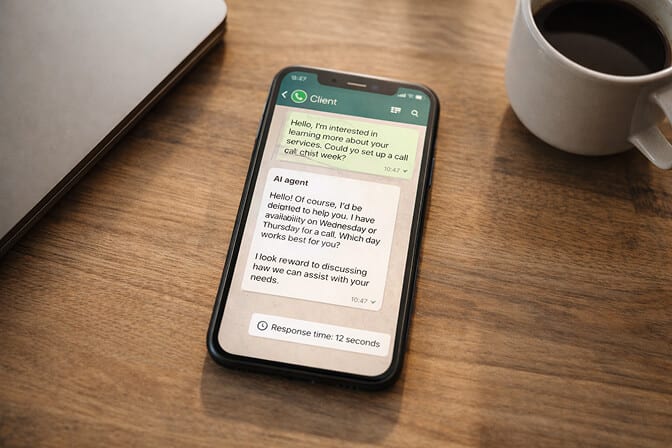
What this looks like in practice: a potential client messages you on WhatsApp at 3 PM while you are on a Zoom call. Your AI agent responds within seconds, answers their initial question about your services using context from your brand guidelines and past conversations, and schedules a discovery call for Thursday morning. You finish your Zoom call and see a notification: "New lead qualified. Discovery call booked for Thursday 10 AM."
That is not a productivity hack. That is a structural advantage that used to require a full-time assistant.
Layer 3: The Operations Layer (How You Get Things Done)
The visual layer makes you look professional. The communication layer makes you responsive. The operations layer is what makes you productive enough to actually deliver the work.
This is where most solopreneurs are already using AI, but badly. They have ChatGPT open in a tab and they copy-paste things back and forth all day. Write an email. Copy. Paste into Gmail. Write a proposal section. Copy. Paste into Google Docs. Generate social media captions. Copy. Paste into the scheduling tool.
The copy-paste workflow is the solopreneur equivalent of a company where every department communicates through Post-it notes. It technically works. It is also incredibly inefficient.
The shift happening right now is from "AI as a tool I use" to "AI as a system that runs." And the mechanism for that shift is the AI agent.
Here is what a well-configured operations layer looks like for a solopreneur:
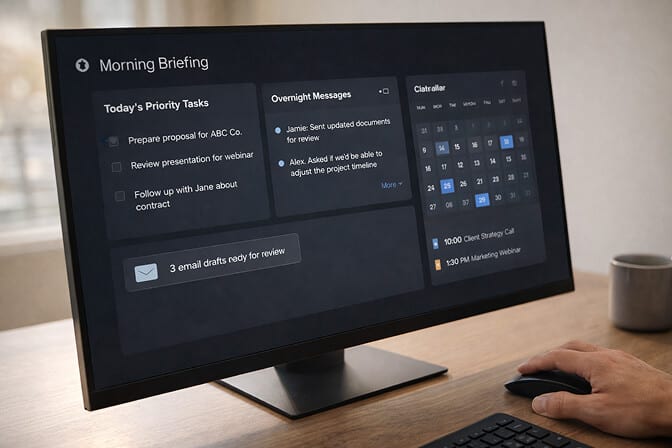
Morning briefing. Your agent compiles overnight messages, flags urgent items, summarizes what happened while you slept, and presents your day's priorities. This arrives in your WhatsApp or Slack at 7 AM without you asking for it.
Client communication. Routine emails and messages are drafted automatically. You review and approve the ones that need your personal touch. The rest go out on their own.
Content creation support. Your agent monitors your industry, flags trending topics, compiles research, and drafts content outlines. You add the thinking and the voice. The agent handles the legwork.
Administrative automation. Invoice follow-ups. Meeting scheduling. Document organization. Status updates to clients. The administrative sludge that eats 10 to 15 hours per week gets compressed to 2 to 3 hours of review and approval.
Competitor monitoring. A weekly digest of what your competitors published, what they are saying on social media, what their clients are saying about them. Delivered to your preferred channel without you doing a single search.
The solopreneurs getting the most out of this are the ones who set up multiple specialized agents instead of one overloaded agent. One agent handles communication. Another handles research and content support. A third handles administrative tasks. Each one is focused, efficient, and does not carry the context baggage of trying to do everything.
Layer 4: The Knowledge Layer (How You Stay Sharp)
The fourth layer is the one nobody talks about, but it might be the most valuable for long-term competitive advantage.
A solopreneur's biggest risk is intellectual stagnation. When you are doing everything yourself, the learning stops. You are so busy executing that you do not have time to stay current in your field, research new approaches, or synthesize information from across your industry.
AI agents flip this dynamic. They become your research department.
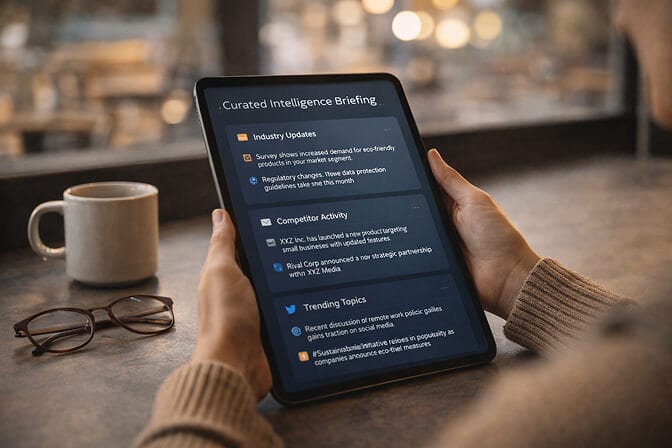
Configure an agent with the right skills and integrations, and it can monitor industry publications, track competitor moves, summarize academic papers relevant to your field, flag regulatory changes that affect your clients, and compile everything into a weekly intelligence briefing.
One consultant I spoke with has an agent that monitors 23 industry RSS feeds, three competitor blogs, and two regulatory databases. Every Monday morning, she gets a two-page briefing covering everything relevant that happened in the previous week. Before the agent, she spent Friday afternoons doing this manually. Now she spends that time on billable client work.
The compounding effect is significant. Over six months, that agent has built a searchable knowledge base from every briefing, every research query, and every client conversation. The consultant can ask "what were the three biggest regulatory changes in Q1 that affected healthcare SaaS?" and get an instant, contextualized answer drawn from months of accumulated intelligence.
No solopreneur has time to build and maintain a knowledge base manually. An AI agent does it as a byproduct of its daily work.
The Full Stack: What It Actually Costs
Let me lay out the real numbers, because the value proposition only works if the math works.
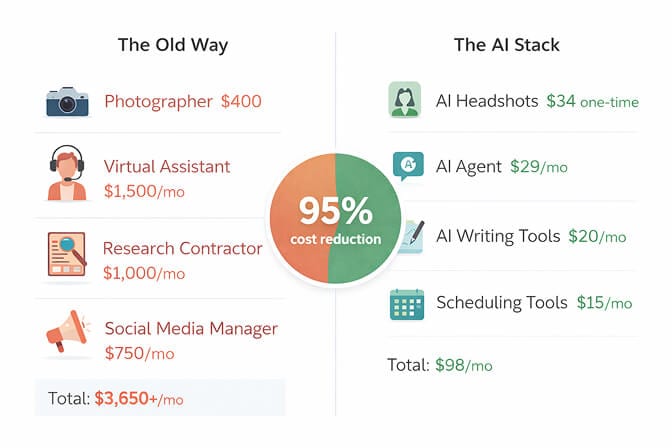
The old way (hiring humans and traditional services):
- Professional photographer: $200 to $500 per session
- Virtual assistant (part-time): $800 to $2,000 per month
- Research assistant (contract): $500 to $1,500 per month
- Social media manager (part-time): $500 to $1,000 per month
Total: $2,000 to $5,000 per month, plus the photographer fee.
The AI stack:
- AI headshots (HeadshotPhoto.io): $34 to $59, one time
- AI agent for communication and operations (BetterClaw): $29 per month per agent, or free if you self-host OpenClaw
- AI writing tools (Claude, ChatGPT): $20 per month
- AI scheduling and admin tools: $0 to $30 per month
Total: $49 to $109 per month, plus the one-time headshot cost.
That is a 95% cost reduction. And the AI stack does not call in sick, does not need training, does not have a two-week notice period, and scales instantly when your workload increases.
The caveat is important: AI does not replace judgment, creativity, or relationship-building. Those are still yours. What it replaces is the mechanical work that surrounds those things. The drafting. The scheduling. The monitoring. The researching. The responding. The remembering.
The Perception Gap That Makes This Work
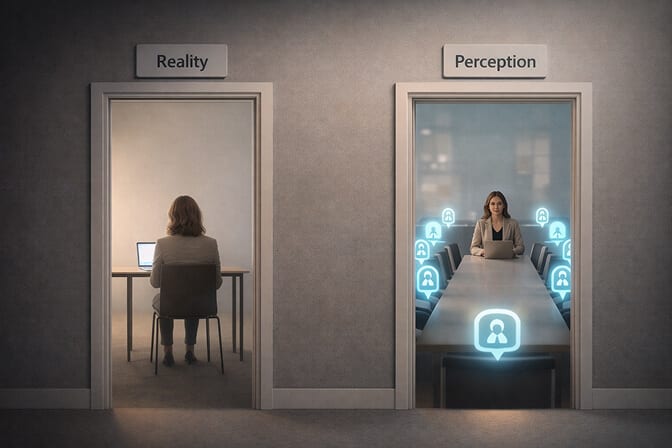
Here is the sociology behind why this AI stack is so powerful for solopreneurs specifically.
When a potential client evaluates you, they are not just evaluating your skills. They are evaluating your operational capacity. Can this person handle my project? Will they be responsive? Do they have the bandwidth?
Every signal you send either builds or erodes that confidence. A professional headshot builds it. A fast, personalized response to an inquiry builds it. A well-researched proposal that arrives within 24 hours builds it. A polished client portal with automated status updates builds it.
None of these signals require a team. They require systems. And AI has made those systems accessible to anyone willing to set them up.
The solopreneurs who are thriving right now are not the ones with the most talent. They are the ones who have eliminated the perception gap between a one-person operation and a ten-person team. Their clients cannot tell the difference. And increasingly, there is no meaningful difference to tell.
Getting Started Without Getting Overwhelmed
If you are reading this and thinking "this sounds great but also like a lot," here is the pragmatic path.
Week 1: Fix the visual layer. Generate professional headshots and update every platform. LinkedIn, website, email signature, Zoom profile, social media. This takes an hour and the impact is immediate.
Week 2: Deploy one AI agent. Start with communication. Set up an agent on WhatsApp or Slack that handles incoming inquiries and drafts responses for your review. If you are technical, try OpenClaw self-hosted. If you want it working in an hour, use a managed platform that handles the infrastructure. Start simple. Get comfortable. Let the agent learn your voice and your business.
Week 3: Expand to operations. Add a morning briefing. Set up automated email drafts. Connect your calendar for scheduling. Each addition saves 30 to 60 minutes per day.
Week 4: Add the knowledge layer. Configure a research agent or add research skills to your existing agent. Set up competitor monitoring and industry tracking. This is where the compounding value starts.
Within a month, you have a visual presence that looks professional, a communication system that responds faster than any human assistant, an operations layer that handles the administrative weight, and a knowledge system that keeps you informed without effort.
You are still one person. But your clients will never know it.
HeadshotPhoto.io helps professionals create stunning AI-generated headshots in 1 hour. Trusted by over 14,000 professionals and rated 4.7 out of 5 stars. Your professional image is the first layer of your AI-powered personal brand.
Frequently Asked Questions
What AI tools do solopreneurs actually need to compete with larger teams?
The core stack has four layers. A visual layer for professional branding (AI headshot generators like HeadshotPhoto.io), a communication layer for fast and personalized responses (AI agents deployed on WhatsApp, Slack, or email), an operations layer for automating admin and content work (AI writing and scheduling tools), and a knowledge layer for staying current in your industry (research agents and monitoring skills). Most solopreneurs can set up all four layers for under $110 per month.
Can I set up AI agents myself for free, or do I need to pay for a service?
Both options exist. OpenClaw is an open-source AI agent framework with over 230,000 GitHub stars that you can self-host for free on your own server. It requires comfort with Docker, YAML configuration, and command-line tools, plus $5 to $10 per month for a VPS and your AI model API costs. If you prefer a managed setup, platforms like BetterClaw deploy OpenClaw agents from your browser in about 60 seconds for $29 per month per agent, with security and infrastructure handled for you.
How much do AI headshots actually cost compared to a traditional photographer?
The average professional headshot session in the U.S. costs $200 to $500 and typically delivers 5 to 15 edited images. AI headshot generators like HeadshotPhoto.io start at $34 as a one-time fee and deliver 40 to 100 headshots across multiple backgrounds and outfit styles in about 1 hour. The quality is comparable for digital use cases like LinkedIn, websites, email signatures, and resumes.
Is it realistic for one person to handle all of this, or does it just create more work?
The setup phase does require an investment of time, roughly a few hours spread across your first month. But once configured, the AI stack reduces your weekly workload rather than adding to it. The key is starting with one layer at a time instead of trying to automate everything at once. Start with your visual brand, then deploy one communication agent, then expand. Each layer should save more time than it takes to maintain. If maintaining the tools starts feeling like a second job, you have overcomplicated your setup.