
Types of Headshots: The Complete Guide to Choosing the Right Style for Your Career
Most people get this wrong. Here's how to pick the headshot that actually works.
Last month, a friend texted me a screenshot of two LinkedIn profiles.
Both candidates were applying for the same VP of Marketing role. Similar backgrounds. Similar experience. But one profile had 3x the engagement.
"What's the difference?" she asked.
I zoomed in. The answer was obvious.
One had a stiff, overly formal headshot - gray background, forced smile, looked like a passport photo from 2016. The other had a warm, approachable shot with natural lighting and a genuine expression.
Same qualifications. Wildly different first impressions.
Here's what most people don't realize: there are fundamentally different types of headshots, and choosing the wrong one can quietly sabotage your career without you ever knowing it.
A corporate lawyer needs a different headshot than a creative director. A real estate agent needs something different from both. An actor? Completely different game.
This guide breaks down every major headshot type, who needs each one, and how to choose the right style for your specific situation.
The Psychology Nobody Talks About
Before we get into the specific types, you need to understand something crucial.
Your headshot isn't really about you.
It's about the person looking at it.
A hiring manager scrolling LinkedIn makes a judgment in roughly 100 milliseconds. A casting director flipping through submissions decides "yes" or "no" before consciously registering your eye color.
Your headshot is doing one job: confirming that you belong in whatever context they're evaluating you for.
A lawyer needs to look trustworthy and serious. An actor needs to look castable and interesting. A startup founder needs to look approachable and innovative.
Same person. Three completely different headshots.
Let me break down each type.
1. Corporate Headshots (The "Trust Me With Your Money" Shot)
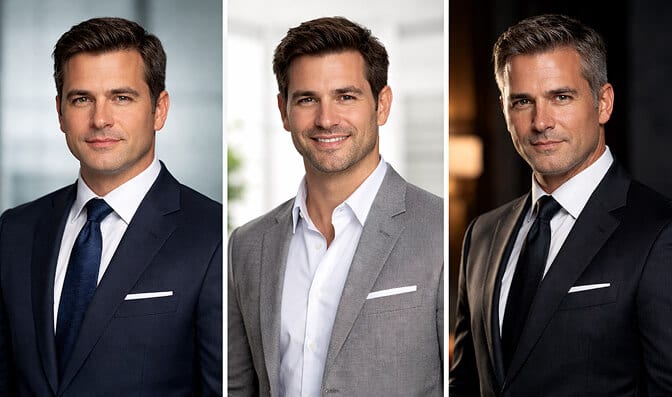
This is the classic. The OG. The headshot your parents imagine when they hear the word "headshot."
Who needs this: Executives, consultants, bankers, lawyers, accountants, anyone in professional services.
The look: Clean background (usually gray, white, or navy). Formal attire. Controlled lighting. Neutral expression or subtle smile. Shoulders squared to camera. Corporate headshots prioritize credibility over personality. You're not trying to be memorable - you're trying to be reassuring.
When someone's deciding whether to trust you with their lawsuit, their investment portfolio, or their company's restructuring, they want to see someone who looks stable. Predictable. Professional.
Here's the weird part:
The best corporate headshots are actually slightly boring on purpose. They don't distract. They don't raise questions. They just quietly confirm: "Yes, this person is exactly what you'd expect."
Pro tip: The background matters more than you think. A textured gray says "established firm." Pure white says "modern but still serious." Avoid busy backgrounds - they undermine the whole point. Check out different headshot backgrounds to see how much the backdrop changes the vibe.
2. LinkedIn Headshots (The "I'm Approachable AND Competent" Shot)

LinkedIn headshots are their own category now.
They're not as formal as corporate headshots. But they're not casual either. They live in this interesting middle ground.
Who needs this: Pretty much everyone with a professional online presence. Job seekers. Entrepreneurs. Freelancers. Anyone who wants to look hireable and likeable.
The look: Slightly warmer lighting. Genuine smile (not the forced "say cheese" kind). Business casual to business professional attire. Background can be slightly more dynamic - think blurred office, outdoor setting, or simple gradient.
The key difference from corporate headshots?
LinkedIn headshots optimize for connection.
You want someone to see your photo and think, "I'd grab coffee with that person." You're still professional, but you're also human. Approachable. Someone who probably replies to emails.
This is where I see people mess up most often. They use their stiff corporate shot from 2018 and wonder why nobody engages with their profile.
LinkedIn is a social platform. Your headshot should feel... social.
Pro tip: The "slight head tilt + genuine smile" combo works insanely well for LinkedIn. It signals openness without sacrificing professionalism.
3. Actor Headshots (The "Cast Me" Shot)
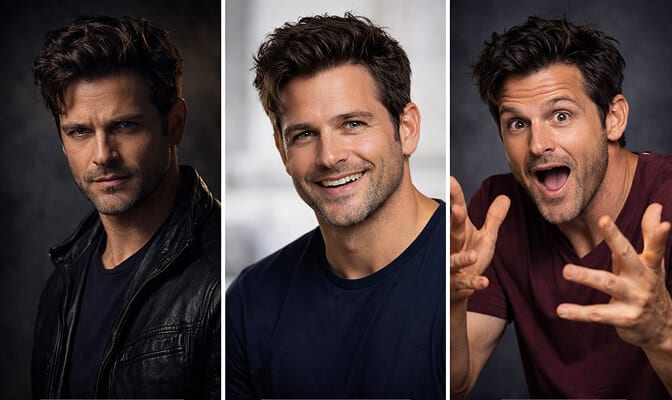
This is where headshots become genuinely creative.
Actor headshots operate by completely different rules. They're not about looking professional - they're about looking castable.
Who needs this: Actors, models, performers, anyone in entertainment or creative fields where personality is the product.
The look: Varies wildly based on the roles you're targeting. But generally: more expressive, more personality, more intentional use of lighting and shadow. Eyes are everything.
A comedic actor's headshot might show a playful smirk, slightly disheveled hair, warm natural lighting.
A dramatic actor might go moody - deeper shadows, more intense expression, minimal smile.
The goal isn't "trustworthy professional." The goal is: "I can see this person playing specific type of role."
Here's the part that matters:
Actors typically need multiple headshots. Different looks for different submission categories. A commercial look. A theatrical look. Maybe a villain look if that's your range. See some actor headshot examples to understand the range.
Pro tip: Your actor headshot should look like you on your best day, not like a fantasy version of yourself. Casting directors get annoyed when you walk in looking nothing like your photo.
4. Real Estate Headshots (The "Trust Me With Your Biggest Purchase" Shot)

Real estate agents have figured something out that other industries haven't.
Their headshot is everywhere. On signs. On bus benches. On mailers. On billboards. On every single listing.
So real estate headshots have evolved into their own distinct style.
Who needs this: Real estate agents, mortgage brokers, property managers, anyone in real estate-adjacent fields.
The look: Confident but warm. Often outdoor or environmental (in front of homes, city skylines). Professional attire but not stiff. Arms crossed is surprisingly common (signals confidence). Big, genuine smile.
Real estate headshots optimize for memorability and approachability equally.
You want someone driving past your sign to remember your face. But you also want them to feel like you'd be pleasant to work with during the stressful process of buying a home.
Pro tip: Outdoor headshots work well for real estate because they subtly signal "I'm out there working, not stuck behind a desk." It matches the job.
5. Executive Headshots (The "I Run Things" Shot)
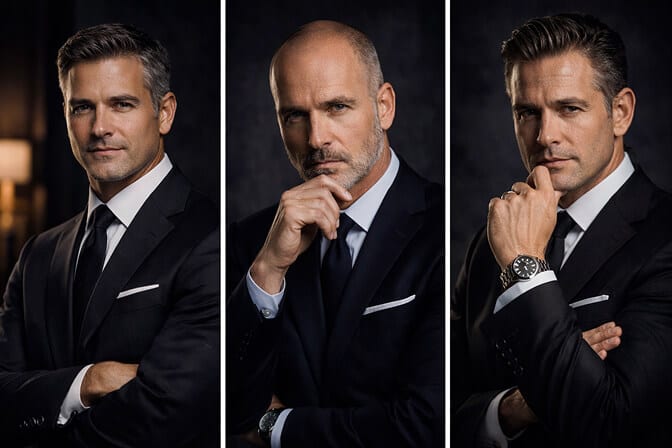
Executive headshots are corporate headshots with the volume turned up.
Same basic principles - professionalism, credibility, trust. But with an added layer of authority.
Who needs this: C-suite executives, founders, board members, keynote speakers, thought leaders, anyone whose personal brand is tied to leadership.
The look: Often more editorial in style. Dramatic lighting. Deeper contrast. Environmental backgrounds (corner offices, city views, boardrooms). Power poses - standing, arms crossed, or seated with intentional body language.
Executive headshots say: "I'm not just in the room. I'm running the room."
These are the headshots that end up in Forbes features, keynote speaker bios, and company "Leadership" pages.
The difference between an executive headshot and a regular corporate headshot?
Intention.
Corporate headshots blend in. Executive headshots stand out. They're designed to make you look like the main character.
Pro tip: Environmental backgrounds (office, city, etc.) work better for executives than plain backdrops. They add context and status without being distracting.
6. Lawyer Headshots (The "I Will Win Your Case" Shot)
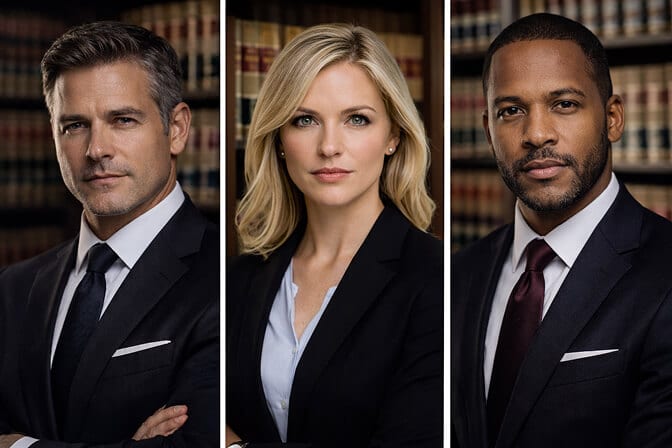
Lawyers deserve their own category because the stakes are different.
When someone hires a lawyer, they're usually stressed, scared, or both. They need to see someone who looks competent and serious - but not cold.
Who needs this: Attorneys, partners, legal professionals, law firm associates.
The look: Formal attire (suit and tie or professional equivalent). Neutral or law-library backgrounds. Serious but not stern expression. Traditional framing.
Lawyer headshots walk a fine line between "I'm approachable enough to tell my problems to" and "I'm serious enough to fight for me in court."
Most law firms maintain strict visual standards. You'll notice the entire "Our Team" page usually has matching backgrounds and similar poses. Consistency signals professionalism.
Pro tip: A slight, closed-mouth smile works better than a big grin for legal headshots. It says "confident and composed" without veering into "used car salesman."
7. Creative Professional Headshots (The "I Think Different" Shot)
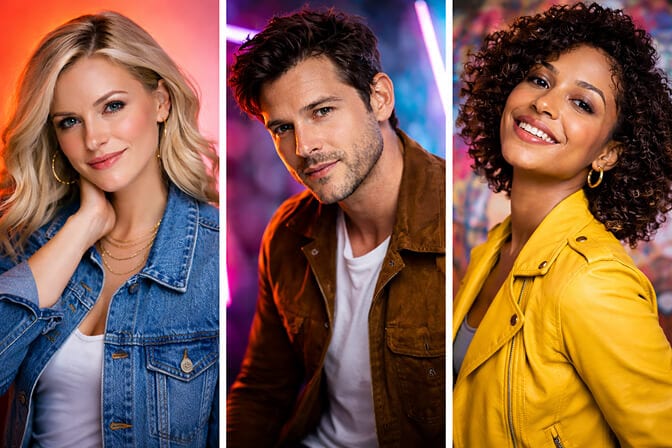
If corporate headshots are vanilla, creative headshots are whatever flavor you want them to be.
Who needs this: Designers, marketers, artists, photographers, writers, anyone in creative industries where personality and uniqueness are assets.
The look: Rules are flexible here. Colorful backgrounds. Interesting angles. Casual or intentionally styled attire. Genuine expressions that show personality.
The goal is to look like someone who has ideas.
Creative headshots optimize for distinctiveness. You're not trying to blend in - you're trying to stand out in a portfolio, a speaker lineup, or a team page full of creative people.
Pro tip: Your creative headshot should match your work. If your portfolio is bold and colorful, your headshot should feel that way too. Consistency matters.
8. Team Headshots (The "We're All in This Together" Shot)
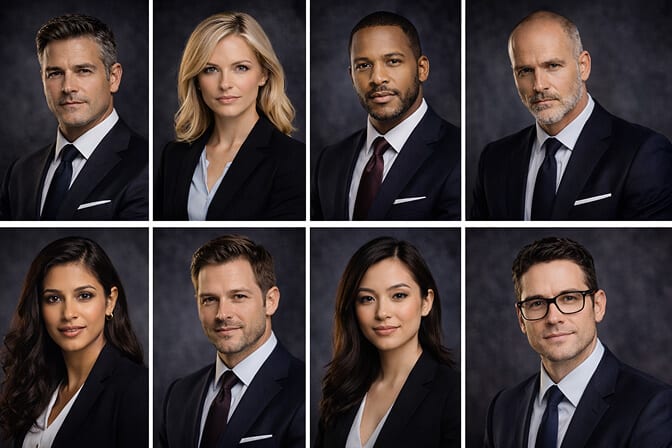
This isn't really a "type" - it's a use case. But it matters.
When companies need headshots for their entire team, consistency becomes the priority.
Who needs this: Any company updating their "About Us" or "Team" page. Startups building culture. Enterprises maintaining brand standards.
The look: Same background, same lighting, same general framing across all team members. Individual personality can still come through in expressions and poses, but the technical elements stay consistent.
Team headshots done well make a company look organized. Team headshots done poorly (mismatched backgrounds, different lighting, some from 2015 and some from last week) make a company look chaotic.
For companies with remote or distributed teams, coordinating traditional photoshoots is a logistical nightmare. That's where company headshot solutions that maintain visual consistency without requiring everyone in the same room become valuable.
Pro tip: Decide on a style before anyone gets their photo taken. Retrofitting consistency onto mismatched headshots never works well.
How to Choose Your Headshot Type (A Simple Framework)
Still not sure which type you need?
Ask yourself two questions:
Question 1: What's the context?
Where will this headshot appear? LinkedIn? Company website? Acting submissions? Speaker bio? Your answer narrows the field immediately.
Question 2: What message do I need to send?
- Need to look trustworthy and serious? → Corporate
- Need to look approachable and hireable? → LinkedIn
- Need to look castable and interesting? → Actor
- Need to look memorable and warm? → Real Estate
- Need to look authoritative and influential? → Executive
- Need to look creative and distinctive? → Creative
Most people actually need two headshot styles minimum.
One for LinkedIn (warm, approachable) and one for their company website (more formal, context-appropriate).
Browse some professional headshot examples to see how different styles work for different industries.
The Real Secret
Here's what I've learned after seeing millions of headshots across every industry:
The best headshot isn't the one where you look best.
It's the one where you look right.
Right for the context. Right for the audience. Right for the message you're trying to send.
Understanding the different types of headshots - and which one fits your situation - is the difference between a photo that works for you and one that quietly works against you.
Choose wisely.