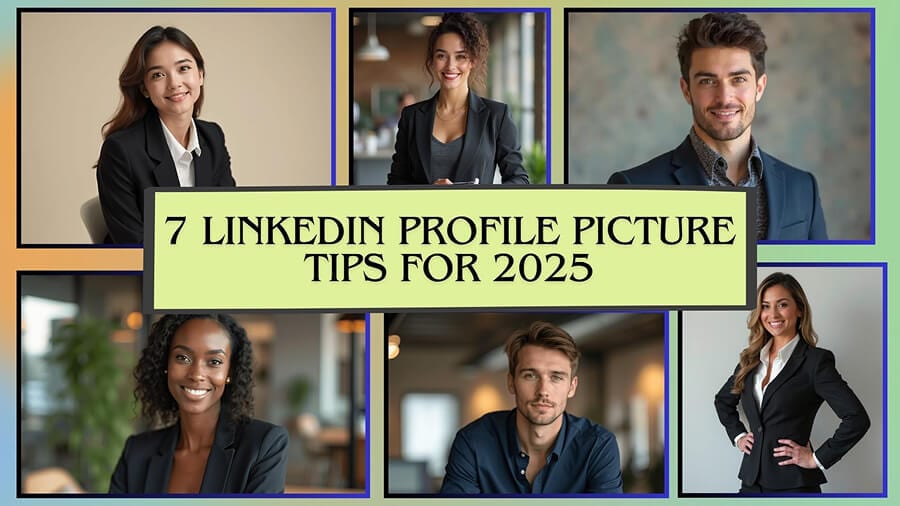
What makes a good LinkedIn profile picture?
Face fills about 60% of the frame, shot from the chest up, with a plain or softly blurred background. Upload at 400 x 400 pixels minimum. Look directly at the camera, smile with your eyes, and wear what you'd wear to meet a client in your industry.
It matters more than it looks. People form a first impression from a face in about a tenth of a second, and LinkedIn reports that profiles with a photo get up to 21x more profile views and 9x more connection requests than profiles without one.
That is the whole formula. Below are real examples by industry and gender, LinkedIn's exact size requirements, a step-by-step guide to taking a good LinkedIn photo at home with just your phone, and a short checklist to run before you upload.
Best LinkedIn Profile Pictures for Women
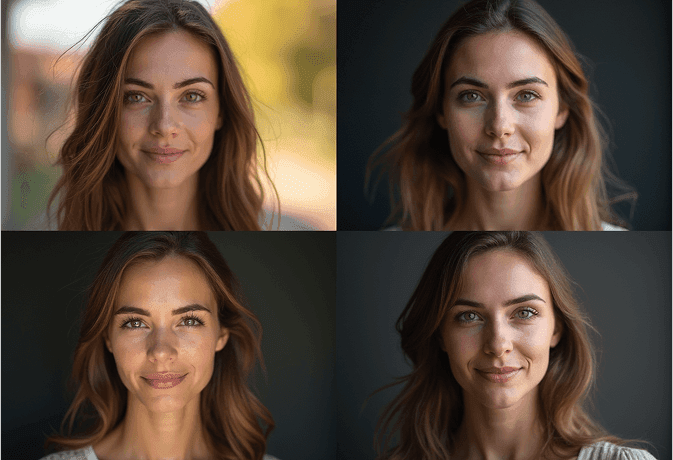
The advice women get about LinkedIn photos is usually either vague ("look confident") or borrowed wholesale from men's headshot guides. Neither helps. Here is what actually distinguishes a strong professional LinkedIn photo for a woman.
Frame tighter than feels natural. The most common mistake on women's LinkedIn photos is standing too far from the camera. LinkedIn's circular crop is small and unforgiving — at the size it appears in a recruiter's search results, a full-body shot renders your face at about 40 pixels. Crop from mid-chest up so your face genuinely fills 60% of the frame.
Shoot at or slightly above eye level. Below eye level is unflattering on everyone. Slightly above, with your chin forward and down a fraction, is the single most reliable adjustment for a sharper jawline and more engaged eyes.
Choose a solid, saturated colour. Jewel tones — sapphire, emerald, burgundy — photograph better than pastels and read as more senior than black, which can flatten under soft light. Avoid busy patterns entirely; they turn to noise at thumbnail size.
Necklines that survive a circular crop. Crew necks, boat necks, blazers over a shell, and collared shirts all hold up. Deep V-necks, strapless, and off-the-shoulder cuts can read as bare once LinkedIn crops to a circle. This is a framing problem, not a modesty one.
Hair off the face on at least one side. Both eyes and your jawline should be visible. Hair falling across one eye reads as a portrait, not a professional headshot.
Smile with your eyes, not just your mouth. A closed-mouth smile with tension around the eyes reads as forced. If you find genuine smiles hard to summon on cue, think of something specific and funny right before the shot. It works, and it is what portrait photographers do.
Skip the heavy retouching. Removing a temporary blemish is fine. Smoothing skin texture, slimming the face, or enlarging the eyes makes a photo look uncanny at full size and creates a mismatch when you meet someone in person.
Two things that are your call, not a rule: whether to wear a blazer (industry-dependent, and increasingly optional outside finance and law) and how much makeup to wear (whatever you'd wear to an important meeting — the photo should look like you on a good day, not like someone else).
Most of this applies to men too: tight framing, eye-level camera, solid colours, light retouching. For side-by-side examples of what that looks like in practice, browse our LinkedIn headshots.

LinkedIn Photo Size and Dimensions
LinkedIn's technical requirements are simple, and getting them wrong is the most avoidable way to look unprofessional.
| Specification | Requirement |
|---|---|
| Minimum size | 400 x 400 pixels |
| Recommended size | 800 x 800 pixels (sharp on high-DPI screens) |
| Maximum size | 7680 x 4320 pixels |
| Maximum file size | 8 MB |
| Accepted formats | JPG, PNG, GIF |
| Aspect ratio | 1:1 square — LinkedIn crops to a circle inside it |
| Resolution | 72 DPI is fine; this is a screen image, not a print |
How LinkedIn crops your photo. Upload a square, and LinkedIn inscribes a circle inside it. Everything outside that circle is cut, including all four corners. If your shoulders sit at the very edge of the square, they will be clipped. Leave a small margin on all sides.
The sizes your photo actually appears at. Roughly 400 x 400 on your own profile page, about 200 x 200 in the feed, and as small as 48 x 48 in comments, messages, and recruiter search results. Test your photo at 48 pixels — if you are not recognisable at that size, it is cropped too wide.
Banner image, for reference. The background banner behind your profile picture is a different asset entirely: 1584 x 396 pixels. Do not upload your headshot there.
A free profile picture maker will crop and export at exactly 400 x 400 if you would rather not do it by hand.
LinkedIn Profile Picture Examples by Industry
The right photo is not universal. What signals competence in one field signals a poor read of the room in another.
Finance, law, and consulting. The most formal end. A suit or blazer, plain light grey or white background, minimal expression — a slight closed-mouth smile rather than a broad one. Convention here is a feature, not a limitation; standing out visually is not the goal.
Technology and startups. Business casual dominates. A plain shirt or knit, an office or softly blurred neutral background, a genuine open smile. A suit here can read as out of touch with the culture. Founders often use a slightly warmer, more casual shot than their own employees.
Healthcare and medicine. Scrubs or a white coat if you are clinical and patient-facing, business attire if you are in administration or research. Backgrounds stay plain and clinical. Warmth matters more here than in most fields, because patients and referrers are part of the audience.
Creative fields — design, marketing, media. The most latitude. Coloured backgrounds, environmental shots, and more expressive framing all work. The photo itself is a portfolio piece, so a technically weak image does more damage here than anywhere else.
Sales and real estate. Approachability outranks formality. Open smile, direct eye contact, bright and even lighting. These are the profiles where a warm expression measurably drives more inbound contact.
Academia and research. Understated. Business casual, plain background, neutral to mildly warm expression. An overly polished corporate headshot can read as off-key against a publication list.
Skilled trades and field roles. An on-site photo in work clothing, shot cleanly and well lit, outperforms a studio portrait. It shows you do the work.
The common thread across all of them: plain or softly blurred background, face filling the frame, sharp focus on the eyes. Industry changes the wardrobe and the expression, not the technical fundamentals. For real profiles that get this right, see our LinkedIn photo examples.
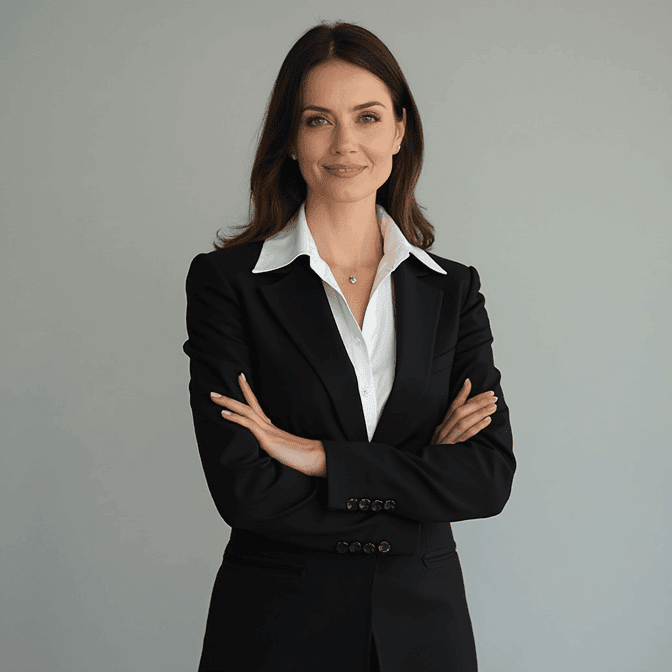
Need the photo, not just the tips?
Our free AI LinkedIn photo generator turns a selfie into a correctly sized, correctly framed profile picture in seconds — no photographer, no signup.
Try the free AI LinkedIn photo generator →Want a full set of studio-quality options? Plans from $34 for 40 headshots, ready in 1 hour.
How to Take a Good LinkedIn Photo at Home, Step by Step
You do not need a photographer or a DSLR. A recent phone, a window, and fifteen minutes will get you a recruiter-ready LinkedIn photo. Here is the order to do it in.
Step 1: Pick a plain spot facing a window
Find a clutter-free wall, a tidy bookshelf, or open shade outdoors, and stand so the window is in front of you, not behind you. Daylight through glass is the most flattering light you have access to. Overcast days are even better, because cloud cover softens it. Avoid overhead ceiling lights, which drop shadows into your eye sockets, and direct sun, which makes you squint.

Step 2: Dress for the role you want
Wear what you would wear to an interview in your industry. Solid colours, a neckline that survives the circular crop, nothing with logos or tight patterns. The industry breakdown above tells you how formal to go.

Step 3: Put the phone at eye level, a few feet away
Use the rear camera, not the front one. It is sharper, and it stops you shooting at arm's length. Prop the phone on a tripod or a stack of books at eye level or slightly above, step back three to six feet, and zoom to 2x. Then use the self-timer, or have a friend take it. Wipe the lens first. A fingerprint smear is the most common reason a phone photo looks soft.
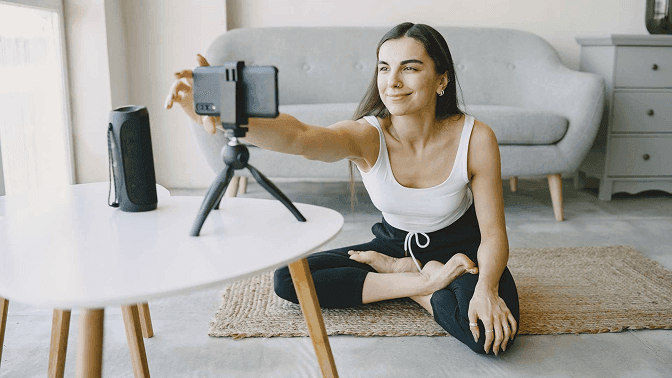
Step 4: Frame from the chest up
Centre yourself so your head and shoulders fill about 60% of the frame, with a little space above your head. Place your eyes roughly a third of the way down from the top. Leave a margin at the sides, because LinkedIn crops a circle out of whatever square you upload.
Step 5: Relax into the expression
Turn your shoulders slightly off the lens, bring your chin forward and a little down, and exhale before the shutter fires. A natural smile with teeth showing tends to test best: in Photofeeler's LinkedIn photo research, it raised both perceived likeability and competence. Let it arrive on the count of three instead of holding it for five seconds.
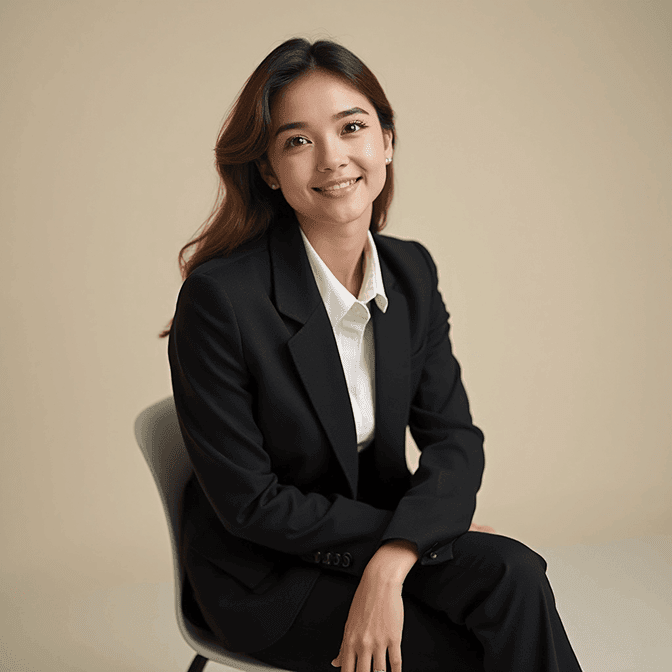
Step 6: Take 20 shots, not one
Use burst mode or keep the timer running, shifting your angle and expression slightly between frames. One frame is a lottery. Twenty will contain a good one. Pick the best two and ask a friend which looks more like you.
Step 7: Edit lightly
Crop to a square, nudge brightness and contrast, and correct the colour if the light made your skin look too warm or too cool. Stop there. Heavy smoothing, slimming, or beauty filters make you look unlike yourself at full size and lower trust when someone meets you in person. Then export at 400 x 400 or larger.
Common LinkedIn Photo Mistakes to Avoid
- An arm's-length selfie. The short front lens enlarges your nose and narrows your face. Step back and zoom, or use a timer.
- A photo cropped out of a group shot. Someone else's shoulder at the edge of the circle is a giveaway, and the resolution is usually too low.
- A holiday or party photo. What works on Instagram or WhatsApp reads as unserious on LinkedIn. Keep a separate, deliberate photo for work.
- A cluttered background. An unmade bed or a busy kitchen pulls attention from your face. Move, or blur it.
- A blank stare or a forced grin. A neutral face reads as cold at thumbnail size. A held smile reads as fake. Aim for relaxed.
- An outdated photo. If you would not be recognised from it on a video call, replace it. Every two to three years is a sensible cadence.
LinkedIn Profile Picture Tips: The Short Checklist
If you only remember one section, make it this one. Every point below is covered in more detail above.
- Use a recent, sharp photo. Taken in the last two to three years, in focus on the eyes, and at least 400 x 400 pixels. If you would not be recognised from it on a video call, replace it.
- Frame head and shoulders. Your face should fill about 60% of the square, with a little headroom and a margin at the sides for LinkedIn's circular crop.
- Dress one notch above your everyday work clothes. Solid colours, a neckline that survives the circle, no logos or busy patterns. See our guide to the best outfits for headshots for ideas by role.
- Keep the background plain or softly blurred. Light grey, white, soft blue, or an out-of-focus office all work. Virtual backgrounds and obvious cut-outs do not. More on this in our guide to headshot backgrounds.
- Look at the lens and smile naturally. Shoulders slightly angled, chin forward, a smile that reaches your eyes.
- Use the same photo everywhere you work. LinkedIn, your company bio, email signature, and speaker profiles. One consistent image is easier to recognise than four different ones.
- Check it at thumbnail size before you upload. Shrink it to 48 pixels. If your face is still clear, it will work in search results and comments too. Our headshot dimensions guide covers sizes for other platforms.

Final Thoughts on Your LinkedIn Profile Picture
Get the size right (400 x 400 minimum, 800 x 800 ideally), frame your face to fill the circle, and match your clothes and expression to your industry. That covers almost everything a recruiter notices in the half-second they spend on your photo.
If you would rather not shoot it yourself, our free AI LinkedIn photo generator turns a selfie into a correctly sized profile picture. For a full set of studio-style options, Headshot Photo has created 1.4 million+ headshots for 14,239 professionals, with plans from $34 for 40 headshots delivered in 1 hour.
FAQs
1. What makes a good LinkedIn profile picture?
Your face should fill about 60% of the frame, shot from the chest up against a plain or softly blurred background, uploaded at 400 x 400 pixels or larger. Look directly at the camera with a genuine expression, and dress the way you would to meet a client in your industry. Sharp focus on the eyes matters more than anything else technical.
2. What size should a LinkedIn profile picture be?
400 x 400 pixels is the minimum and 800 x 800 is recommended so it stays sharp on high-resolution screens. Keep the file under 8 MB in JPG, PNG, or GIF format, and upload a square image, since LinkedIn crops a circle inside it. Leave a small margin around your shoulders so the circular crop does not clip them.
3. What is the best LinkedIn profile picture for a woman?
A tightly framed head-and-shoulders shot at or slightly above eye level, in a solid saturated colour such as sapphire, emerald, or burgundy, with hair clear of at least one side of the face. Crew necks, blazers, and collared shirts survive LinkedIn's circular crop; deep V-necks and off-the-shoulder cuts often do not. Keep retouching light so the photo still looks like you in person.
4. Should your LinkedIn photo be formal or casual?
It depends entirely on your industry. Finance, law, and consulting expect a suit or blazer with a plain background and a restrained expression. Technology, startups, sales, and creative fields do better with business casual and a warmer, more open smile. The technical fundamentals — tight framing, plain background, sharp eyes — stay the same across all of them.
5. Do LinkedIn profile pictures actually matter?
Yes. LinkedIn reports that profiles with a photo get up to 21x more profile views and 9x more connection requests than profiles without one, and your picture is the first element a recruiter sees in search results, where it renders at roughly 48 pixels. At that size, framing and contrast decide whether anyone clicks through to read your experience at all.
6. How do I take a good LinkedIn photo at home?
Stand facing a window in front of a plain wall, prop your phone at eye level three to six feet away, zoom to 2x, and use the rear camera with the self-timer. Frame from the chest up so your face fills about 60% of the shot, take 20 frames with small changes in angle and expression, and keep editing to crop, brightness, and colour.
7. What should I wear in my LinkedIn photo?
Wear what you would wear to an interview in your industry, usually business casual or formal. Solid colours photograph best. Avoid logos, busy patterns, and bright neons, which turn to noise at thumbnail size. Pick a neckline that survives the circular crop: crew necks, collared shirts, and blazers all do. For outfit ideas by role, see our guide to the best outfits for headshots.
8. Can I use a selfie for my LinkedIn photo?
Only if it does not look like a selfie. An arm's-length front-camera shot distorts your face and usually crops awkwardly. Propping the phone up a few feet away with a timer gets you a far better result from the same phone, or you can turn an existing selfie into a proper headshot with an AI tool.
9. Should I smile in my LinkedIn photo?
Yes, in almost every industry. A natural smile that reaches your eyes reads as more likeable and more competent than a neutral face, which tends to look cold at thumbnail size. The exception is the most formal end of finance and law, where a slight closed-mouth smile is the convention.
10. Can you use an AI-generated photo as your LinkedIn profile picture?
Yes, provided it genuinely looks like you. LinkedIn's terms require your profile to represent a real person accurately, so an AI headshot generated from your own photos is fine while an invented or heavily altered face is not. Our free AI LinkedIn photo generator works from your own selfie and keeps your actual features intact. Recruiters are broadly fine with it too, as long as it looks like you. See whether recruiters trust AI LinkedIn photos.